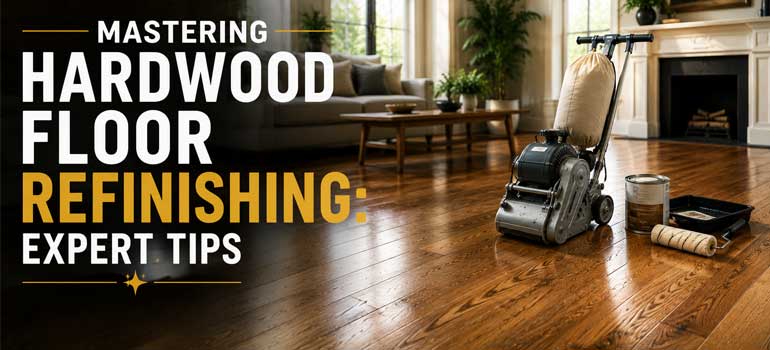
Refinishing can genuinely bring a tired, worn floor back to something close to its original condition, whether you're tackling it yourself or hiring a professional. Here are ten things worth knowing before starting, some practical, a couple that might genuinely change your approach to the project.
Hire the equipment rather than buying it
If you're going the DIY route, there's little point in buying a sander, dust extractor, and edger for a project you'll likely only do once. A tool hire specialist lets you access proper equipment without the ongoing storage headache or the cost of owning machinery you'll rarely use again.
Match your new finish to what's already there, where possible
If your floor already has an established finish, staying with the same type - polyurethane, varnish, or a penetrating sealer, generally gives the most predictable, compatible result. The right choice ultimately comes down to your priorities, durability, appearance, and how much maintenance you're prepared to take on.
Use a sheepskin applicator for a smooth, even coat
This is a genuinely useful, often overlooked detail. A sheepskin applicator spreads finish more evenly than a standard brush or roller, reducing the risk of visible streaks or uneven coverage across a large area.
Build in a proper schedule, and seal soon after sanding
Refinishing genuinely isn't a rushed weekend job. Sealing the floor the same day it's sanded is worth prioritising, since the wood's pores are freshly opened and take the finish more evenly before any dust has had a chance to resettle on the surface.
Remember that a well-maintained floor can genuinely last a century
Even boards that look genuinely tired can come back through proper sanding and refinishing. Depending on the thickness of the timber, a solid wood floor can typically be resanded and refinished five or more times over its life, which is a large part of why well-maintained period floors are still original after generations.
Sanding isn't always the right answer
It's worth knowing this before assuming a full sanding is automatically needed. Sometimes a floor's tired appearance comes from the old finish wearing thin, not the bare wood underneath, in which case a straightforward floor recoat can achieve a genuinely fresh look without the cost and disruption of a full sand.
Be careful about oil-based soap residue
If a floor has been cleaned with oil-based soap products over the years, that residue can interfere with how a new finish adheres. Rather than reaching for ammonia, which can genuinely damage or discolour certain wood finishes, use a proper wood-safe deglossing product specifically designed to remove this kind of residue before sanding and refinishing begins.
Buff and clean between every coat
This step is genuinely non-negotiable, not optional. Buffing lightly between finish coats and cleaning away any dust before applying the next layer keeps the final result smooth rather than trapping debris under the surface.
Save the sawdust rather than throwing it away
This is a genuinely useful tip most people don't know: fine sawdust from your own floor, mixed with the right resin, makes an excellently colour-matched filler for gap filling between boards, since it's made from the exact same timber rather than a generic filler that might not match precisely.
Know when to call in professional help
If working through this list leaves the project feeling like more than you'd bargained for, that's a completely reasonable place to land, not a failure. Hiring a professional for all or part of the job is often the more sensible route once the equipment, time, and skill genuinely involved are weighed up honestly.
Wood Floor Refinishing Tips: Common Questions
How many times can a wood floor genuinely be refinished?
Typically five or more times over its life, depending on the thickness of the timber, which is why a properly maintained solid wood floor can realistically last a century or longer.
Is it safe to use ammonia to clean a floor before refinishing?
No, it's not recommended. Ammonia can damage or discolour certain wood finishes, so a proper wood-safe deglossing product is the safer choice for removing old soap or cleaning residue before sanding.
Does a worn-looking floor always need a full sand?
Not necessarily. Sometimes the worn appearance comes from the old finish wearing thin rather than damage to the bare wood, in which case a recoat can achieve a fresh look without a full sand.
Is it really worth saving sawdust after sanding?
Yes, genuinely. Mixed with the right resin, sawdust from your own floor makes a naturally colour-matched gap filler, since it comes from the exact timber rather than a generic product.
Call us on 020 7036 0625 or request a free site visit if you'd like a professional opinion before starting your refinishing project.