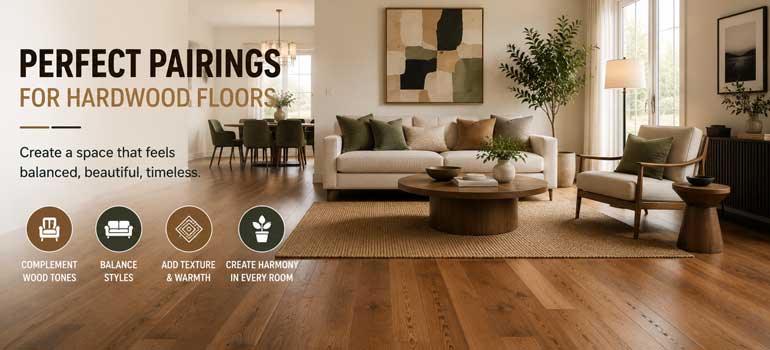
Most people spend weeks agonising over which solid wood flooring to install, then pick furniture almost as an afterthought. That's a mistake — the relationship between your floor and your furniture does more to define how a room feels than almost any other design decision. Get it right and the room feels pulled together and intentional. Get it wrong and even beautiful individual pieces can end up looking flat or mismatched. Here's how to think about it properly.
Contrast Beats Matching, Every Time
The single most common mistake is choosing furniture in the same tone as the floor. It seems like the safe option, but it usually backfires — when the floor and the furniture blend into each other, the room loses definition and can end up looking flat, monotonous, or even smaller than it is. Deliberate contrast is what makes a room feel considered.
This doesn't mean clashing colours. It means choosing furniture that's clearly a shade lighter or darker than the floor, so each element reads as its own feature rather than disappearing into the background. A few ways to approach it:
- One or two shades lighter or darker than the floor — enough to create separation without looking mismatched.
- Same material family, different finish — if you want a cohesive but not identical look, furniture in the same wood species as the floor but with a different stain or sheen level works well.
- Bold contrast for a statement look — pairing a very dark floor with pale, light furniture (or vice versa) creates a striking, contemporary feel, particularly effective in open-plan spaces.
Light Floors vs Dark Floors: What Each One Calls For
The tone of your floor sets the baseline for everything else in the room, so it's worth thinking through what each direction supports:
Light and blonde floors open up a room and make it feel larger and brighter — ideal in smaller spaces or rooms without much natural light. They pair well with almost any furniture colour, but darker furniture pieces stand out beautifully against a light floor and act as natural anchors in the space.
Mid-tone natural floors are the most flexible option and work with nearly any furniture style or colour, which is exactly why they remain the most popular choice for London homes. They're forgiving if your furniture and decor tastes are likely to change over time.
Dark floors bring a formal, dramatic character to a room but can make a smaller space feel more enclosed if the furniture is also dark. Balancing a dark floor with lighter furniture, pale upholstery, or bright accessories keeps the room from feeling heavy.
Undertones Matter as Much as Depth of Colour
It's not just about how light or dark your floor is — undertone matters just as much. A floor with warm amber or honey undertones will sit awkwardly next to furniture with cool grey or blue undertones, even if they're a similar overall shade. Before committing to a piece of furniture, look at your floor in natural daylight and identify whether it leans warm (red, orange, amber) or cool (grey, ash). Matching furniture to that underlying temperature, rather than just the depth of colour, is what makes a room feel genuinely coordinated.
Use Rugs, Curtains, and Accessories to Bridge the Gap
If you're working with furniture you already own and don't want to replace it, you can still tie the room together through the details. Rugs, curtains, cushions, and other soft furnishings are the easiest way to bridge a floor and furniture combination that doesn't quite align on its own — introducing a colour or tone that pulls both elements together. This is also the lowest-cost way to experiment with contrast before committing to anything permanent, since these items are far easier and cheaper to change than furniture or flooring.
Protecting Your Floor From Furniture Damage
Beautiful furniture on a beautiful floor is only a win if the two aren't damaging each other. A few simple habits go a long way:
- Fit felt pads to the legs of chairs, tables, and sofas — this is the single most effective way to prevent scratches from everyday movement.
- Lift furniture rather than dragging it whenever you need to reposition a room, even with pads fitted.
- Use rugs under heavier pieces, such as dining tables or sideboards, to spread the weight and reduce indentation over time.
- Keep an eye on castors on office chairs and similar furniture — standard castors are one of the most common causes of fine scratch trails on wood floors, and a rug or chair mat solves this easily.
When to Consider Refinishing Instead of New Furniture
Sometimes the mismatch isn't the furniture's fault — it's the floor. If you love your existing furniture but the floor colour is fighting against it, wood floor staining can shift the tone of an existing floor to sit better alongside furniture you already own, rather than replacing pieces to chase a floor colour that isn't working for the room.
Keeping the Look Fresh Over Time
Once you've found a combination that works, regular floor polishing keeps the finish looking sharp and helps the floor continue doing its job as the anchor of the room, rather than fading into a dull, worn backdrop behind your furniture. If you're planning a refurbishment and want advice on flooring that will work with your existing or planned furniture, call us on 020 7036 0625 or request a free site visit — we're happy to talk through what will suit your space before you commit to anything.
FAQ
Should furniture match my floor colour exactly?
Generally not. Matching too closely tends to flatten the room and makes both the floor and the furniture harder to notice individually. A shade or two of contrast usually looks more intentional.
How do I protect my wood floor from furniture scratches?
Felt pads on chair and table legs handle most of the risk. Beyond that, lift furniture rather than dragging it, and use a rug or mat under anything on castors, like an office chair.
What if my furniture and floor don't seem to go together at all?
Rugs, curtains, and cushions are the easiest fix, since they let you introduce a bridging colour without replacing anything major. If the mismatch is really about the floor rather than the furniture, refinishing or restaining is also worth considering.
Does the room's lighting affect how furniture and flooring look together?
Yes, quite a lot. Colours that look coordinated under daylight can shift noticeably under warm evening lighting, so it's worth checking any pairing at different times of day before committing.