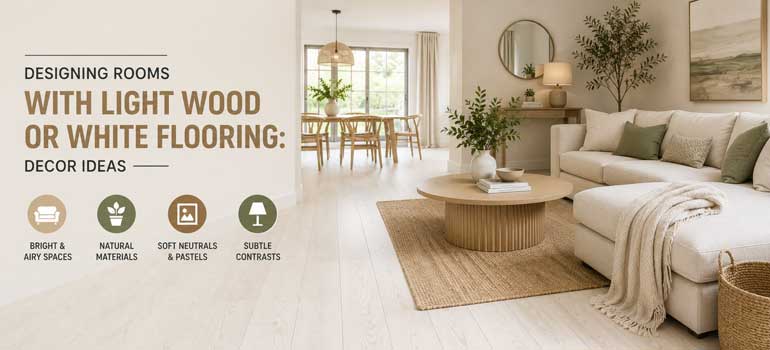
Light wood flooring has become one of the most requested looks in London homes over the past decade, and it's easy to see why. It brightens a room, makes smaller spaces feel more open, and gives interiors a clean, contemporary edge that darker floors can't quite match. But decorating around a light floor takes a slightly different approach than decorating around a mid-tone or dark one — get the balance wrong and the room can end up feeling flat and washed out rather than bright and airy.
Why Light Flooring Works So Well
Light floors reflect more ambient light around a room than dark ones, which is exactly why they're so effective in smaller rooms, north-facing spaces, or anywhere natural light is limited. They also read as more contemporary and less formal than deep, traditional wood tones, which is part of why they've become the default choice in so many recent London renovations — particularly in open-plan kitchen-living spaces where a bright, unified floor helps the whole area feel more connected.
Choosing Wall Colours That Work With Light Floors
The walls do a lot of the heavy lifting once you've chosen a light floor. A few directions that consistently work well:
- White and cream walls amplify the brightness of a light floor and create the strongest sense of spaciousness — the classic choice for making a small room feel larger.
- Warm accent tones — golden, peach, soft yellow — pair naturally with light oak or ash and add warmth without competing with the floor.
- Deeper wall colours create an elegant, more dramatic contrast against a light floor, and work particularly well in larger rooms that can handle the added depth without feeling closed in.
Whichever direction you choose, the goal is the same: let the walls either amplify the brightness or provide a considered contrast, rather than fighting the floor for attention.
Rugs and Soft Furnishings: Add Warmth Without Losing Brightness
A rug that matches the floor colour too closely will make the room look flat and washed out. Choosing a rug one or two shades darker than the floor achieves two things at once: it adds visual warmth and cosiness to the room, and it protects the floor from scratches in high-traffic areas like under a dining table or in front of a sofa.
Furniture: Contrast Is Still the Rule
Just as with the floor-and-rug relationship, furniture that's too close in tone to a light floor tends to disappear into it. Darker, neutral furniture — browns, charcoals, black — creates a clean, grounded look and gives the eye something to rest on against the lighter backdrop. If you'd rather go bolder, a single statement piece in a strong colour — a red sofa, a deep blue armchair — stands out dramatically against a light floor in a way it simply wouldn't against a darker one.
A Few Styling Directions to Try
If you're not sure which direction to take the room, a few reliable combinations to consider:
- Fresh and vivid — pair the light floor with a few bold accent colours in cushions, art, or a single feature wall for an eye-catching, energetic feel.
- White and blue — a classic, coastal-inspired combination that reads as clean and calming against light flooring.
- Glass and contemporary furniture — glass-topped tables and sleek metal frames emphasise the modern character of a light floor more than heavier, traditional furniture would.
- Grey, beige, and white — a softer, more understated palette that leans into a classic English interior look.
Already Have Dark Floors? Here's How to Get the Light Look
If your existing floor is a darker tone and you want to move to the light look, this doesn't necessarily mean replacing it. In many cases, floor sanding back to bare timber followed by a whitewash or light grey wood floor stain can achieve the same bright, contemporary result on your existing boards — often at a fraction of the cost of a full replacement, and without losing the character of original floorboards in a period property.
Keeping Light Floors Looking Bright
Light floors show dust, dirt, and scuffing differently than dark ones — often more visibly in direct sunlight, though less prone to showing fine scratches than very dark, glossy finishes. Regular floor polishing keeps the finish looking fresh and helps the floor hold onto that bright, just-fitted look for longer, rather than gradually dulling under everyday wear.
FAQ
Does light flooring make a room feel bigger?
Yes, this is one of the more reliable effects in interior design. Light floors reflect more ambient light, which reads visually as more open space, particularly in smaller or darker rooms.
What wall colour works best with a light wood floor?
White and cream walls maximise the brightness effect, while warmer tones like soft yellow or golden hues add cosiness without fighting the floor. Deeper wall colours can also work well in larger rooms looking for more contrast.
Do light floors show dirt more than dark ones?
They show dust and scuffing differently rather than simply more. Light floors tend to show dust more visibly in direct sun, but they're often more forgiving of fine scratches than very dark, glossy finishes.
Can I lighten an existing dark floor without replacing it?
Usually yes, if it's solid or engineered wood. Sanding back to bare timber and applying a whitewash or light stain can achieve a very similar result to a full replacement, at a fraction of the cost.
Get Advice for Your Room
Whether you're fitting a new light wood floor or considering lightening an existing one, we can talk you through what will work best for your specific room and light levels. Call us on 020 7036 0625 or request a free site visit and we'll help you get the look right from the start.