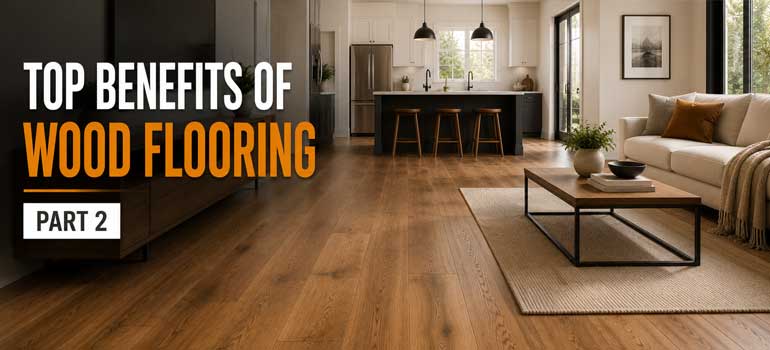
Part one covered durability, appearance, and long-term value. This second part looks at a few other genuinely practical reasons wood flooring keeps winning out over the alternatives: how it's sourced, how easy it actually is to live with day to day, and what it does for a property beyond just looking good.
Responsibly Sourced Material
Wood flooring today comes overwhelmingly from suppliers held to genuine sourcing standards, most commonly certified through schemes like FSC (Forest Stewardship Council) or PEFC, which track timber back to managed, replanted forests rather than uncontrolled logging. It's worth checking for this certification specifically when buying, since "eco-friendly" claims without any backing certification aren't worth much on their own.
Beyond sourcing, wood's long service life is itself a genuine environmental advantage. A floor that lasts a century and gets refinished rather than replaced simply consumes far fewer resources over its lifetime than a flooring type that needs full replacement every decade or so.
Genuinely Simple To Maintain
This is one of the more underrated benefits, since people sometimes assume real wood needs specialist, constant attention. In practice, the routine is straightforward:
- Daily — a quick vacuum or sweep with a soft-bristled broom to lift grit before it can scratch the surface.
- Weekly — a damp mop, using a cleaning product specifically designed for wood floors rather than a generic all-purpose cleaner.
- As needed — spills wiped up immediately, since food and drink left to sit can leave a stubborn stain on the finish.
- Every few years — a re-application of the protective finish, whether that's a full floor polishing or a recoat, to keep the surface protected and address fine wear before it becomes visible.
Minor issues like light scratches don't usually require a full sand either. Targeted scratch repair can address localised damage without touching the rest of the floor.
An Extensive Range Of Styles
With hundreds of species, tones, and patterns to choose from, wood flooring genuinely offers something for almost any interior style. Lighter woods open up a room and make it feel bigger, while darker tones bring a more dramatic, formal atmosphere. Beyond colour, the choice extends to:
- Plank width and pattern, from narrow traditional boards to wide contemporary planks or patterned parquet.
- Texture, from smooth and uniform to rustic, characterful grades with visible knots and grain.
- Finish, matt, satin, gloss, or oiled, each giving a noticeably different final look and feel underfoot.
That range is part of why wood flooring rarely feels like a compromise choice, there's usually a genuine match for whatever look a room is going for.
Better Acoustics Than You'd Expect
Wood flooring has a reputation for being noisier underfoot than carpet, and while that's true of a bare floor, it's not the full picture. Paired with the right acoustic underlay, a wood floor can perform very well against both footstep noise and sound travelling between floors, which is particularly relevant in London flats where lease terms often specify minimum acoustic standards before hard flooring can even be installed.
Holds Its Value Over Time
Wood flooring is generally viewed favourably by buyers and valuers alike, particularly in period properties where original or well-restored floorboards are often seen as a genuine selling point. It's not a guarantee of a higher sale price on its own, but a well-maintained wood floor is rarely, if ever, viewed as a negative, and it can help a property stand out against comparable homes with dated or worn alternative flooring.
Frequently Asked Questions
Is wood flooring actually more environmentally friendly than other options?
It can be, particularly when sourced from FSC or PEFC certified suppliers, and its long service life, especially the ability to sand and refinish rather than replace, means it consumes fewer resources over its lifetime than flooring types that need regular full replacement.
How often does a wood floor's finish need reapplying?
It varies with traffic levels, but every few years is a reasonable general guide for a well-used room. Areas with heavier footfall will need attention sooner than quieter rooms.
Can wood flooring work in a noisy flat or apartment?
Yes, with the right acoustic underlay fitted underneath. This is often a requirement rather than just a nice-to-have in London leasehold flats, where lease terms frequently specify minimum acoustic performance for hard flooring.
Does wood flooring actually add value to a property?
It's generally viewed positively by buyers, particularly in period homes, though it's one factor among many rather than a guaranteed increase in sale price on its own.
Call us on 020 7036 0625 or request a free site visit and we'll help you find the right wood flooring for your home.