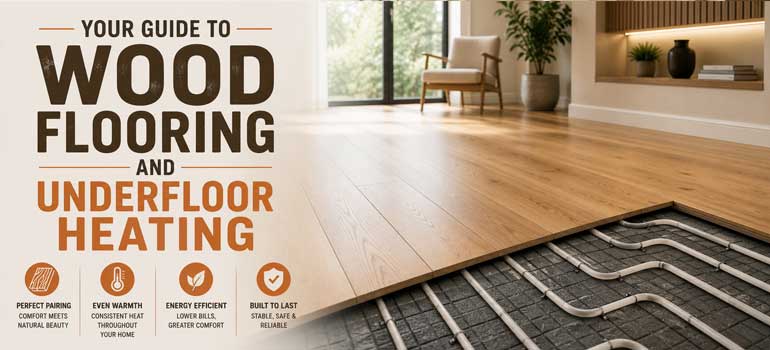
Underfloor heating and wood flooring genuinely work well together, but getting the combination right involves a few decisions that matter more than people expect, particularly around construction type and underlay, which is exactly where mistakes tend to happen.
What Underfloor Heating Actually Does
Underfloor heating warms a room from below rather than through radiators or vents, distributing heat evenly across the whole floor area rather than concentrating it in one spot. It's genuinely energy efficient in the right setup, and it particularly suits larger rooms, where conventional heating can struggle to distribute warmth evenly across the space.
Why Wood Pairs Well With Underfloor Heating
Wood flooring is one of the more effective floor coverings to pair with underfloor heating, since it retains and distributes warmth well without the discomfort of a naturally cold surface, unlike stone or tile, which can feel cold underfoot even when the heating system beneath is working properly.
Adding Underfloor Heating To An Existing Wood Floor
If you already have wood flooring and want to add underfloor heating afterward, the boards generally need to be lifted to install the system, then relaid once it's in place. It's more disruptive and costly than including it at the point of original installation, so if you're planning a new wood floor and have any interest in underfloor heating down the line, it's worth considering at the same time rather than as a separate future project.
Engineered Wood Is The Safer Choice Here
While underfloor heating can technically be installed beneath most wood flooring, the type of wood affects how well the floor itself copes with it in the long term. Engineered wood's layered, cross-grain construction handles the temperature cycling that comes with underfloor heating considerably more reliably than solid wood, which is more prone to the kind of expansion and contraction that repeated heat cycles can cause over time. This doesn't affect the heating system's efficiency directly, it's about protecting the floor above it from unnecessary movement.
Keep The Floor In Good Condition For The System To Work Properly
A floor with gaps or general poor condition doesn't retain heat as effectively as a well-maintained one, which genuinely affects the underfloor heating system's overall efficiency, not just the floor's appearance. If gaps have developed over time, professional gap filling restores a flush, even surface and helps the floor properly retain and distribute heat again.
Get The Underlay Choice Right, This Is Where People Go Wrong
This is worth being precise about, since it's a genuinely common point of confusion. With standard heating, a high-insulation underlay makes sense, the goal is stopping heat escaping through the floor. With underfloor heating, the opposite is true. You need a low-Tog rated underlay, since the goal here is letting heat pass upward from the heating system into the room as efficiently as possible. A standard, highly insulating underlay actually works against an underfloor heating system, trapping heat beneath the floor rather than letting it reach the room, which makes the whole system less efficient and slower to warm the space, exactly the opposite of what you'd want. If you're planning floor insulation alongside underfloor heating, it's essential to confirm the product's TOG rating is appropriate for underfloor heating specifically, rather than assuming more insulation is automatically better.
Wood Flooring And Underfloor Heating: Common Questions
Does the type of wood flooring affect how efficiently underfloor heating works?
Not the efficiency of the heating system itself, but it does affect how well the floor copes long-term. Engineered wood handles the temperature cycling considerably more reliably than solid wood.
Should I use a highly insulating underlay with underfloor heating?
No, that's a common mistake. Underfloor heating needs a low-Tog underlay so heat can pass upward efficiently. A highly insulating underlay actually traps heat beneath the floor rather than letting it warm the room.
Do gaps in a wood floor really affect underfloor heating efficiency?
Yes, genuinely. A floor with gaps retains and distributes heat less effectively, which impacts the overall efficiency of the heating system, not just the floor's appearance.
Is it cheaper to add underfloor heating during a new floor installation rather than afterwards?
Generally yes. Adding it to an existing floor means lifting and relaying the boards, which is more disruptive and costly than including it as part of the original installation.
Call us on 020 7036 0625 or request a free site visit and we'll advise on the right construction and underlay for your underfloor heating setup.