Monday - Friday 07:30 - 17:30, Saturday 07:30 - 16:00
Floorboards Fitting in London
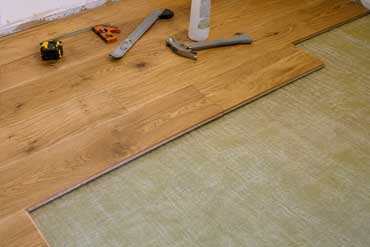
Floorboards fitting is the installation of traditional tongue-and-groove softwood or hardwood boards — typically Scots pine, Douglas fir, or redwood in the standard profiles used across London's Victorian and Edwardian housing stock — onto a suspended timber subfloor using secret nailing, producing a structurally sound, authentic, and sandable timber floor suited to period London properties.
Floorboard fitting is distinct from the installation of wider engineered or hardwood planks. The term refers specifically to the narrow tongue-and-groove boards — typically 75mm to 125mm wide and 19–22mm thick — that were laid as standard in London's terraced and semi-detached houses from roughly the 1840s through to the 1930s. These boards form the base layer of the floor in the vast majority of inner London's period housing stock and are still the correct specification for restoration, extension, and replacement work in these properties.
Flooring Services London installs new and reclaimed floorboards across London, working primarily in period residential properties where matching the existing board specification is a priority. As part of our full floor fitting service, floorboard fitting is regularly combined with wood floor repair and floor sanding to produce a complete, finished result across the entire floor. Our complete price list covers all fitting and finishing services.
Why Floorboards Are the Right Choice for London Period Properties
London's Victorian and Edwardian terraces were built with suspended timber subfloors as standard — joist-and-board construction that spans the void between the ground and the floor surface, providing natural ventilation beneath the floor and allowing the building to breathe. The original floorboards in these properties were laid directly onto the joists using cut nails, and in many cases, these original boards are still in place — over 100 years old and in perfectly serviceable condition beneath decades of carpet, paint, or old laminate.
When original boards are damaged, missing, or need to be extended into a newly opened room or loft conversion, matching the existing specification as closely as possible is the priority. The width, thickness, timber species, and board profile all need to be as close as possible to the original — both for structural continuity and for visual consistency when the floor is sanded and finished.
New hardwood flooring — wide-plank engineered oak, for example — does not suit period London terraced houses in the way that traditional floorboards do. The narrower board width, the softer grain of pine, and the slightly uneven character that comes with natural softwood give period London floors their specific quality. Installing wide hardwood planks in a Victorian terrace can look anachronistic — particularly once sanded, when the difference in grain and texture between new hardwood and original boards in adjacent rooms becomes very visible.
For new builds, loft conversions, and contemporary London interiors where a traditional appearance is not the priority, wider hardwood and engineered boards are usually the more appropriate specification.
Floorboard Timber Species and Specifications
Scots pine (Pinus sylvestris) — the most common original floorboard timber in London's Victorian and Edwardian housing stock. Relatively soft compared to hardwoods but exceptionally durable in the narrower profiles used for floorboards, where the boards are supported at close intervals by joists beneath. New Scots pine is available in period-appropriate profiles and is the standard specification for replacing or extending original Victorian pine floors.
Douglas fir (Pseudotsuga menziesii) — a slightly harder, tighter-grained softwood found in some London period properties, particularly in houses built from the 1890s onward, when Douglas fir became more widely available as an import timber. Slightly more durable than Scots pine and with a distinctive straight grain and reddish-brown tone.
Redwood (Pinus sylvestris) — broadly similar to Scots pine, used interchangeably in period London construction. Reclaimed Victorian and Edwardian redwood floorboards are the best match for original floors in period restoration projects — the timber has been seasoned for a century, has a density and character that new timber does not replicate, and blends far more naturally into an existing original floor than new boards.
Reclaimed floorboards — for London period properties where matching the existing floor as closely as possible is the priority, we source reclaimed softwood floorboards from salvage suppliers. Reclaimed boards are already seasoned, have a similar age and colour profile to original floors, and are available in original Victorian and Edwardian profiles that are not always available new. We advise on reclaimed options during the site visit where matching is a specific requirement.
Standard Floorboard Profiles in London Period Properties
Understanding the profile of the existing boards is essential before ordering replacement or extension timber. The most common profiles we encounter in London period properties are:
75mm face width, 19mm thickness — the narrowest and thinnest standard profile, most common in upper-floor bedrooms and smaller rooms in Victorian terraces. The actual face width after fitting (excluding the tongue) is typically 65–68mm.
100mm face width, 22mm thickness — the most common profile in London Victorian and Edwardian ground-floor rooms, hallways, and principal rooms. The standard specification for most period restoration work.
125mm face width, 22mm thickness — a wider profile found in some larger Victorian and Edwardian properties, particularly in reception rooms and ground-floor hallways of houses built from the 1880s onward.
We measure the existing boards as part of the site visit and confirm the closest available match in new or reclaimed timber before ordering. Where an exact match is not available, the closest specification is used and the colour and texture difference is addressed through staining and finishing after sanding.
Floorboards Fitting Process
1. Free site visit and assessment — We visit the property, examine the existing floor, measure the board profile, assess joist spacing and subfloor condition, and confirm the timber specification for new or reclaimed replacement boards. Written quote provided before any work begins.
2. Subfloor preparation — Existing joists checked for level and structural integrity. Any loose or squeaking existing boards in adjacent areas are secured. Where joist spacing is wide (greater than 450mm centres), additional noggins or counter-boarding may be required before the new boards are laid. Subfloor moisture levels measured — new boards must not be installed over a damp subfloor.
3. Acclimatisation — New softwood boards acclimatised in the property for a minimum of five to seven days before installation. Softwood is particularly sensitive to moisture variation — boards that are significantly drier than the room's ambient humidity will expand after fitting, causing buckling; wetter boards will shrink, leaving gaps. We confirm the required acclimatisation period for the specific timber.
4. Board installation — Boards secret-nailed through the tongue at an angle into the joists beneath, working row by row across the floor. Each board is pulled tight against the previous row using board cramps before nailing to ensure tight, consistent joints. Expansion gaps left at all fixed perimeters — walls, hearths, and door frames — to allow for seasonal movement.
5. Precision cutting — Boards cut accurately around doorways, hearths, chimney breasts, and other fixed features. In London period terraces, this typically includes cutting around Victorian hearth surrounds, bay window projections, and chimney breast recesses, all of which require careful measurement and precise cutting for a clean result.
6. Sanding and finishing — New floorboards are sanded and finished after installation. The sanding process levels any minor height differences between boards and removes all surface marks from fitting. See our floor sanding page for full details on sanding process and available finishes. Gap filling is typically recommended for softwood boards after the first sanding season — softwood expands and contracts more than hardwood and benefits from flexible resin filling after the boards have settled.
Floorboards Fitting Costs in London
| Service | Price |
|---|---|
| Floorboard fitting — labour | Priced on survey |
| Gap filling — resin (up to 5mm) | from £7/m² |
| Strip gap filling (over 5mm) | from £15/m² |
| Original floorboard repairs | from £12/metre |
| Wood floor staining | from £8/m² |
*All prices shown are exclusive of VAT.
Floorboard fitting is priced on survey as the cost varies significantly depending on the area to be fitted, joist spacing, subfloor condition, and whether new or reclaimed timber is specified. Reclaimed boards carry a materials premium over new softwood. For original floorboard repairs — replacing individual damaged boards within an existing floor — pricing is from £12/metre excluding seasoned pine boards. All charges confirmed in writing after the site visit. A full breakdown of all services is available in our pricing guide.
Frequently Asked Questions — Floorboards Fitting in London
Can you match the original floorboards in my Victorian terrace? In most cases yes, closely. We measure the existing board profile — width, thickness, and tongue-and-groove dimensions — and source the nearest available match in new or reclaimed softwood. Reclaimed Victorian and Edwardian pine is the closest match to original boards in most London terraces, as the timber has been seasoned for a century and has a comparable density, colour, and grain character. A new board will always be slightly different in colour to an aged original, but this difference is significantly reduced after sanding and finishing across the complete floor.
Should I use new or reclaimed floorboards for a period London property? For visible areas where matching the existing floor closely matters — extending into a new room, replacing a section of original floor — reclaimed boards are almost always the better choice. They blend more naturally into the existing floor and have a character that new softwood cannot replicate. For structural subfloor boards beneath a new finished floor, or for areas that will be fully covered, new softwood is entirely appropriate and more cost-effective. We advise on the best approach for each specific situation during the site visit.
Do original Victorian floorboards need replacing or can they be restored? Original Victorian floorboards in structurally sound condition can almost always be restored through floor sanding and refinishing. Even boards that look badly worn, stained, or gapped respond very well to a full sand — the original timber quality is typically high, the boards are thick enough to be sanded multiple times, and the result after finishing is usually excellent. We recommend restoration over replacement wherever the existing boards are structurally sound. Replacement is warranted only where boards are rotted, broken, or missing entirely.
How long do new floorboards take to acclimatise before fitting? A minimum of five to seven days in the room where they will be installed, at normal living temperature and humidity. This is longer than engineered boards require and is particularly important for softwood, which is more moisture-sensitive than hardwood. Adequate acclimatisation prevents both expansion-related buckling and shrinkage-related gapping after installation.
Can floorboards be fitted in a loft conversion in a Victorian terrace in London? Yes — floorboards are the most appropriate floor type for loft conversions in period London terraces, where the aesthetic should remain consistent with the rest of the house. The joists in a loft conversion are typically new timber, so the subfloor is in excellent condition for fitting. We advise on the correct board specification and joist centres to ensure the floor is structurally adequate for the intended use.
Call us on 020 7036 0625 or request a free quote online — we respond to all floorboard fitting enquiries the same working day.