Monday - Friday 07:30 - 17:30, Saturday 07:30 - 16:00
Laminate Floor Installation in London

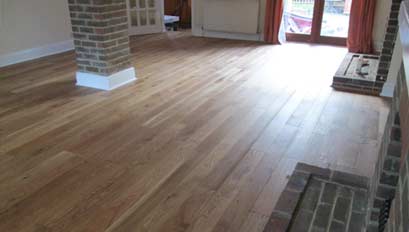
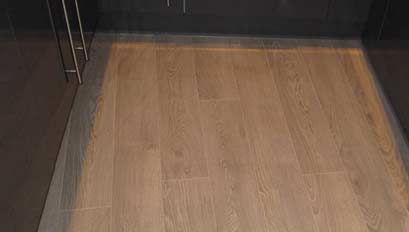
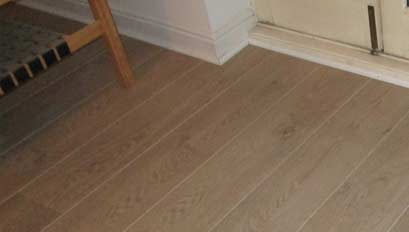
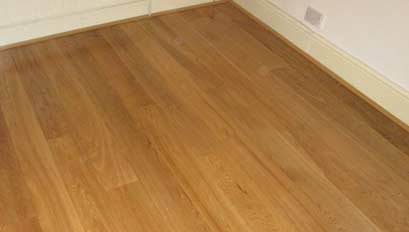
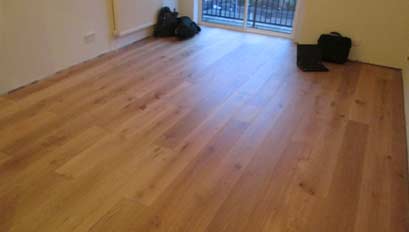
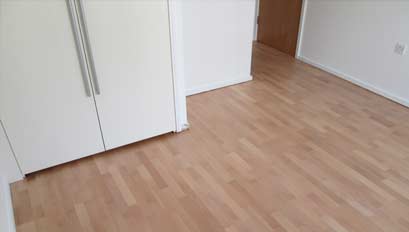
Laminate floor installation is the fitting of laminate flooring boards — a multi-layer synthetic product with a photographic wood-effect surface layer protected by a clear wear coat — using a floating click system over a prepared subfloor and underlay, without adhesion to the subfloor.
Laminate is one of the most practical and cost-effective flooring choices for London rental properties, high-traffic residential areas, and commercial spaces where durability, easy replacement, and low maintenance are priorities. It cannot be sanded or refinished like real wood, but modern laminate products — particularly those rated AC4 and above — offer genuine resistance to scratching, staining, and surface wear that makes them well-suited to the demands of London's busy households and managed properties.
Flooring Services London installs laminate flooring across London for residential and commercial clients, as part of our full floor fitting service. Laminate installation is priced from £20/m². See our prices page for full details.
Understanding Laminate Flooring — What It Is and What It Isn't
Laminate is frequently confused with engineered wood, and the distinction matters when making a flooring decision for a London property.
Laminate flooring has no real wood in its visible surface. It consists of a high-density fibreboard (HDF) core with a photographic image layer — a high-resolution printed image of wood grain — protected by a melamine resin wear coat. The wear coat's hardness is rated on the AC (Abrasion Class) scale from AC1 (light residential) to AC6 (heavy commercial). For most London residential applications, AC3 or AC4 is the appropriate specification; for commercial or high-footfall areas, AC5 or AC6.
Engineered wood has a real hardwood surface layer — typically 3–6mm of genuine oak, walnut, or other species — bonded to a plywood core. It can be lightly sanded and refinished and has a different feel, sound, and ageing characteristic to laminate. Engineered wood costs more than laminate but has a longer service life and can be restored when worn. See our engineered floor fitting page for details.
The right choice between laminate and engineered wood depends on budget, intended use, and how long the floor needs to last. For London rental properties being prepared between tenancies, laminate is often the most sensible choice — it installs quickly, costs less, and when it eventually wears out it is straightforward to replace. For owner-occupied homes where the floor will be lived with for decades, engineered wood or solid hardwood is usually the better long-term investment.
Laminate Specifications That Matter for London Properties
Not all laminate products perform equally, and the specification of the product chosen significantly affects how long it lasts and how well it suits a particular London property.
AC rating — wear resistance: As noted above, AC3 is the minimum for normal residential use; AC4 for busy households, hallways, and light commercial use; AC5 for offices and retail. We advise on the appropriate AC rating for your specific use during the site visit.
Thickness: Laminate boards are typically 7mm, 8mm, 10mm, or 12mm thick. Thicker boards feel more solid underfoot, produce less hollow sound when walked on, and better disguise minor subfloor imperfections. For London flats where impact sound transmission to the flat below is a concern, a thicker board combined with an appropriate acoustic underlay is always preferable. We recommend a minimum of 10mm for most London residential applications.
Surface texture: Modern laminate is available in smooth, embossed, hand-scraped, and registered emboss (where the texture is aligned to the printed grain image) finishes. Registered emboss products look significantly more realistic than flat-surface laminate and are worth specifying where appearance is a priority.
Water resistance: Standard laminate is not waterproof and will swell and delaminate if exposed to standing water or repeated moisture ingress. Most modern laminate products have some degree of water resistance at the joint — typically rated for surface spills that are wiped up within 24–48 hours — but are not suitable for wet rooms, shower rooms, or areas with persistent moisture. For genuinely wet areas, vinyl floor installation is the more appropriate choice.
Subfloor Requirements for Laminate Installation in London
Laminate is a floating floor — it is not fixed to the subfloor — which means subfloor flatness is more critical than for glued installations. An uneven subfloor beneath a floating laminate floor creates localised pressure points at the board joints, causing the locking system to crack and joints to open over time.
The subfloor must be flat to within 3mm over a 1.8m span before laminate installation begins. We assess subfloor flatness during the site visit and carry out levelling where needed before installation.
Concrete subfloors — the most common subfloor type in London's post-war flats and modern apartment buildings. Concrete must be adequately dry before laminate is installed — residual construction moisture rising through a concrete slab can cause laminate boards to swell and lift at the joints. We measure moisture levels before every installation over concrete and specify a damp-proof membrane where readings exceed safe thresholds.
Timber subfloors — common in London's Victorian and Edwardian terraced houses and on upper floors throughout the older housing stock. Floating laminate over timber subfloors works well provided the existing boards are flat, secure, and free from significant movement. Squeaking or loose existing boards must be secured before laminate installation — a floating floor laid over a moving subfloor will develop squeaks and joint movement of its own.
Existing floor coverings — in some cases laminate can be installed over existing hard floor coverings such as ceramic tiles or old vinyl, provided the existing surface is flat, well-bonded, and no more than a few millimetres thick. We assess existing floor coverings during the site visit and advise whether overlay or removal is the better approach. Carpet must always be removed before laminate installation.
Underlay Selection for London Properties
Underlay is an essential component of every laminate installation — it cushions the floor, reduces impact sound transmission, and provides a moisture barrier over concrete subfloors. The right underlay choice significantly affects how the finished floor feels, sounds, and performs over time.
Standard foam underlay — the most basic option, suitable for ground-floor installations in houses where impact sound transmission is not a concern. Provides cushioning and a basic moisture barrier.
Acoustic underlay — the most important underlay consideration for London flats. Many London leasehold properties — mansion blocks, purpose-built flats, and converted Victorian and Edwardian houses — have lease clauses specifying minimum impact sound insulation requirements for new hard flooring. Acoustic underlay significantly reduces the impact sound transmitted to the flat below when people walk on the floor above. We advise on the appropriate acoustic underlay specification for lease compliance and can provide written documentation for managing agents where required.
Combined acoustic and thermal underlay — for ground-floor rooms above unheated spaces, a combined acoustic and thermal underlay improves both sound and heat performance.
Underlay with integrated damp-proof membrane — for installations over concrete where moisture is a concern, underlays with a built-in polyethylene moisture barrier eliminate the need for a separate DPM sheet and reduce the total floor build-up height — useful in London properties where reducing floor height is a priority around existing door frames and thresholds.
Laminate Installation Process
1. Free site visit and assessment — We visit the property, assess the subfloor type and condition, measure moisture levels on concrete, check flatness, identify any levelling or preparation work needed, discuss product and underlay options, and provide a fixed-price written quote.
2. Subfloor preparation — Levelling compound applied to concrete where needed; loose or uneven existing boards secured and levelled on timber subfloors; damp-proof membrane installed where moisture readings require it.
3. Acclimatisation — Laminate boards should acclimatise to the room's temperature and humidity for a minimum of 48 hours before installation. We advise on acclimatisation requirements for the specific product.
4. Underlay installation — Selected underlay laid across the prepared subfloor, joints taped where required by the manufacturer.
5. Board installation — Boards installed in the specified direction, clicked together using the tongue-and-groove locking system, staggered between rows for structural stability and visual consistency. Expansion gaps are maintained at all fixed perimeters — walls, door frames, pipes, and fixed furniture — to allow for seasonal movement of the floor as a whole unit.
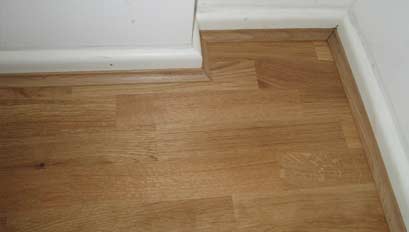
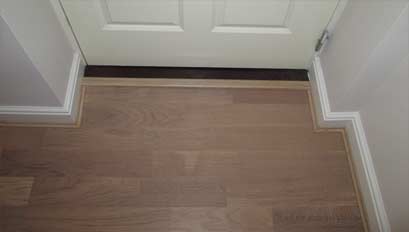
6. Finishing work — Threshold strips and transition profiles fitted at doorways and room transitions; skirting board or beading installed to cover expansion gaps at walls; door trimming where reduced floor-to-door clearance requires it.
7. Final inspection and clean-up — Floor inspected for alignment, tight joints, and consistent appearance. Installation debris removed. Written aftercare instructions provided.
Frequently Asked Questions — Laminate Floor Installation in London
Is laminate suitable for a London buy-to-let flat? Yes — laminate is one of the most practical choices for London rental properties. It is durable, easy to clean, resistant to the kind of surface wear that accumulates during a tenancy, and straightforward to replace section by section if damaged. For rental properties, we typically recommend an AC4-rated product of at least 10mm thickness with an acoustic underlay appropriate for the building type. The lower cost compared to engineered wood also means a better return on investment for landlords.
My lease requires acoustic underlay — what specification do I need? Lease acoustic requirements vary between buildings and are typically expressed as a minimum weighted impact sound reduction value (ΔLw). The underlay specification needed to meet this requirement depends on the existing floor construction and the laminate product being installed. We advise on compliant underlay options during the site visit and can provide a written specification for your managing agent or freeholder on request.
Can laminate be installed in a kitchen? Laminate can be installed in a kitchen where surface spills are wiped up promptly and standing water does not accumulate around appliances. Most modern laminate products with water-resistant joints can tolerate the typical moisture levels of a domestic kitchen. However, for areas immediately adjacent to a sink or dishwasher, or in galley kitchens where the floor is frequently wet, vinyl floor installation is the safer and more durable choice.
How long does laminate floor installation take? A standard room (15–25 m²) typically takes half a day to one full day, including subfloor preparation and installation. A complete ground floor (50–80 m²) is usually one to two days. Laminate installs faster than most other floor types due to the simplicity of the click system, which makes it particularly practical for London landlords working to tight turnaround timescales between tenancies.
Can laminate be installed over existing tiles or vinyl? In some cases, yes — if the existing surface is flat, well-bonded, and not so thick that the additional floor height creates problems at doors and thresholds. We assess the existing surface during the site visit and advise whether overlay or removal is the more appropriate approach. Old carpet, loose vinyl, or uneven tiles must always be removed before laminate installation.
Call us on 020 7036 0625 or request a free quote online — we respond to all laminate floor installation enquiries the same working day.