Monday - Friday 07:30 - 17:30, Saturday 07:30 - 16:00
LVT Floor Installation in London
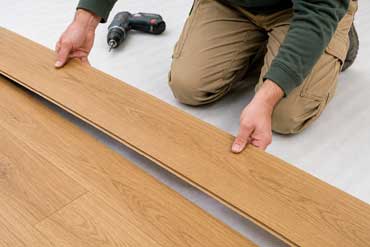
LVT (Luxury Vinyl Tile) installation is the fitting of multi-layer synthetic flooring — comprising a rigid or flexible core, a photographic design layer, and a clear wear coat — in either glue-down or click-lock format, onto a flat prepared subfloor to produce a highly durable, fully waterproof floor surface suited to the wettest and most demanding environments in any London property.
LVT has become one of the most widely specified floor types in London over the past decade, and for good reason. It is the only hard flooring that is genuinely waterproof — not just water-resistant — making it the practical choice for London kitchens, bathrooms, utility rooms, and any other area where real or engineered wood would be at risk from moisture. At the same time, modern LVT products — particularly the rigid core SPC (Stone Plastic Composite) and WPC (Wood Plastic Composite) formats — have a realistic wood or stone visual quality that bears little resemblance to the vinyl flooring of previous generations.
Flooring Services London installs LVT flooring across London for residential and commercial clients, as part of our full professional floor fitting services in London. LVT glue-down installation is priced from £20/m²; click-fit LVT from £18/m². Our complete floor fitting and restoration price guide covers all charges in full.
LVT vs. Laminate vs. Engineered Wood — Choosing the Right Floor for Your London Property
These three floor types are frequently compared, and understanding their differences helps make the right decision for a specific London room or property.
LVT is fully waterproof — the entire board construction is synthetic and impervious to moisture. It can be installed in wet rooms, directly adjacent to showers, in ground-floor rooms with damp concrete subfloors, and in any other environment where moisture is a regular factor. It cannot be sanded or refinished — when it eventually wears out it needs to be replaced, though modern wear coats on quality LVT products last 15–25 years in residential use. LVT is the correct choice wherever water resistance is the priority.
Laminate has some surface water resistance at the joints in modern products but is not waterproof — prolonged moisture exposure causes the HDF core to swell and delaminate. It is not suitable for bathrooms, utility rooms, or areas with persistent moisture. LVT outperforms laminate floor installation in London properties wherever moisture is a concern.
Engineered wood has a real hardwood surface that can be lightly sanded and refinished, giving it a longer and more renewable service life than LVT. It is more moisture-tolerant than solid timber but is not waterproof and is not appropriate for rooms where the floor will regularly be wet. In dry areas of a London property — living rooms, bedrooms, hallways — engineered wood floor installation is often the better long-term investment; in wet areas, LVT is the practical choice.
LVT Product Types
Not all LVT is the same, and the product format significantly affects performance, feel underfoot, and suitability for different London subfloor conditions.
Flexible LVT (traditional vinyl tile/plank) — thinner, flexible sheets or tiles typically 2–3mm thick that conform slightly to minor subfloor irregularities. Generally glued down. Requires a very flat subfloor as any imperfection in the subfloor telegraphs through the thin flexible material over time. Most commonly specified in commercial environments where the subfloor preparation is controlled.
Rigid core LVT — SPC (Stone Plastic Composite) — a rigid board with a dense stone-composite core, typically 4–6mm thick with an attached underlay layer. The rigid core bridges minor subfloor irregularities more effectively than flexible LVT and produces a floor that feels more solid underfoot. SPC is dimensionally stable across a wide temperature range — it does not expand and contract significantly with heat — making it suitable for conservatories, rooms with large south-facing windows, and other environments with significant temperature variation. Currently the most popular LVT format for London residential installations.
Rigid core LVT — WPC (Wood Plastic Composite) — similar to SPC but with a wood-composite core that is slightly softer and warmer underfoot. Slightly less dimensionally stable than SPC at temperature extremes but comfortable in standard residential use. Less common than SPC in current London installations.
Glue-down LVT — flexible or rigid LVT adhered directly to the subfloor with a pressure-sensitive or hard-set adhesive. Produces the most stable, squeak-free result and the most realistic feel underfoot — the floor does not move at all. The preferred specification for commercial environments and for residential installations over heated subfloors or where maximum stability is required.
Click-fit LVT — rigid core planks or tiles that interlock at the joints without adhesive, floating over an underlay. Faster and less expensive to install than glue-down; easier to replace individual planks if damaged. The most common residential LVT installation method in London.
Subfloor Requirements for LVT Installation in London
LVT — particularly flexible and thinner rigid formats — is more demanding of subfloor flatness than most other floor types. Any imperfection in the subfloor surface that is not resolved before installation will eventually show through the LVT surface as a visible ridge, dip, or indentation.
The subfloor must be flat to within 3mm over a 1.8m span for rigid click LVT, and 2mm over 1m for flexible glue-down LVT. These are tighter tolerances than most other floor types, and achieving them in London's older housing stock — where concrete subfloors are often uneven and timber subfloors have decades of movement — typically requires a levelling compound application before installation.
Concrete subfloors — the most common subfloor type for LVT installation in London kitchens, bathrooms, and ground-floor rooms. Levelling compound is applied across the concrete to achieve the required flatness before LVT is installed. For glue-down LVT, the concrete must also be primed with the adhesive manufacturer's specified primer to ensure adequate bond strength. Moisture assessment is still relevant for glue-down LVT over concrete — while LVT itself is waterproof, adhesive bond failure can occur if moisture levels in the concrete are excessively high.
Timber subfloors — for click LVT over timber subfloors, the existing boards must be flat, secure, and free from significant movement. Squeaking or loose boards must be secured before LVT installation. For glue-down LVT over timber, a plywood overlay is typically applied over the existing boards to provide a flat, stable, and sufficiently rigid gluing surface — timber boards alone flex too much for a reliable adhesive bond.
Existing floor coverings — click LVT can often be installed directly over existing hard floor coverings such as ceramic tiles, provided the surface is flat, well-bonded, and the added height is acceptable at doorways and thresholds. Old vinyl or carpet must always be removed before LVT installation.
LVT in London's Kitchens, Bathrooms, and Commercial Spaces
Kitchens — LVT is the most practical hard flooring choice for London kitchens, combining the wood or stone visual that most London homeowners want with the waterproof performance that a kitchen environment demands. SPC rigid core click LVT in a wood-effect plank format is currently the most popular kitchen floor specification in London's renovated period properties and new-build apartments alike.
Bathrooms and wet rooms — LVT is the only wood-effect hard floor that can be installed in a bathroom with confidence. Properly installed with joints sealed at the perimeter and fitted hard against sanitaryware bases, LVT performs reliably in bathroom conditions. For genuine wet rooms with a shower drain in the floor, LVT is not the correct specification — a tiled or resin floor is needed.
Hallways and high-traffic areas — the wear coat on quality LVT products — rated in use classes from Class 23 (residential heavy use) to Class 34 (commercial heavy use) — provides excellent resistance to scratching and scuffing in hallways and entrance areas. LVT in a stone-effect tile format is a popular choice for London hallways where the look of natural stone is desired without the weight, cost, and cold underfoot feel of actual stone.
Commercial properties — LVT is one of the most widely used commercial floor coverings in London's offices, retail spaces, healthcare facilities, and hospitality environments. Commercial-grade LVT products with Class 33 or 34 wear coats provide the durability needed for high-footfall commercial use, and the range of available designs — wood, stone, abstract, and bespoke patterns — makes it suitable for brand-sensitive commercial interiors.
LVT Installation Process
1. Free site visit and assessment — Subfloor assessed for flatness and moisture. Product format (click or glue-down), wear class, and design discussed. Written fixed-price quote provided including any levelling or preparation charges.
2. Subfloor preparation — Levelling compound applied to concrete subfloors where needed; plywood overlay fitted over timber subfloors for glue-down installations; existing floor coverings removed where required.
3. Acclimatisation — Rigid core LVT products should acclimatise at room temperature for 24–48 hours before installation. This is less critical than for wood products but still recommended by most manufacturers.
4. Installation — Click LVT installed floating over the prepared subfloor and underlay, staggered between rows, with expansion gaps at all fixed perimeters. Glue-down LVT installed using the specified adhesive applied to the primed subfloor, with boards pressed firmly into the adhesive and weighted or taped during curing.
5. Finishing work — Threshold strips and transition profiles fitted at doorways; skirting board or beading installed to cover perimeter expansion gaps; door trimming where the new floor height requires it.
6. Final inspection — Floor checked for flat joints, consistent alignment, and secure fixing. Written aftercare instructions provided.
Frequently Asked Questions — LVT Floor Installation in London
What is the difference between LVT and standard vinyl flooring?
LVT (Luxury Vinyl Tile) is a modern multi-layer product with a realistic photographic design layer, a rigid or semi-rigid core, and a durable wear coat. It looks and feels significantly more realistic than traditional vinyl sheet flooring and performs better in terms of durability and dimensional stability. Standard vinyl sheet flooring — the older format — is a single-layer flexible product with a printed surface that has much lower wear resistance and a less realistic appearance. When we refer to LVT on this page we mean the modern multi-layer format, not traditional vinyl sheet.
Can LVT be installed over underfloor heating?
SPC rigid core LVT is compatible with underfloor heating — its dimensional stability means it does not expand and contract significantly with temperature changes. WPC and flexible LVT have varying compatibility depending on the product — always check the manufacturer's UFH rating before installation. We confirm compatibility and calculate floor build-up thermal resistance values before every UFH LVT installation.
Is LVT suitable for a London bathroom floor?
Yes — LVT is the most practical hard floor choice for London bathrooms. It is fully waterproof, comfortable underfoot compared to ceramic tile, and available in designs that closely replicate natural stone and wood. The floor must be installed with perimeter joints properly sealed and fitted hard against sanitaryware bases to prevent water tracking beneath the floor at edges.
How long does LVT last in a London home?
Quality residential LVT products with a 0.3mm or 0.5mm wear coat (Class 23 rating) typically last 15–25 years in normal residential use before the wear coat shows significant degradation. Commercial-grade products with a 0.55mm or 0.7mm wear coat (Class 33–34) last considerably longer in high-footfall environments. Unlike wood floors, LVT cannot be sanded or refinished when it wears — it is replaced rather than restored. For long-term value in dry living areas, solid wood floor fitting in London or engineered wood floor installation may be a better long-term investment.
Can you install LVT in a London flat without acoustic underlay? LVT over a hard subfloor without acoustic underlay transmits impact noise (footsteps) more than most other floor types, as the rigid core transmits vibration efficiently. In a London leasehold flat where the lease specifies minimum acoustic performance, an acoustic underlay beneath the LVT is almost certainly required. Our acoustic underlay and soundproof floor fitting service covers all underlay specifications for lease compliance.
Call us on 020 7036 0625 or request a free quote online — we respond to all LVT floor installation enquiries the same working day.