Monday - Friday 07:30 - 17:30, Saturday 07:30 - 16:00
Floor Waxing in London
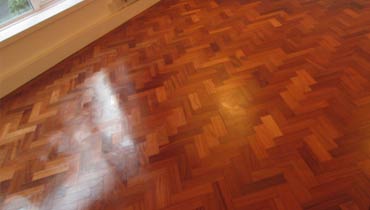
Floor waxing is the application of a protective wax finish — traditional paste wax, liquid wax, or hard-wax oil — to a wood floor surface, providing a natural-looking protective layer that enhances the timber's appearance, repels light moisture and dirt, and can be renewed in sections without a full sand.
Wax is one of the oldest wood floor finishes and remains one of the most appropriate choices for London's original period flooring — Victorian pine floorboards, Edwardian parquet, and early 20th-century oak floors that were originally finished with natural wax or shellac. Unlike lacquer, which forms a hard plastic-like film over the timber surface, wax penetrates the upper wood fibres and sits within them rather than on top, producing a softer, more natural appearance that suits the character of period timber particularly well.
Flooring Services London carries out professional floor waxing and re-waxing across London for residential and commercial properties, as part of our full range of floor maintenance services. We work with all major wax and hard-wax oil products, including Osmo Polyx, Bona Craft Oil, Junckers, and traditional paste waxes, matching the product to the specific floor type and the client's requirements.
Wax vs. Lacquer — Choosing the Right Finish for a London Floor
The choice between wax and lacquer is one of the most common questions we are asked during consultations in London properties, and the answer depends on the floor type, the level of use, and the aesthetic the client wants.
Wax finishes produce a softer, more matt appearance that enhances the natural grain and colour of the timber without adding a surface sheen. They are particularly suited to original period floorboards and parquet in London's Victorian and Edwardian properties, where a lacquered finish can look anachronistically shiny and can obscure the natural character of old-growth timber. Wax is also easier to spot-repair — a worn or scratched area can be re-waxed locally without having to refinish the entire floor, which is a significant practical advantage in a busy household.
The main disadvantage of wax over lacquer is that it requires more frequent maintenance. A lacquered floor can go three to five years between professional treatments; a wax-finished floor in regular use typically needs re-waxing annually or every two years to maintain its protection. Wax also offers less resistance to water and heavy soiling than lacquer — in kitchens, bathrooms, or high-footfall commercial spaces, lacquer or hard-wax oil is usually the more practical choice.
Hard-wax oil (Osmo Polyx, Bona Craft Oil, Rubio Monocoat) is the modern evolution of traditional wax — it combines penetrating oil and wax in a single product, offering better durability and water resistance than paste wax while retaining the natural look and spot-repairability of a wax finish. It has become the most popular maintenance finish for London period floors over the past decade, largely replacing traditional paste wax in new flooring work and restoration projects.
Lacquer forms a hard surface film that offers superior durability and water resistance, is easier to clean with standard domestic methods, and holds its finish longer between professional treatments. It is the better choice for high-traffic areas, rental properties, kitchens, and commercial spaces. See our wood floor recoating page for details on lacquer maintenance.
Floor Waxing Services We Carry Out in London
Re-Waxing (Maintenance Wax Application)
Re-waxing is the routine maintenance treatment for floors already finished with wax or hard-wax oil. The existing wax layer is assessed — if it is intact but depleted, fresh wax is applied directly over it and buffed in. If old wax has built up unevenly or become contaminated, a floor stripping step is carried out first to remove the old wax before fresh product is applied.
The process involves applying the wax product by hand applicator or buffing machine, working in sections across the floor, allowing the wax to penetrate for the specified dwell time, then buffing to the desired sheen level with a rotary buffer and appropriate pad. Most residential re-waxing jobs take half a day to a full day, depending on floor area and whether stripping is needed.
Re-waxing is the recommended annual or biannual maintenance treatment for wax-finished floors in London period properties — original parquet in Edwardian houses across Kensington, Islington, and Hackney, Victorian pine floors in terraced houses throughout south and east London, and oak board floors in inter-war semis across the outer boroughs.
First Wax Application After Sanding
When a floor is sanded back to bare timber, the first wax application is the most important maintenance step — it seals the open grain of the freshly sanded wood and provides the base layer for all subsequent wax maintenance. We typically apply two coats of wax or hard-wax oil after sanding, with buffing between coats, to build up adequate protection before the floor is returned to use.
The first application after sanding is included as part of our floor sanding service when a wax or oil finish is specified. See our sanding page for details on finishes available following a full sand and restoration.
Hard-Wax Oil Application
Hard-wax oil application follows the same principle as traditional wax but uses a two-component product — penetrating oil and wax combined — that provides a more durable and moisture-resistant result. We apply Osmo Polyx, Bona Craft Oil, and Rubio Monocoat products, selecting the appropriate product for the floor species, age, and intended use.
Hard-wax oil is applied in one or two thin coats, worked into the timber surface with an applicator pad or buffing machine, and buffed off before curing. It is critical not to apply hard-wax oil too thickly — excess product that does not penetrate the timber stays on the surface, dries tacky, and must be removed. We work in thin coats and follow the manufacturer's application specifications precisely.
Hard-wax oil floors are typically re-oiled rather than re-waxed for routine maintenance — see our wood floor re-oiling page for details on the re-oiling process and frequency.
Commercial Floor Waxing
For commercial properties in London — restaurants with original parquet, hotel lobbies with period timber floors, heritage buildings and public spaces — we carry out waxing and hard-wax oil application outside trading hours to minimise disruption. Commercial wax-finished floors require more frequent maintenance than residential floors due to higher footfall, and we can provide scheduled maintenance programmes for clients with ongoing requirements.
Floor Waxing Process
1. Assessment and product selection — We visit the property and examine the existing floor finish. If a wax or oil finish is already in place, we identify the product type and assess whether re-waxing directly, stripping and re-waxing, or a full floor sanding is the most appropriate treatment. We select the wax or hard-wax oil product best suited to the floor species, age, and use.
2. Cleaning — The floor is deep cleaned using a finish-compatible cleaner to remove surface dirt, residue, and any incompatible product buildup before wax is applied.
3. Stripping (where needed) — Where old wax has built up unevenly or is contaminated, chemical stripping removes the old wax layer entirely before fresh product is applied.
4. Wax application — Wax or hard-wax oil applied in thin coats using an applicator pad or buffing machine, worked section by section across the floor. Product allowed to penetrate for the specified dwell time.
5. Buffing — Rotary buffer with appropriate pad worked across the waxed surface to achieve the specified sheen level — from a low, almost invisible natural sheen through to a soft lustre. Hard-wax oil products are buffed off while still slightly tacky; paste wax is buffed after full penetration.
6. Second coat (where specified) — For freshly sanded floors or floors receiving wax for the first time, a second coat is applied after the first has cured, following the same process. Second coats are not always required for routine re-waxing of maintained floors.
7. Curing and aftercare — Waxed floors are walkable in socks within a few hours but benefit from 24–48 hours before furniture is replaced and normal use resumes. We provide written aftercare guidance and product recommendations for ongoing home maintenance.
How Often Does a Wax-Finished London Floor Need Re-Waxing?
| Situation | Recommended re-waxing frequency |
|---|---|
| Residential wax floor, light use | Every 2 years |
| Residential wax floor, busy household | Annually |
| Residential hard-wax oil floor | Every 1–2 years (re-oiling) |
| Rental or buy-to-let property | Between each tenancy |
| Commercial or hospitality floor | Every 6–12 months |
These are approximate intervals — the actual condition of the floor is the best guide. A floor that is looking dull, showing worn patches in high-traffic areas, or where the wax no longer beads water, is ready for re-waxing. Leaving a wax floor without maintenance until the finish has fully worn through means the subsequent treatment requires stripping and full re-application rather than a straightforward re-wax, which takes longer and costs more.
Floor Waxing Costs in London
Floor waxing and cleaning & polishing services are priced from £10/m² for recoating treatments and £9/m² for cleaning and polishing, in line with our full price list. The exact cost for your floor depends on its size, condition, the product specified, and whether stripping is needed before waxing. All costs are confirmed in writing following a free site visit — there are no hidden additions to the quoted price. Properties within the London ULEZ and Congestion Charge zones may include a daily access surcharge, stated explicitly in every written quote.
Frequently Asked Questions — Floor Waxing in London
Can I wax a floor that currently has a lacquer finish?
No — wax cannot be applied directly over lacquer. Lacquer forms a sealed surface film that prevents wax from penetrating the timber. Applying wax over lacquer simply sits on the surface, does not bond, and wipes off. If you want to switch from a lacquer to a wax finish, the lacquer must be fully removed through floor sanding before wax is applied. We assess the existing finish during the site visit and advise accordingly.
What is the difference between floor waxing and floor recoating?
Floor waxing applies a penetrating wax or hard-wax oil product into the timber surface, producing a natural matt or low-sheen finish. Floor recoating applies a new layer of lacquer over the existing lacquer surface, renewing the hard protective film on top of the wood. The two treatments are for different finish systems and are not interchangeable — the right treatment depends entirely on what finish is currently on your floor.
My wax floor looks dull and dirty despite regular mopping — what is causing it?
The most likely cause is product buildup from domestic floor cleaners or furniture sprays that contain silicone or wax emulsions incompatible with the floor's finish. This buildup prevents the floor from responding to normal cleaning and dulls the surface progressively. A professional wood floor cleaning or floor stripping removes the contamination, after which re-waxing restores the original appearance. We assess the surface during the site visit and confirm the most appropriate treatment.
How long after waxing can I walk on the floor and replace furniture?
Wax-finished floors are typically walkable in socks within two to four hours of application. We recommend waiting 24 hours before replacing furniture and 48 hours before resuming full normal use, to allow the wax to fully cure and harden before it is subjected to concentrated point loads from furniture feet.
Do you re-wax floors in occupied London properties?
Yes — re-waxing is one of the least disruptive maintenance services we offer. Most wax products have low odour, produce no significant dust, and the floor is usable again within hours. It is well-suited to occupied London homes, rental properties between tenancies, and commercial premises outside trading hours.
Call us on 020 7036 0625 or request a free quote online — we respond to all floor waxing enquiries the same working day.