Monday - Friday 07:30 - 17:30, Saturday 07:30 - 16:00
Wood Floor Cleaning in London
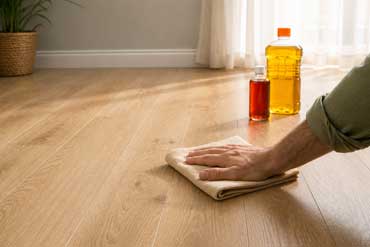
Wood floor cleaning is the process of removing ingrained dirt, cleaning product residue, surface deposits, and finish contamination from a wood floor using professional equipment and finish-compatible cleaning solutions — restoring the floor's appearance and preparing it for maintenance treatments such as floor polishing, wood floor recoating, or wood floor re-oiling.
Professional wood floor cleaning is distinct from everyday domestic mopping. It uses specialist pH-neutral cleaning solutions formulated for specific finish types, applied with controlled moisture and mechanical scrubbing where needed, to clean the floor thoroughly without damaging the finish or allowing water to penetrate into the timber. It is a more intensive and technically careful process than routine home cleaning, and produces results that everyday products and methods cannot achieve.
Flooring Services London carries out professional wood floor cleaning across London as a standalone service and as part of our broader floor maintenance offering. We work with all finish types — lacquer, oil, hard-wax oil, wax, and unfinished wood — in residential and commercial properties throughout all London boroughs.
Why Professional Wood Floor Cleaning Is Needed
The most common reason London wood floors need professional cleaning is cumulative residue from years of incorrect domestic cleaning products. Many household floor cleaners — including products sold specifically as "wood floor cleaners" or "floor shine restorers" — contain wax emulsions, silicone compounds, or polymer-based shine additives that build up invisibly on the floor surface over months and years. This buildup:
- Dulls the floor's appearance despite regular cleaning, creating a flat, cloudy surface that no amount of mopping improves
- Prevents maintenance products — recoats, polish, oil — from bonding correctly to the finish beneath, causing fish-eye, peeling, or uneven absorption
- Traps dirt within the residue layer, making the floor appear permanently grubby even after cleaning
A professional deep clean removes this residue entirely, restoring the floor's original appearance and preparing the surface correctly for any subsequent maintenance treatment.
Other situations that call for professional cleaning include:
Post-construction or renovation cleaning — wood floors exposed to construction dust, adhesive residue, paint splashes, or plaster dust during building work require specialist cleaning before any finish assessment or maintenance can be carried out.
End-of-tenancy cleaning — London rental properties regularly need professional floor cleaning between tenancies. Heavy soiling, product buildup from tenants using inappropriate cleaners, and surface marks from furniture movement all accumulate over a tenancy and cannot be fully resolved with domestic cleaning methods.
Pre-maintenance preparation — professional cleaning is the essential first step before any recoating, polishing, re-oiling, or waxing. Applying any maintenance treatment over a dirty or contaminated surface produces a poor result — uneven finish, poor adhesion, trapped dirt — regardless of the quality of the product used.
Stain and mark removal — specific stains, including dried food and drink spills, watermarks, black heel marks, and old wax buildup, respond to targeted professional cleaning treatments that are not available in domestic products.
What We Clean and How
Lacquered and Surface-Sealed Wood Floors
Lacquered floors — the most common finish in London homes and commercial properties — are cleaned using pH-neutral, water-based cleaning solutions specifically formulated to clean the lacquer surface without stripping or softening it. The solution is applied with a controlled-moisture applicator or a lightly dampened professional cleaning pad and worked across the floor in sections. For stubborn residue or heavy soiling, a single-disc buffing machine fitted with a cleaning pad is used to provide gentle mechanical agitation across the surface.
The critical point with lacquered floors is moisture control. Lacquer forms a surface film over the timber — it is not absorbed into the wood — so it provides reasonable protection against light moisture. However, excessive water, pooling, or moisture forced into board gaps by a soaking wet mop can still reach the timber beneath. We use damp rather than wet cleaning methods, and work in sections that dry quickly.
Products we use: Bona Wood Floor Cleaner, Loba-Wakol Cleaner W, and equivalent pH-neutral professional floor cleaning solutions. We never use vinegar, bleach, or general-purpose household cleaners on wood floors — vinegar is acidic and degrades lacquer finishes over time; bleach strips and discolours timber; most general household cleaners contain additives incompatible with wood floor finishes.
Oiled and Hard-Wax Oiled Floors
Oil and hard-wax oil finishes (Osmo Polyx, Bona Craft Oil, Rubio Monocoat, and similar products) penetrate the wood fibres rather than forming a surface film. This makes them more breathable and easier to spot-repair than lacquer, but they also absorb soiling more readily and require cleaning products specifically designed for oil-finished surfaces.
We clean oiled floors using specialist oil floor cleaners — Osmo Wash & Care, Bona Cleaner for Oiled Floors, and equivalents — that clean the surface without stripping the oil treatment from the wood fibres. For deeply soiled oiled floors, a gentle mechanical scrub with a buffing machine and appropriate cleaning pad is used before the floor is refreshed with a maintenance oil coat. See our wood floor re-oiling page for details on oil refresh treatments.
Wax-Finished Floors
Wax-finished floors — common on original Victorian and Edwardian parquet and pine floorboards in London's period housing stock — require careful cleaning to avoid stripping the wax layer while removing dirt and buildup. We use wax-compatible cleaning solutions that dissolve surface soiling and old wax residue without penetrating into the timber, followed by a light buff and fresh wax application where needed.
Where old wax has built up in uneven layers — creating a patchy, yellowed surface that no amount of mopping will resolve — a professional floor stripping is carried out to remove the old wax entirely before the floor is cleaned and re-waxed. See our floor waxing page for details.
Unfinished and Raw Wood Floors
Raw or unfinished wood floors require the most careful approach to cleaning — with no protective finish layer, moisture goes directly into the timber. We use near-dry cleaning methods with specialist products designed for unfinished timber, working quickly and ensuring thorough drying before any finish treatment is applied.
Common Wood Floor Cleaning Mistakes — and Why They Matter
Over 20 years of working in London properties, the most common floor damage we see from incorrect cleaning includes:
Wet mopping with excess water — the single most damaging routine cleaning habit for wood floors. Water forced into board gaps and joints reaches the timber and subfloor beneath, causing boards to swell, cup, stain grey or black, and eventually rot. A damp — not wet — mop is the correct tool for routine cleaning of any wood floor.
Vinegar and water solutions — widely recommended in domestic cleaning guides as a "natural" floor cleaner. In practice, the acidity of vinegar degrades lacquer and wax finishes over time, leaving the surface dull and increasingly difficult to maintain. We regularly see London floors that have been cleaned with vinegar solutions for years — the finish is typically hazy, streaky, and unreceptive to recoating or polishing.
Steam cleaners — steam cleaning machines deliver heat and moisture simultaneously into the floor surface and joints. Even on well-lacquered floors, repeated steam cleaning causes the finish to cloud, lift, and eventually peel. On oiled or waxed floors, steam strips the finish treatment from the timber entirely. Steam cleaning is not appropriate for any type of wood floor.
Oil sprays and furniture polish — products such as aerosol furniture sprays and oil-based shine products leave a silicone residue on the floor surface that builds up with each application. This residue makes the floor slippery, traps dirt, and creates a barrier that prevents recoating or polishing products from bonding to the finish beneath. Floors treated regularly with furniture polish almost always require a professional strip before any maintenance treatment can be applied.
Supermarket "wood floor cleaner" products — many products sold as wood floor cleaners in UK supermarkets contain wax emulsions or shine additives that build up on the surface with repeated use. While they may make the floor look good initially, the cumulative buildup dulls the finish over time and creates the contamination layer that requires professional cleaning to remove. We recommend using only products specifically recommended by the floor finish manufacturer — Bona, Osmo, Loba, or Rubio Monocoat, all of which produce cleaning products designed for their respective finish systems.
Professional Wood Floor Cleaning Costs in London
| Service | Typical cost |
|---|---|
| Professional deep clean — residential (per m²) | priced on survey |
| Pre-maintenance clean (as part of recoat or polish) | priced on survey |
| End-of-tenancy deep clean (per m²) | priced on survey |
| Post-construction clean (per m²) | priced on survey |
| Commercial deep clean (priced on survey) | priced on survey |
All prices confirmed in writing following site assessment. ULEZ and Congestion Charge zone surcharges are stated explicitly in the quote where applicable.
Frequently Asked Questions — Wood Floor Cleaning in London
Can a professional clean restore a floor that looks permanently dull despite regular mopping?
In most cases, yes — persistent dullness despite cleaning is almost always caused by product residue buildup on the surface, typically from domestic cleaners containing wax, silicone, or polymer additives. A professional deep clean removes this residue entirely and usually restores the floor's original appearance. If the dullness is caused by finish wear rather than contamination, a wood floor recoating or floor polishing treatment may also be needed — we assess and advise during the site visit.
Is professional wood floor cleaning the same as steam cleaning?
No — and steam cleaning is actually one of the most damaging things you can do to a wood floor. Steam forces heat and moisture into the floor surface and joints simultaneously, causing finish clouding, lifting, and peeling in lacquered floors, and stripping the oil treatment from oiled floors. Professional wood floor cleaning uses controlled-moisture, pH-neutral chemical cleaning solutions and mechanical scrubbing — no steam, no excessive moisture, no heat.
Do I need to clear the room before a professional clean?
Ideally yes — furniture removal allows us to clean the entire floor area evenly and reach edges and corners properly. For large rooms where moving all furniture is impractical, we can work around it in sections, though the result is better on a cleared floor. We are happy to move lighter items as part of the service.
How long does professional wood floor cleaning take?
A standard room (15–25 m²) takes approximately one to two hours, including preparation, cleaning, and drying time. A full ground floor (50–80 m²) is typically a half-day job. Where stripping is required before cleaning, the overall time is longer — we confirm the expected duration in the written quote.
My London rental property floor looks heavily soiled after a tenancy — can it be cleaned rather than sanded?
Often yes. Heavy soiling, scuff marks, and product buildup from a tenancy can frequently be resolved with a professional deep clean and recoat, from £10 per m², rather than a full sand, starting from £25 per m². We assess the floor honestly and recommend the most cost-effective approach — if cleaning and recoating will achieve the required result, that is what we will recommend.
Call us on 020 7036 0625 or request a free quote online — we respond to all wood floor cleaning enquiries the same working day.