Monday - Friday 07:30 - 17:30, Saturday 07:30 - 16:00
Wood Floor Recoating in London
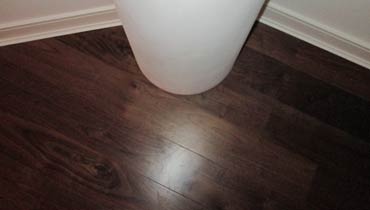
Wood floor recoating is the application of a fresh coat of finish — lacquer, hard-wax oil, or maintenance oil — directly over an existing wood floor finish, without sanding the floor back to bare timber. It renews the protective layer, restores the floor's appearance, and extends the time before a full floor sanding and refinishing is needed.
Recoating is the most cost-effective professional maintenance treatment available for a lacquered or oiled wood floor. At from £10/m², it costs a fraction of a full sand and refinish, can be completed in a single day for most residential floors, and produces a result that is often close to a full refinish in appearance — provided the floor is in the right condition to receive it.
Flooring Services London carries out wood floor recoating across London for residential and commercial properties, as part of our full range of floor maintenance services. We recoat both lacquered and oiled floors, using finish-compatible products matched to the existing coating on your floor. Identifying the existing finish correctly and confirming compatibility before applying any recoat product is the essential first step — and one we carry out on every job without exception.
Recoating vs. Sanding and Refinishing — What Is the Difference?
This is the most important distinction to understand when deciding which service your floor needs.
Recoating applies a new finish coat over the existing one. The existing finish remains in place — it is lightly abraded to provide a mechanical key for the new coat, cleaned to remove all contamination, and a fresh coat is applied on top. The timber beneath is not touched. Recoating works when the existing finish is intact but worn, dull, or thin — the new coat bonds to the old one and restores the protective and aesthetic properties of the finish system.
Sanding and refinishing removes the existing finish entirely by sanding the floor back to bare timber, then applies a completely fresh finish system from scratch. This is needed when the existing finish has failed — worn through to bare wood, peeling, delaminating, or too contaminated to recoat over — or when the floor has structural issues such as gaps, damaged boards, or deep scratches in the timber that need to be addressed before refinishing.
The key practical point: recoating only works when the existing finish is still fundamentally intact. A floor where the lacquer has peeled, where bare wood is exposed in worn areas, or where the finish has been contaminated with silicone or incompatible products cannot be recoated successfully — the new coat will not bond and the result will be poor. We assess finish condition as part of every recoating site visit and will tell you honestly if sanding is the more appropriate treatment.
What recoating cannot do:
- Remove deep scratches that have penetrated through the finish into the timber — these require wood floor repair or sanding
- Change the colour of a floor — colour changes require sanding to bare wood and restaining before refinishing
- Fix structural problems — gaps, loose boards, squeaks — which require wood floor repair first
- Restore a floor where the finish has completely failed or where bare wood is exposed
Types of Wood Floor Recoating We Carry Out in London
Lacquered Floor Recoating
Lacquer recoating is the most commonly requested recoating service in London. Water-based lacquers — Bona Mega, Bona Traffic HD, Junckers Strong, and similar products — are the standard finish on the majority of London's residential and commercial wood floors, and they are well-suited to recoating as a maintenance treatment because successive coats bond reliably to cured lacquer when the surface is correctly prepared.
The existing lacquer surface is lightly abraded with a fine abrasive screen or pad mounted on a buffing machine — removing the sheen and opening the surface without removing meaningful material — then cleaned thoroughly to remove all dust and residue. A fresh coat of compatible lacquer is applied by roller or applicator, allowed to dry, and a second coat applied where specified. The result is a renewed, even finish across the entire floor.
For London's busy rental and buy-to-let sector, lacquer recoating between tenancies is one of the most practical floor maintenance solutions available. A complete ground floor can typically be recoated in a single day, starting from £10/m², returning the floor to a condition close to freshly sanded at a fraction of the cost and without the disruption of a full sand.
For commercial properties — offices, restaurants, retail spaces across London — recoating with Bona Traffic HD provides an exceptionally hard and durable refresh that withstands high footfall. We carry out commercial recoating outside trading hours to avoid business disruption.
Oiled Floor Recoating
Oiled floor recoating — more commonly referred to as re-oiling — applies a fresh maintenance coat of the appropriate oil or hard-wax oil product over a depleted but intact oiled surface. The process and requirements differ from lacquer recoating: oil products penetrate the timber fibres rather than forming a surface film, so preparation involves cleaning and sometimes light abrasion rather than mechanical keying.
Compatibility between the existing oil finish and the recoat product is critical. Different oil systems — Osmo Polyx, Bona Craft Oil, Rubio Monocoat, Junckers Bio Oil — are not always interchangeable, and applying an incompatible product over an existing oil finish can prevent proper penetration and result in a tacky or uneven surface. We identify the existing finish and use the correct compatible product on every job.
Oiled floor recoating is priced from £10/m², in line with lacquer recoating. See our wood floor re-oiling page for full details on the re-oiling process, product selection, and maintenance frequency.
When Is Recoating the Right Choice for a London Floor?
Recoating is appropriate when all of the following apply:
The finish is worn but intact — the lacquer or oil has become dull and thin in high-traffic areas, but has not worn through to expose bare timber. Light surface scratches confined to the finish layer are acceptable; deep scratches into the wood are not.
The floor is structurally sound — no significant gaps between boards, no loose or damaged boards, no squeaking that would indicate subfloor movement. Recoating over a floor with structural issues does not address those issues and the result will be poor.
The existing finish is compatible — the current finish must be identified and the recoat product confirmed as compatible before application. The most common compatibility failure is silicone or wax contamination from domestic cleaning products, which prevents lacquer from bonding. We test compatibility as part of every site visit.
The floor has not been recoated too many times — each recoat adds a layer of finish to the floor surface. After several recoats, the finish buildup can become uneven, begin to peel at edges, or lose adhesion. A floor that has been recoated many times without an intermediate sand may require a full sand to reset the finish system before recoating can continue to be effective.
Common situations in London where recoating is the right call:
- Rental property floor dull and scuffed after a tenancy, but with no serious damage
- Office or retail floor losing sheen in high-traffic areas, but structurally sound
- The residential living room or hallway floor is looking tired after three to five years of use
- Floor was recently sanded and finished, but requires a maintenance coat after one to two years of use
Wood Floor Recoating Process
1. Free site visit and assessment — We examine the floor, identify the existing finish, assess its condition and compatibility for recoating, check for structural issues that would need addressing first, and confirm whether recoating is appropriate or whether sanding is needed. Written quote provided before any work begins.
2. Deep cleaning — The floor is cleaned with a finish-compatible professional cleaner to remove ingrained dirt, wax residue, silicone contamination, and cleaning product buildup. This step is non-negotiable — applying recoat over a contaminated surface is the single most common cause of recoating failure. See our wood floor cleaning page for details.
3. Compatibility test — Where there is any uncertainty about the existing finish type or the recoat product's compatibility, we carry out a small test application in an inconspicuous area and assess adhesion before proceeding with the full floor.
4. Light abrasion — The floor surface is lightly abraded with a fine abrasive screen on a buffing machine to remove the existing sheen, open the surface for bonding, and smooth any minor surface irregularities. This is not sanding — no timber is removed, only the very top of the existing finish is scuffed.
5. Dust removal — All abrasion dust is removed by vacuuming and tack cloth. Any dust remaining on the surface at this stage will be trapped under the recoat and visible in the finished result.
6. Recoat application — The selected finish product is applied by roller or applicator pad in a thin, even coat across the entire floor. Edges and corners are cut in by brush or pad applicator. The floor is left to dry undisturbed.
7. Second coat (where specified) — For floors requiring additional protection or where the first coat has been absorbed unevenly due to finish depletion, a second coat is applied after the first has dried — typically two to four hours for water-based lacquer. Most routine recoating jobs require one coat; significantly depleted floors may benefit from two.
8. Curing and aftercare — Water-based lacquer recoats are walkable in socks within two to three hours and ready for furniture after 24 hours. Full cure and maximum hardness is reached after five to seven days. We provide written aftercare instructions and advise on compatible cleaning products to maintain the finish going forward.
Wood Floor Recoating Costs in London
| Service | Your price |
|---|---|
| Wood floor recoating — lacquered floors | from £10/m² |
| Wood floor recoating — oiled floors | from £10/m² |
| Wood floor cleaning & polishing | from £9/m² |
*All prices shown are exclusive of VAT.
Prices are confirmed in writing following the free site visit. The exact cost depends on floor area, condition, number of coats required, and property location. Properties within the London ULEZ and Congestion Charge zones may include a daily access surcharge, stated explicitly in every written quote.
For full pricing across all services, see our prices page.
Frequently Asked Questions — Wood Floor Recoating in London
How do I know if my floor can be recoated or needs a full sand?
The key indicators are: whether bare wood is visible anywhere on the floor (if yes, sanding is needed); whether the finish is peeling or delaminating at edges (if yes, sanding is needed); whether the floor has been cleaned with silicone-based products that may prevent adhesion (a clean and compatibility test determines this); and whether structural issues such as gaps or damaged boards are present (these need repair before recoating). We carry out this assessment during the free site visit and give you an honest recommendation.
Can recoating change the sheen level of my floor — for example, from satin to matt?
Yes, within limits. Applying a matt recoat over a satin lacquer will reduce the sheen level noticeably. Applying a satin recoat over a very matt floor will increase the sheen. However, the effect is moderated by the existing finish still showing through — a single recoat will not produce a dramatic sheen change. For a precise sheen change, a full sand and refinish with the specified sheen is the more reliable approach. We advise on what to expect from the recoat product during the site visit.
My floor was cleaned with Flash or Mr Muscle for years — can it still be recoated?
Possibly, but it will require professional cleaning and a compatibility test first. Many general household cleaners contain surfactants, wax emulsions, or polymer compounds that leave a residue incompatible with lacquer recoating. Our professional wood floor cleaning process removes this residue. We then test a small area before committing to the full recoat. In some cases where contamination is very heavy, a floor stripping step is needed before cleaning and recoating.
How long does wood floor recoating take in a London home?
A standard room (15–25 m²) takes approximately two to four hours, including preparation, abrasion, cleaning, coat application, and initial drying. A full ground floor (50–80 m²) is typically a full day's work. Where two coats are required, the second coat is applied the same day after the first has dried — usually two to four hours later for water-based lacquer. The floor is walkable in socks within two to three hours of the final coat.
Do you recoat floors in London rental and buy-to-let properties?
Yes — rental property recoating is one of the most common jobs we carry out across London. Landlords and letting agents use our recoating service to refresh floors between tenancies quickly and cost-effectively, avoiding the cost and downtime of a full sand when the floor is not in need of full restoration. We can coordinate directly with property managers and provide the service on a scheduled basis across a portfolio of properties.
Call us on 020 7036 0625 or request a free quote online — we respond to all wood floor recoating enquiries the same working day.