Monday - Friday 07:30 - 17:30, Saturday 07:30 - 16:00
Flooring Services Beckton, E6 — Floor Sanding, Fitting & Repair
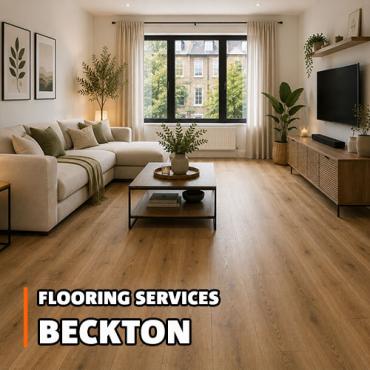
Beckton is a neighbourhood unlike almost anywhere else in east London. While neighbouring areas like Forest Gate or East Ham are defined by their Victorian and Edwardian terraced housing, Beckton's property stock is overwhelmingly post-1980s — a product of the London Docklands Development Corporation, which redeveloped the former gasworks and marshland into thousands of private homes between 1981 and the mid-1990s. The result is a neighbourhood of modern terraces, semi-detached houses, and low-rise apartments, most built on concrete slab subfloors, with a smaller number of older properties surviving on Winsor Terrace and parts of the Cyprus estate. To the south and east, newer developments like Beckton Parkside near Gallions Reach are adding a fresh wave of contemporary apartments and houses to the area.
That specific housing profile matters enormously for flooring. Working in Beckton is different from working in a Victorian terrace borough. The subfloor conditions, the original floor coverings, and what lies beneath the carpet are all shaped by the era and method of construction — and getting those details right from the outset is the difference between a floor that performs well for years and one that fails prematurely. We work across Beckton regularly, and we bring that area-specific knowledge to every job.
To discuss your project or arrange a free site visit, call us on 020 7036 0625 or request a free estimate online.
Floor Sanding and Finishing in Beckton
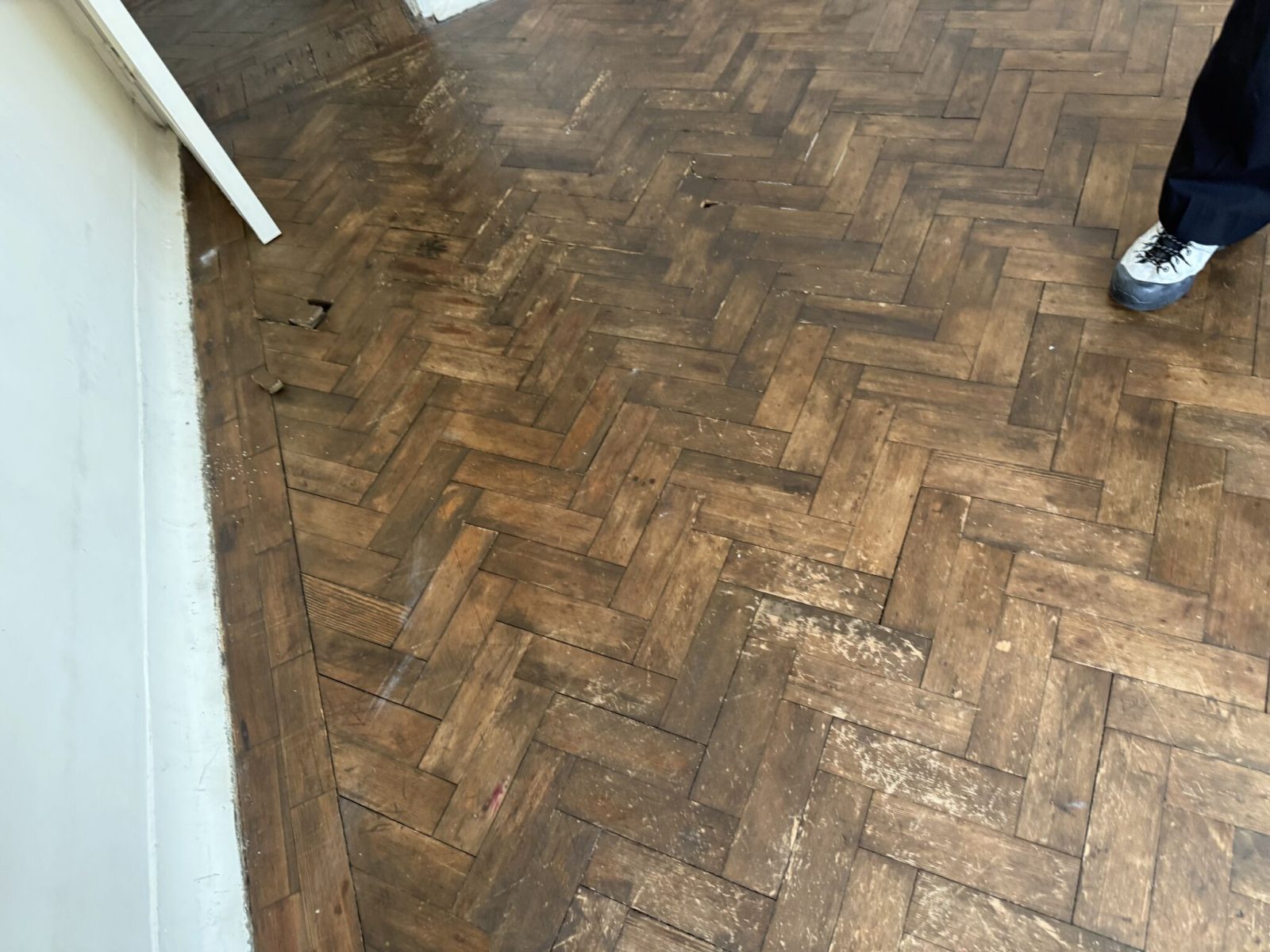
Floor sanding is the process of removing the worn or damaged surface layer of a timber floor using industrial belt sanders and edge equipment, then applying a fresh protective finish to restore the floor's appearance and durability. In Beckton, this work arises most commonly in the 1980s and 1990s LDDC-era properties — many of which had softwood strip flooring or chipboard beneath fitted carpet that was standard practice at the time. Where original softwood boards are present and in sound condition, sanding and refinishing them is a cost-effective way to transform the look of a room without replacement.
The finish we apply depends on how the floor will be used and what look you want. Lacquer gives a hard-wearing, easy-clean surface well suited to hallways and living rooms in family homes. Hardwax oil produces a more natural, matt finish that is easier to spot-repair if individual boards get scratched or stained — popular in Beckton's private rented properties where landlords want a practical, attractive floor that holds up to tenant use. Staining before sealing can shift the tone of the timber significantly, a useful option where the natural colour of older softwood boards is uneven or uninspiring.
Gap filling is frequently required before finishing in the LDDC-era properties. Decades of seasonal movement open up joints between boards, and flexible resin filler matched to the wood tone addresses this before the finish goes down. For properties in the Cyprus estate or Winsor Terrace area where original or earlier-period boards may exist, we assess condition carefully — these boards can have significant value if they are structurally sound and thick enough to sand.
For a full breakdown of sanding and finishing costs, see our floor sanding and finishing pricing guide.
Wood Floor Fitting in Beckton
Which floor type suits a Beckton property? The answer depends primarily on the subfloor and whether underfloor heating is present — both of which vary across Beckton's different housing eras.
In the post-1980s terraces and semis that make up the majority of Beckton's housing stock, concrete slab subfloors are the norm. On concrete, engineered wood is almost always the right choice. It is dimensionally stable, can be glued or floated directly to concrete with appropriate preparation, and handles the humidity variations that come with modern central heating far better than solid wood. Species and board width vary widely — from narrow natural oak planks that suit the more modest room proportions of LDDC-era terraces, to wider brushed or smoked boards in the newer Bellway-built apartments near Gallions Reach DLR.
In the newer developments at Beckton Parkside and Gallions Reach, underfloor heating is increasingly common. For these properties, we specify only engineered boards rated for use with UFH systems, with strict controls on adhesive type and board acclimation — rushing installation without allowing boards to acclimatise to the room's temperature and humidity is one of the most common causes of joint gaps or cupping after the heating season begins.
Solid wood is fitted in Beckton where conditions are appropriate — typically in the older housing on the Cyprus estate where suspended timber subfloors may exist, or where a client specifically wants the option of multiple re-sands over the floor's lifetime. We assess subfloor stability and ventilation before recommending solid in any property.
LVT (luxury vinyl tile) is covered in the section below, but it is worth noting here that for Beckton's substantial stock of rental properties and buy-to-let flats, LVT often represents the most practical and durable choice — and we carry out a significant volume of LVT work in this area for both individual landlords and portfolio investors.
For full information on fitting options and what each installation involves, visit our wood floor fitting service page.
Ready to book a free site visit? Call us on 020 7036 0625 or request a free estimate online — we'll assess your subfloor and give you honest advice on the best option for your property.
Wood Floor Repair in Beckton
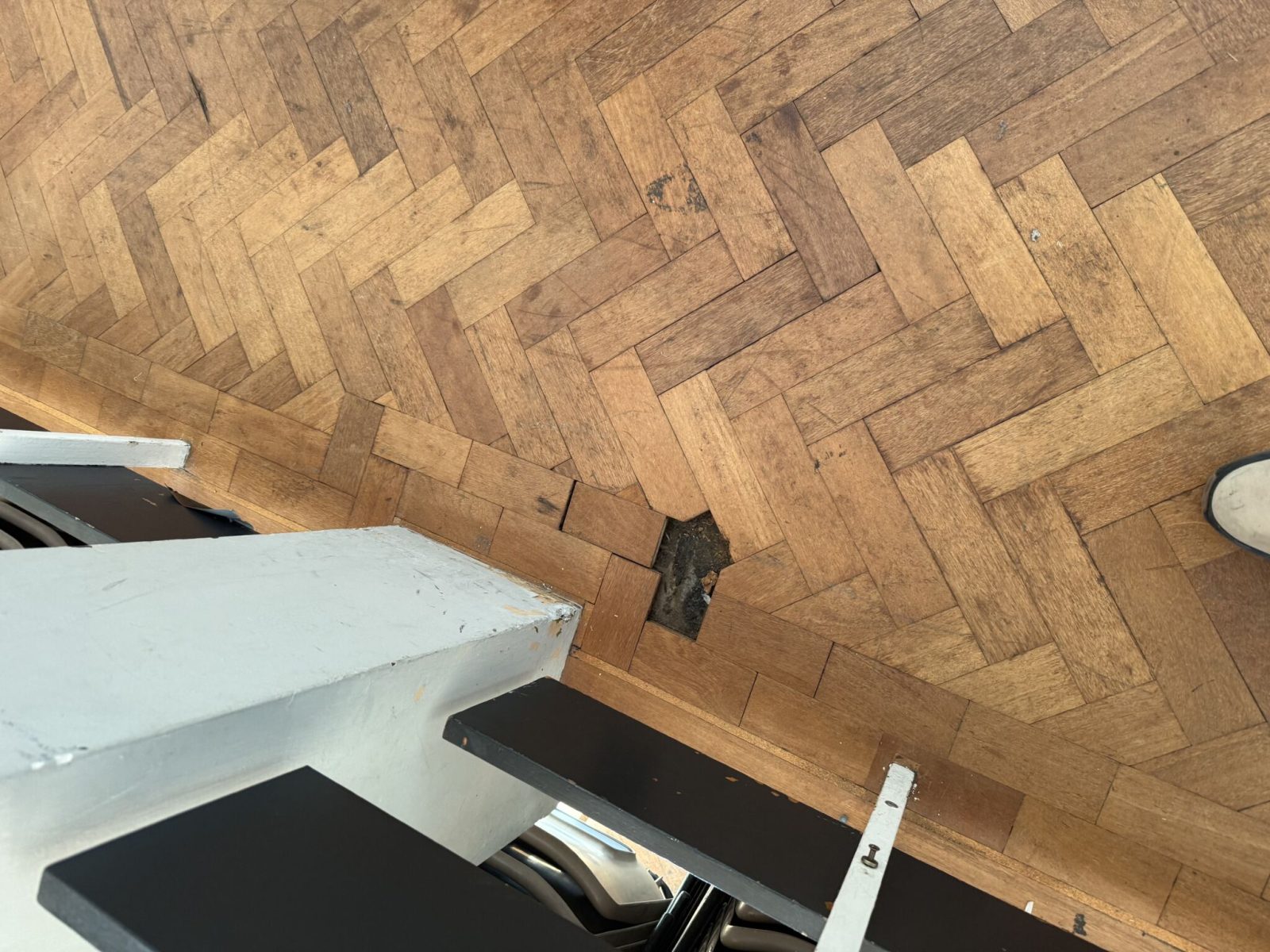
Wood floor repair in Beckton most commonly involves issues that develop over time in the 1980s and 1990s housing stock: squeaking boards, loose fixings, surface scratches, and gaps between boards that have widened with seasonal movement. In some LDDC-era properties we also encounter delaminating engineered boards from lower-specification products installed during the original development — these can often be addressed without full replacement if the damage is localised.
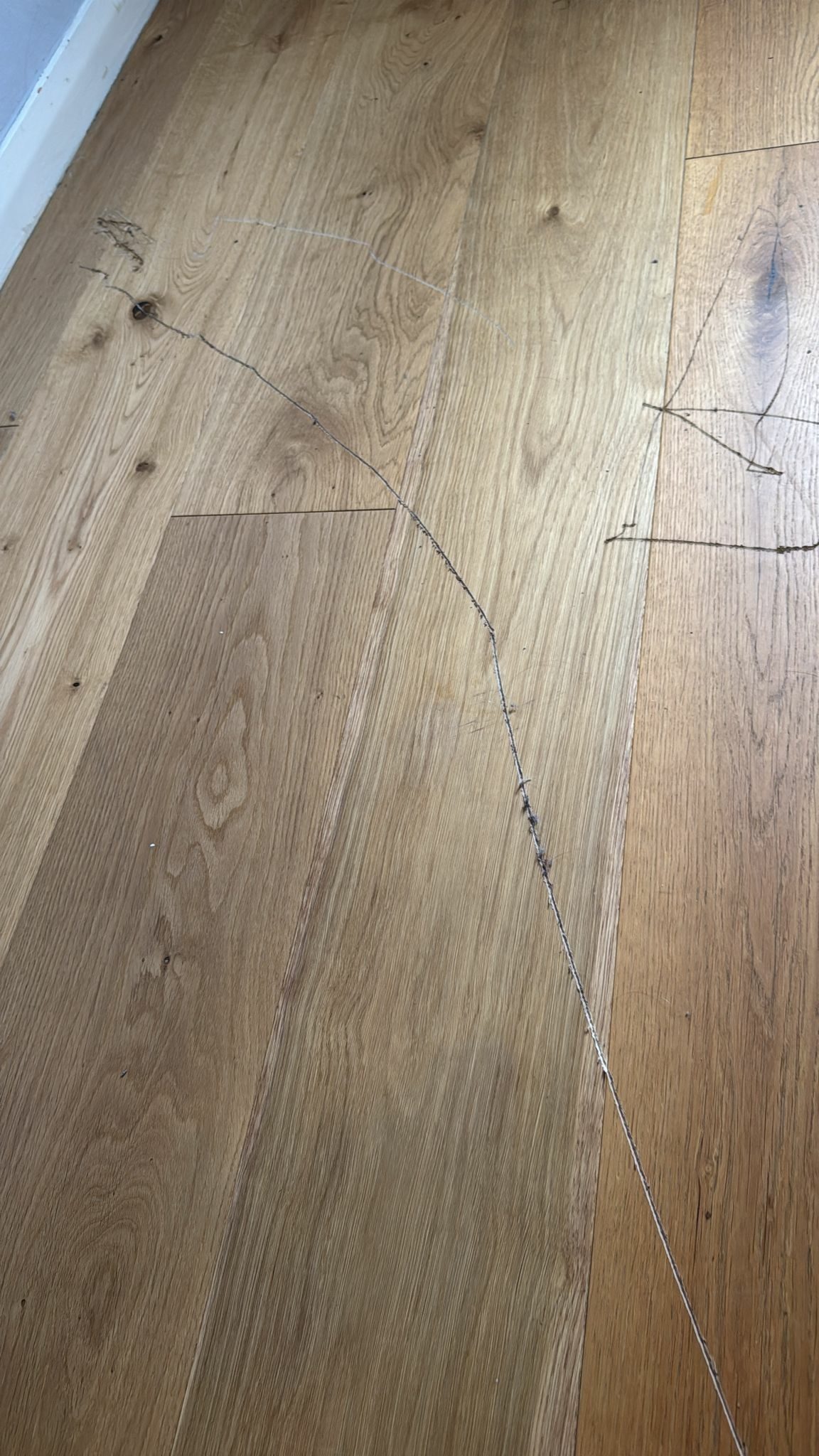
Our repair process starts with a proper diagnosis. Squeaking typically has one of two causes — loose boards rubbing against fixings, or boards rubbing against each other at the joints — and the fix is different for each. We identify the source before starting work rather than applying a surface treatment that masks the problem temporarily. Loose or lifting boards are resecured or replaced, depending on whether the damage is isolated or indicative of a subfloor moisture issue. Scratches and surface damage are assessed for depth: shallow surface scratches in a lacquered floor can often be addressed with a local sand-and-refinish without sanding the entire floor.
For engineered floors — which make up the majority of Beckton's newer flooring installations — repair options depend on the thickness of the wear layer. Thicker-wear-layer boards (3mm+) can be spot-sanded and refinished; thinner boards may require board-for-board replacement in damaged areas, which we can match closely in most cases. We give honest advice on whether repair or full replacement is the more cost-effective route for your specific situation.
Wood Floor Maintenance in Beckton
Regular maintenance is what protects a good floor installation and extends its life significantly — and it is far less disruptive and less expensive than a full sand or replacement. In Beckton, we most commonly carry out maintenance work on oiled and hardwax-finished floors in owner-occupied homes, and commercial-grade maintenance programmes for landlords managing multiple properties in the area.
For oiled floors, the key maintenance treatment is re-oiling: applying a fresh coat of compatible oil to the cleaned, degreased surface every two to four years, depending on foot traffic. This replenishes the protective layer, revives the colour, and prevents the timber from drying out and becoming susceptible to cracking. It is a one-day job for most rooms and adds years of life to the floor. For lacquered floors that have dulled without being damaged, recoating — applying a fresh layer of lacquer over the existing finish without full sanding — is a cost-effective mid-life treatment that restores appearance and protection.
For rental properties in Beckton, a scheduled maintenance visit between tenancies is one of the most effective ways to protect a flooring investment. A recoat or re-oil at the end of a tenancy is typically a fraction of the cost of a full sand and refinish — and avoids the situation where a floor deteriorates to the point where only a full restoration will suffice. We work with many Beckton landlords on this basis and can advise on an appropriate maintenance schedule for your property type and level of use.
Frequently Asked Questions — Flooring in Beckton
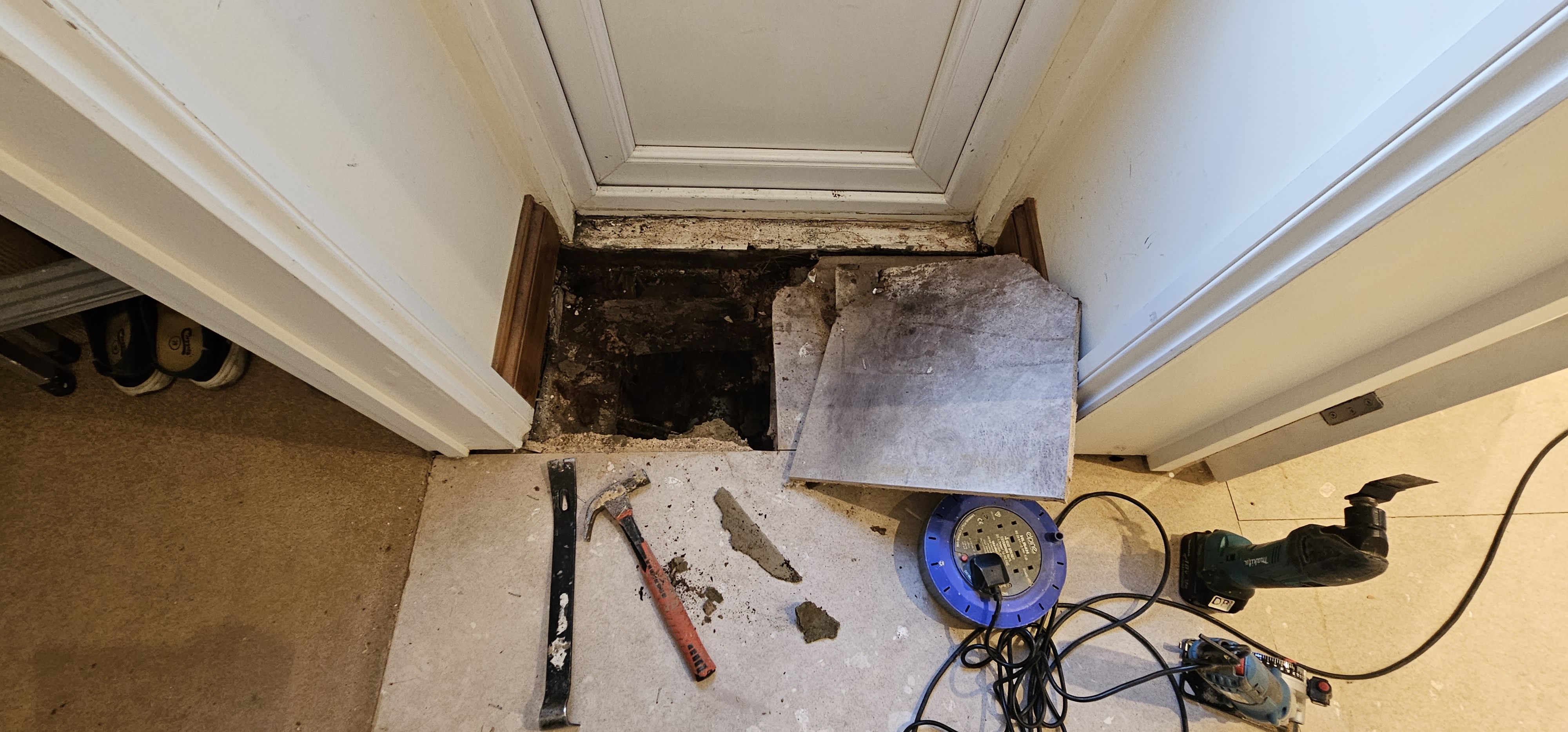
Does the type of subfloor in Beckton's 1980s houses affect which flooring I can use? Yes, significantly. The majority of LDDC-era homes in Beckton were built on concrete slab subfloors, which rules out nail-down solid wood installation and requires specific preparation for both engineered wood and LVT. The key requirements are a flat, dry, structurally sound surface — and we assess all three before recommending a product or method. Properties with moisture ingress through the slab need a damp-proof membrane before any wood-based product is laid.
Can original floorboards from the 1980s Beckton houses be sanded and restored? It depends on the board type and thickness. Some LDDC-era properties have softwood strip boards that are perfectly sandable if they haven't been thinned by previous sanding or damaged by moisture. Others have chipboard, which cannot be sanded. We assess the boards at the free site visit and give you an honest view of whether restoration is viable or whether a new floor is the more practical choice.
I'm a landlord with several Beckton properties — can you manage flooring across all of them? Yes. We work with individual landlords and portfolio investors across Beckton and the wider E6 area. We can coordinate repairs, maintenance visits, and new installations across multiple properties, and we're experienced working around occupied and vacant tenancies. Call us on 020 7036 0625 to discuss a schedule that works for your portfolio.
Is LVT a good choice for the newer Beckton Parkside and Gallions Reach developments? LVT works very well in these properties — the concrete subfloors are typically flat and modern, and many units have open-plan layouts where LVT's ability to run continuously through kitchen, dining, and living areas without transitions is a significant design advantage. For units with underfloor heating, we specify only LVT products rated for UFH use, with appropriate allowance for thermal expansion.
How long does a standard floor sanding job take in a Beckton terraced house? For a typical Beckton terrace — living room and hallway or two bedrooms — sanding and applying the first coat of finish takes one to two days. Final coats and curing require the floor to be kept clear for a further 12 to 24 hours depending on the finish type. We give you a precise timeline at the estimate stage based on the actual area and condition of the floor.
Working Across Beckton
We cover all of Beckton and the surrounding E6 area, including Cyprus, Gallions Reach, North Beckton, East Beckton, and the new-build developments near Beckton DLR station. Whether your project is a single-room sand and seal, a full-house LVT installation, a repair to a damaged engineered floor, or a maintenance programme for a rental property portfolio, we provide a free no-obligation estimate before any work starts.
Call us on 020 7036 0625 or get a free quote online. We're available Monday to Friday 07:30–17:30 and Saturday 07:30–16:00.
Flooring Services in Beckton
As a trusted local flooring company, we offer a comprehensive range of flooring services in Beckton and surrounding areas. Whether you need new flooring installed, existing floors repaired, or expert advice on the best flooring options for your property, our experienced team is here to help.
Floor Fitting
Wood floor fitting is the process of installing flooring such as engineered wood, solid wood, parquet, or laminate, ensu...
Floor Sanding
Floor sanding is the process of removing the top layer of a wooden floor using professional sanding equipment to elimina...
Wood Floor Repair
Wood floor repair involves fixing damaged, worn, or unstable areas of a wooden floor, including replacing boards, fillin...
Floor Maintenance
Wood floor maintenance includes cleaning, polishing, buffing, and re-coating wooden floors to preserve their appearance,...
Solid Wood Floor Sanding
Solid wood floor sanding is the process of removing the top layer of solid timber flooring to eliminate wear, scratches,...
Engineered Floor Sanding
Engineered wood floor sanding is the process of carefully removing the top wear layer of an engineered floor to restore ...
Gap Filling
Wood floor gap filling involves sealing gaps between floorboards or parquet blocks to improve stability, appearance, and...
Floor Sealing
Floor sealing refers to the application of a protective finish, such as lacquer or oil, to a wooden floor after sanding,...
Commercial Floor Sanding
Commercial floor sanding involves restoring wooden floors in high-traffic environments by removing worn finishes, surfac...
Engineered Floor Fitting
Engineered wood floor fitting involves installing multi-layered wooden boards designed for stability, allowing them to p...
Laminate Floor Installation
Laminate floor fitting involves installing multi-layer synthetic flooring boards designed to replicate the appearance of...
Floorboards Fitting
Floorboards fitting covers the installation of timber floorboards, ensuring correct preparation, alignment, and fixing f...
Floor Insulation Fitting
Floor insulation fitting involves installing insulating materials beneath a floor structure to reduce heat loss, improve...
Floorboards Repair
Floorboard repair covers the restoration of damaged, loose, or worn timber boards, addressing issues such as movement, s...
Floor Scratch Repair
Wood floor scratch repair focuses on restoring damaged areas of a wooden floor by reducing or removing surface scratches...
Floor Polishing
Floor polishing focuses on enhancing the appearance of wooden floors by restoring shine, improving surface protection, a...
Parquet Floor Sanding
Parquet floor sanding involves carefully restoring patterned wooden flooring by removing worn finishes, surface damage, ...
Floorboards Sanding
Floorboards sanding focuses on restoring timber boards by removing worn finishes, surface damage, and imperfections, cre...
Stairs Sanding
Stair sanding involves restoring wooden staircases by removing worn finishes, surface damage, and imperfections, prepari...
Wood Floor Staining
Floor staining enhances the appearance of wooden floors by applying coloured finishes that change the tone of the wood w...
School Floor Sanding
School floor sanding focuses on restoring wooden floors in educational environments by removing wear, surface damage, an...
Solid Wood Floor Fitting
Solid wood floor fitting requires careful preparation and precise installation, as natural timber reacts to changes in t...
Parquet Floor Fitting
Parquet floor fitting involves installing patterned wooden flooring with precision, ensuring correct alignment, subfloor...
Staircase Floor Fitting
Staircase floor fitting involves installing wooden elements on staircases, including treads, risers, and trims, ensuring...
Soundproofing Wood Flooring
Soundproof floor fitting focuses on reducing airborne and impact noise by installing suitable underlay and flooring syst...
Solid Wood Floor Repair
Solid wood floor repair covers the restoration of damaged timber flooring by replacing worn boards, treating surface iss...
Engineered Floor Repair
Engineered wood floor repair focuses on restoring damaged or worn engineered flooring by addressing surface issues and, ...
Parquet Floor Repair
Parquet floor repair involves restoring patterned wooden flooring by fixing damaged blocks, stabilising loose sections, ...
Wood Floor Cleaning
Wood floor cleaning involves using suitable products and techniques to remove dirt, maintain the finish, and protect the...
Floor Waxing
Floor waxing and recoating involves renewing the protective layer of a wooden floor by removing old wax or finish build-...
Floor Stripping
Floor stripping refers to the removal of old wax, polish, or finish layers from a floor using specialised products, prep...
Wood Floor Re-Oiling
Wood floor re-oiling focuses on renewing the protective oil finish of a wooden floor, enhancing its natural appearance w...
Wood Floor Recoating
Wood floor recoating involves applying a new protective finish over an existing one without full sanding, helping to ref...
Commercial Floor Cleaning
Commercial floor cleaning focuses on deep cleaning and maintenance of flooring in high-traffic environments, removing em...
LVT Floor Installation
LVT floor installation involves fitting luxury vinyl tiles or planks with precision, ensuring correct subfloor preparati...
All our flooring services in Beckton come with a free, no-obligation estimate. We pride ourselves on quality workmanship and competitive pricing across all London boroughs.
Floor Sanding in E6 — Beckton, Bellingham, Catford, Custom House, East Ham, Upton Park
The E6 postcode district covers Beckton, Bellingham, Catford, Custom House, East Ham, Upton Park in London. Our team regularly works on period conversions, Victorian terraces, and modern apartments throughout E6. Whether you have hardwood boards, parquet, or engineered flooring, we provide professional floor sanding with a free site visit and no-obligation quote.
For detailed area information, see our Flooring Services in Beckton page.
Frequently Asked Questions
How much does floor sanding cost in Beckton, Bellingham, Catford, Custom House, East Ham, Upton Park, E6?
Floor sanding in Beckton, Bellingham, Catford, Custom House, East Ham, Upton Park, E6 typically costs £25 to £45 per square metre depending on floor condition and finish type. Gap filling and repairs are priced separately.
How long does floor sanding take in Beckton, Bellingham, Catford, Custom House, East Ham, Upton Park, E6?
Most residential floor sanding jobs in Beckton, Bellingham, Catford, Custom House, East Ham, Upton Park, E6 are completed in 1-2 days. Lacquering or oiling adds drying time.
Is your floor sanding process dust-free in Beckton, Bellingham, Catford, Custom House, East Ham, Upton Park, E6?
We use modern dustless sanding equipment that captures 98%+ of airborne particles, keeping your Beckton, Bellingham, Catford, Custom House, East Ham, Upton Park, E6 property clean.
Do you offer free site visits in Beckton, Bellingham, Catford, Custom House, East Ham, Upton Park, E6?
Yes, we offer free, no-obligation site visits in Beckton, Bellingham, Catford, Custom House, East Ham, Upton Park, E6. Our surveyor assesses the floor and provides a detailed quote on the spot.
Also available in E6:
Wood Floor Fitting in Beckton, Bellingham, Catford, Custom House, East Ham, Upton Park, E6