Monday - Friday 07:30 - 17:30, Saturday 07:30 - 16:00
Flooring Services Burnt Oak — Floor Sanding, Fitting & Repair in HA8
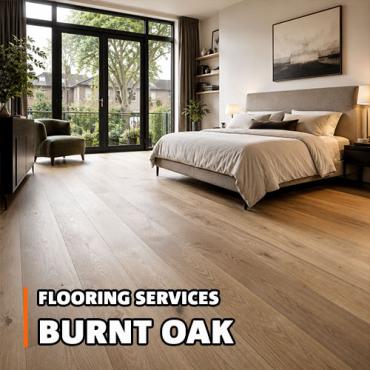
Flooring Services London provides floor sanding, floor fitting, wood floor repair and floor maintenance in Burnt Oak HA8. Burnt Oak sits on the western edge of the London Borough of Barnet, occupying the HA8 postcode between Edgware to the north, Hendon and Colindale to the east and east, and Queensbury to the south and west. It is one of north London's more straightforwardly suburban neighbourhoods — a place built almost entirely in the 1920s through the 1950s around the arrival of the Northern line extension to Edgware in 1924, which opened up this part of Middlesex to the rapid residential development that transformed fields and market gardens into the residential streets that still define the area today.
The housing stock of Burnt Oak is consequently one of the most consistent and homogeneous in the wider Barnet area. The streets spreading outward from Burnt Oak station and along Watling Avenue — the main commercial spine of the neighbourhood — are lined with semi-detached and terraced houses from the 1920s and 1930s, built to a reasonably consistent standard as part of the wave of suburban expansion that followed the Underground extension. These properties have suspended timber subfloors throughout, original softwood boards in upper floors and bedrooms, and in the better-specified examples, original parquet block floors in reception rooms. Alongside the early 20th-century stock, a significant layer of council and social housing from the 1940s through to the 1970s — the Watling Estate, one of the largest council estates of its era in London, lies immediately adjacent — and more recently built properties complete the area's residential picture. Burnt Oak HA8 falls outside the ULEZ zone — no daily charge applies. All work begins with a free site visit and a written fixed-price quote.
Get a free quote for your Burnt Oak property →
Wood Floor Fitting in Burnt Oak
The semi-detached and terraced houses that make up the majority of Burnt Oak's privately owned residential stock have suspended timber subfloors throughout, and the standard of the original construction — while more modest than the premium suburbs of neighbouring Hendon or Edgware — is solid enough that original boards survive in usable condition in many properties. Where boards are sound, restoration is almost always preferable to installing new flooring over them.
Where new flooring is going in over suspended timber, the options appropriate to Burnt Oak's housing are:
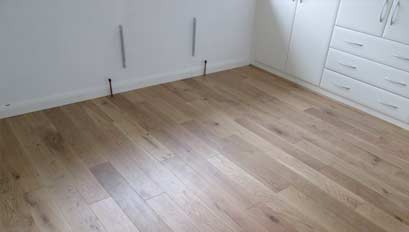
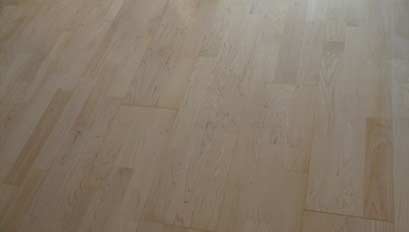
- Engineered wood floor fitting — the most practical specification for HA8's period properties; dimensionally stable and available in a range of species and finishes suited to the semi's proportions
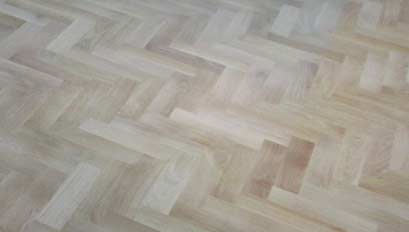
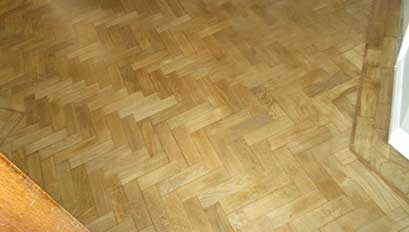
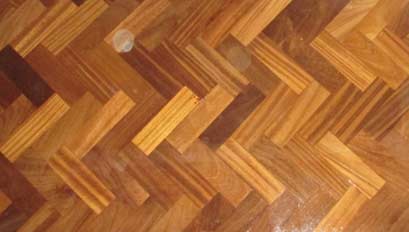
- Parquet floor fitting — herringbone and traditional block formats are period-appropriate and suit the bay-fronted reception rooms of Burnt Oak's better 1930s properties; where original parquet has been lost, herringbone engineered oak is the natural replacement
- Solid wood floor fitting — appropriate where the suspended timber subfloor is in good condition; solid hardwood in wider formats for the better properties
- LVT installation — the most practical waterproof option for kitchens, utility rooms and ground-floor rooms where moisture makes timber flooring less appropriate; a particularly sensible choice in the older properties of the Watling area where ground conditions can be variable
- Laminate floor fitting — a cost-effective option where budget makes hardwood less practical
For Burnt Oak's housing stock — the council and social housing properties built from the late 1940s through to the 1970s — subfloor construction varies. Some have suspended timber on upper floors with solid concrete on the ground floor; later-built properties may have concrete throughout. Engineered wood or LVT are the appropriate specifications for concrete subfloors. We always assess the specific subfloor during the site visit before confirming any installation method. Full subfloor preparation, including moisture checking, levelling and damp-proof membrane where required, is standard before every installation.
Floor Sanding in Burnt Oak
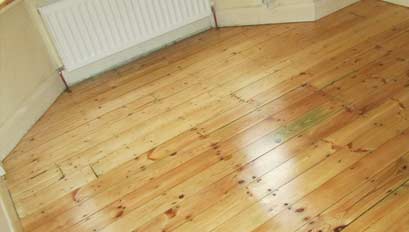
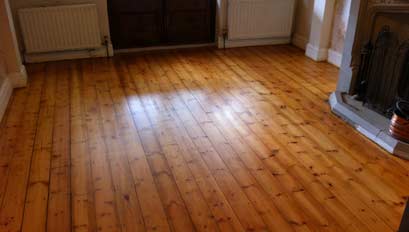
The floor sanding brief in Burnt Oak centres on the housing stock and the original floors it contains. Softwood boards in the bedrooms and upper floors of HA8's 1920s and 1930s properties have spent decades beneath carpet and typically emerge in reasonable structural condition. In the reception rooms of the better semis, original parquet block floors are a genuine possibility and respond well to professional sanding when they survive intact.
The Watling Estate — one of the largest London County Council cottage estates of the period, largely in the neighbouring NW9 postcode but with its influence extending through this part of HA8 — is an interesting flooring context in its own right. The LCC cottage houses of the estate were built to a standard that included original softwood boards throughout, and where these have survived in the residential properties of the area they are worth assessing before any new floor installation is considered.
Our dust-free sanding process captures up to 99% of airborne particles at source — important in Burnt Oak's closely-spaced semi-detached streets where open sanding generates dust that migrates between properties through shared walls.
The sanding approach across Burnt Oak HA8:
- Original softwood boards in bedrooms, hallways and upper floors — assessed for thickness and condition; hard-wax oil is the most frequent finish recommendation, enhancing the natural grain without an incongruous surface sheen and providing a finish practical to maintain in a family home
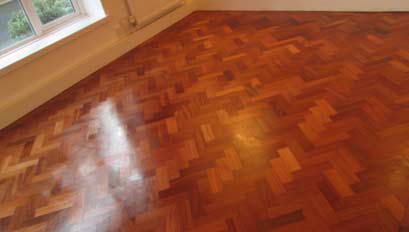
- Original parquet block floors in 1930s reception rooms — parquet floor sanding using specialist edge equipment and careful directional handling; each job assessed individually for block layout and condition
- Engineered floors in more recently renovated properties — wear layer thickness measured before sanding is agreed; honest advice given if recoating is more appropriate than full sanding
- Staircases — finished by hand and detail sander throughout; the staircases of Burnt Oak's semis are straightforward but require careful hand work to match the surrounding floor
Wood Floor Repair in Burnt Oak
The repair requirements of Burnt Oak's housing reflect the age range of the properties — semis now between eighty-five and a hundred years old, properties from the 1950s through to the 1970s with their own specific set of maintenance issues.
Common repair work across Burnt Oak HA8:
- Gap filling between floorboards — flexible filler colour-matched to the specific boards; boards in HA8's semis develop seasonal gaps in the same way as all suspended timber floors, requiring correctly specified flexible filling for a result that lasts
- Loose board re-fixing — original fixings working gradually free from joists after decades of seasonal movement; efficiently resolved and eliminates the movement and squeaks it produces
- Board replacement where individual planks have been damaged by water ingress, rot or structural failure
- Original parquet repair where reception room parquet survives — re-bonding loose blocks, replacing missing sections with period-matched material. Parquet floor repair in Burnt Oak requires care with material sourcing and pattern continuity
- Surface scratch and damage repair on both lacquered and oiled floors with localised refinishing
- Property repairs — surface wear, edge-lifting and delamination in engineered and laminate floors throughout the housing stock, assessed and treated individually
Floor Maintenance in Burnt Oak
The right ongoing maintenance approach in Burnt Oak depends on the floor type and finish. For the area's predominantly owner-occupied family homes:
- Hard-wax oil finished boards and parquet — annual or biannual wood floor re-oiling with Osmo Polyx or equivalent; maintains the protective finish and allows localised damage to be spot-treated without a full resand — the most practical strategy for Burnt Oak's busy family homes
- Wax-finished parquet — periodic professional re-waxing at appropriate intervals; traditional wax maintains the character of the original parquet effectively over many years
- Lacquered engineered and hardwood floors — wood floor recoating once the lacquer shows wear; extends the floor's life without the disruption of full sanding
- LVT floors — regular professional cleaning with LVT-appropriate products; deep cleaning at appropriate intervals maintains the surface layer and appearance over time
Burnt Oak's commercial premises along Watling Avenue and the surrounding streets — the shops, takeaways, cafés and local businesses that serve the neighbourhood — generate consistent demand for commercial floor cleaning and professional floor maintenance. We schedule all commercial work around business operating hours.
Flooring Services in Burnt Oak
Flooring Services London covers all residential and commercial flooring work in Burnt Oak HA8 — from the semi-detached and terraced houses of the residential streets to the housing throughout the postcode and the commercial premises of Watling Avenue. No ULEZ charge applies in HA8. Call us on 020 7036 0625 or request a free quote online — we respond to all Burnt Oak enquiries the same working day.
We regularly work in neighbouring areas including Edgware, Hendon, Colindale, Queensbury and Mill Hill.
Frequently Asked Questions — Flooring in Burnt Oak
What types of original floors are most common in Burnt Oak properties? The most common original floors in Burnt Oak's semi-detached houses are softwood boards in bedrooms, hallways and upper floors — typically in reasonable structural condition beneath carpet. In the reception rooms of the better 1930s properties, original parquet block floors are a genuine possibility. Where original floors survive in usable condition, professional restoration is almost always more cost-effective and characterful than new floor installation.
Is LVT a good option for Burnt Oak ground-floor rooms? Yes — LVT installation is a practical choice in Burnt Oak for kitchens, utility rooms and ground-floor rooms where a waterproof hard floor is more appropriate than timber. In the older properties of HA8, where concrete ground floors and variable ground moisture are common, LVT provides a reliable and durable specification that handles the conditions well.
What finish is best for original floors in a Burnt Oak semi? Hard-wax oil is our most frequent recommendation for Burnt Oak's period properties. It enhances the natural grain of the timber, suits the age and character of the house, and is practical to maintain in a family home — localised damage can be spot-treated without a full resand.
Does ULEZ apply in Burnt Oak HA8? No — HA8 falls outside the ULEZ zone. No daily charge applies, confirmed clearly in every written estimate.
How do I get a quote for flooring work in Burnt Oak? Call us on 020 7036 0625 or request a free quote online. We will arrange a convenient site visit and provide a written fixed-price estimate with no obligation.
Flooring Services in Burnt Oak
As a trusted local flooring company, we offer a comprehensive range of flooring services in Burnt Oak and surrounding areas. Whether you need new flooring installed, existing floors repaired, or expert advice on the best flooring options for your property, our experienced team is here to help.
Floor Fitting
Wood floor fitting is the process of installing flooring such as engineered wood, solid wood, parquet, or laminate, ensu...
Floor Sanding
Floor sanding is the process of removing the top layer of a wooden floor using professional sanding equipment to elimina...
Wood Floor Repair
Wood floor repair involves fixing damaged, worn, or unstable areas of a wooden floor, including replacing boards, fillin...
Floor Maintenance
Wood floor maintenance includes cleaning, polishing, buffing, and re-coating wooden floors to preserve their appearance,...
Solid Wood Floor Sanding
Solid wood floor sanding is the process of removing the top layer of solid timber flooring to eliminate wear, scratches,...
Engineered Floor Sanding
Engineered wood floor sanding is the process of carefully removing the top wear layer of an engineered floor to restore ...
Gap Filling
Wood floor gap filling involves sealing gaps between floorboards or parquet blocks to improve stability, appearance, and...
Floor Sealing
Floor sealing refers to the application of a protective finish, such as lacquer or oil, to a wooden floor after sanding,...
Commercial Floor Sanding
Commercial floor sanding involves restoring wooden floors in high-traffic environments by removing worn finishes, surfac...
Engineered Floor Fitting
Engineered wood floor fitting involves installing multi-layered wooden boards designed for stability, allowing them to p...
Laminate Floor Installation
Laminate floor fitting involves installing multi-layer synthetic flooring boards designed to replicate the appearance of...
Floorboards Fitting
Floorboards fitting covers the installation of timber floorboards, ensuring correct preparation, alignment, and fixing f...
Floor Insulation Fitting
Floor insulation fitting involves installing insulating materials beneath a floor structure to reduce heat loss, improve...
Floorboards Repair
Floorboard repair covers the restoration of damaged, loose, or worn timber boards, addressing issues such as movement, s...
Floor Scratch Repair
Wood floor scratch repair focuses on restoring damaged areas of a wooden floor by reducing or removing surface scratches...
Floor Polishing
Floor polishing focuses on enhancing the appearance of wooden floors by restoring shine, improving surface protection, a...
Parquet Floor Sanding
Parquet floor sanding involves carefully restoring patterned wooden flooring by removing worn finishes, surface damage, ...
Floorboards Sanding
Floorboards sanding focuses on restoring timber boards by removing worn finishes, surface damage, and imperfections, cre...
Stairs Sanding
Stair sanding involves restoring wooden staircases by removing worn finishes, surface damage, and imperfections, prepari...
Wood Floor Staining
Floor staining enhances the appearance of wooden floors by applying coloured finishes that change the tone of the wood w...
School Floor Sanding
School floor sanding focuses on restoring wooden floors in educational environments by removing wear, surface damage, an...
Solid Wood Floor Fitting
Solid wood floor fitting requires careful preparation and precise installation, as natural timber reacts to changes in t...
Parquet Floor Fitting
Parquet floor fitting involves installing patterned wooden flooring with precision, ensuring correct alignment, subfloor...
Staircase Floor Fitting
Staircase floor fitting involves installing wooden elements on staircases, including treads, risers, and trims, ensuring...
Soundproofing Wood Flooring
Soundproof floor fitting focuses on reducing airborne and impact noise by installing suitable underlay and flooring syst...
Solid Wood Floor Repair
Solid wood floor repair covers the restoration of damaged timber flooring by replacing worn boards, treating surface iss...
Engineered Floor Repair
Engineered wood floor repair focuses on restoring damaged or worn engineered flooring by addressing surface issues and, ...
Parquet Floor Repair
Parquet floor repair involves restoring patterned wooden flooring by fixing damaged blocks, stabilising loose sections, ...
Wood Floor Cleaning
Wood floor cleaning involves using suitable products and techniques to remove dirt, maintain the finish, and protect the...
Floor Waxing
Floor waxing and recoating involves renewing the protective layer of a wooden floor by removing old wax or finish build-...
Floor Stripping
Floor stripping refers to the removal of old wax, polish, or finish layers from a floor using specialised products, prep...
Wood Floor Re-Oiling
Wood floor re-oiling focuses on renewing the protective oil finish of a wooden floor, enhancing its natural appearance w...
Wood Floor Recoating
Wood floor recoating involves applying a new protective finish over an existing one without full sanding, helping to ref...
Commercial Floor Cleaning
Commercial floor cleaning focuses on deep cleaning and maintenance of flooring in high-traffic environments, removing em...
LVT Floor Installation
LVT floor installation involves fitting luxury vinyl tiles or planks with precision, ensuring correct subfloor preparati...
All our flooring services in Burnt Oak come with a free, no-obligation estimate. We pride ourselves on quality workmanship and competitive pricing across all London boroughs.