Monday - Friday 07:30 - 17:30, Saturday 07:30 - 16:00
Flooring Services Covent Garden — Floor Sanding, Fitting & Repair in WC2
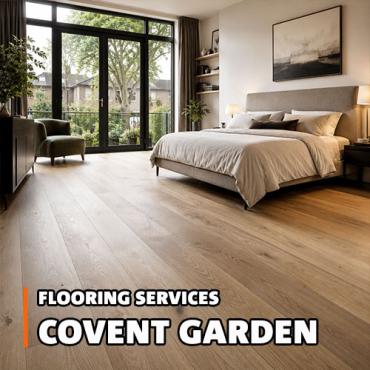
Covent Garden is one of central London's most varied neighbourhoods when it comes to flooring work. The area sits within WC2 and combines Georgian residential streets — Long Acre, Endell Street, Neal Street, and the quieter lanes between the Strand and High Holborn — with a significant stock of former warehouse and commercial buildings that have been converted into loft apartments, offices, and mixed-use spaces over the past three decades. Add in the neighbourhood's density of restaurants, bars, theatres, and retail premises, and you have a genuinely diverse mix of domestic and commercial flooring requirements within a compact area.
Flooring Services London operates from Orange Street, just minutes from Covent Garden, and has been carrying out floor sanding, fitting, repair, and maintenance in WC2 and the surrounding area for over 20 years. We know this neighbourhood well — its access constraints, its building types, and the specific flooring challenges that come with working in one of central London's busiest and most architecturally varied districts.
Wood Floor Sanding in Covent Garden
Floor sanding in Covent Garden covers two quite different scenarios, reflecting the neighbourhood's mixed character.
Residential sanding — Covent Garden's Georgian terraces and period residential streets contain original pine and oak floorboards that respond exceptionally well to professional sanding and refinishing. The area's conversion flats — former Georgian townhouses subdivided into apartments along streets such as Mercer Street, Shelton Street, and the Seven Dials area — frequently have original boards beneath layers of old lacquer or carpet that have never been properly restored. Bringing these back is some of the most rewarding work we carry out in WC2.
Commercial sanding — Covent Garden's high footfall commercial spaces — restaurants along Floral Street and King Street, bars and venues near the Piazza, retail units in the Thomas Neal's and Neal's Yard areas — need their wood floors restored and refinished regularly to handle the wear that comes with thousands of visitors weekly. For commercial jobs we schedule work outside trading hours, typically evenings and weekends, to avoid disruption to business. We use Bona Traffic HD lacquer for commercial applications — one of the hardest-wearing finishes available and specifically designed for high-footfall environments.
Dust-free sanding equipment is used on every job in Covent Garden, residential and commercial alike. In the neighbourhood's dense mixed-use buildings — where a restaurant operates directly below a residential flat, or offices sit adjacent to a gallery — uncontrolled dust creates problems for neighbouring occupants. Our extraction systems capture up to 99% of sawdust at source throughout the sanding process.
Sanding costs in Covent Garden WC2 vary depending on floor type, condition, finish specification, and whether the project is residential or commercial. All prices are confirmed in writing following the free site visit — a full breakdown of all sanding and finishing charges is available on our floor restoration price guide.
All of WC2 falls within both the ULEZ zone and the Congestion Charge area. Any applicable daily access surcharge is always stated explicitly in the written quote — never added on the day.
Finishes we apply in Covent Garden: For residential period properties, hard-wax oil (Osmo Polyx, Bona Craft Oil) suits the character of original boards and is easy to maintain between full sands. For commercial and high-footfall spaces, Bona Traffic HD water-based lacquer is the most durable option, available in matt, satin, and gloss, with an anti-slip variant suitable for restaurant and bar environments. We also offer staining in a full range of tones before sealing.
Floor Fitting in Covent Garden
New floor installation in Covent Garden reflects the neighbourhood's architectural variety. The specific subfloor and building type shapes every installation decision.
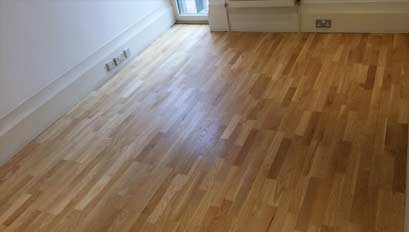
Warehouse and loft conversions — Covent Garden's former textile warehouses, printworks, and market buildings — many converted from the 1980s onwards in streets around Long Acre, Shorts Gardens, and the Strand end of WC2 — typically have exposed concrete subfloors and high ceilings with large open-plan footprints. These spaces suit wide-plank engineered oak (200mm+), glued directly to the concrete slab or floated over a suitable underlay. The raw industrial character of many Covent Garden loft conversions also lends itself to heavily textured or brushed engineered boards that reference the original warehouse aesthetic.
Georgian flats and maisonettes — The subdivided Georgian terraces in streets like Mercer Street, Neal Street, and around Seven Dials have suspended timber subfloors on upper floors and occasional concrete on ground level. We assess moisture and subfloor condition before every installation and advise on the appropriate fixing method. Engineered or solid hardwood secret-nailed to suspended subfloors is the most common installation in these properties.
Theatres, studios, and performance spaces — Covent Garden is home to a significant number of performing arts facilities, rehearsal studios, and small theatre venues, particularly in the streets around the Royal Opera House and the Aldwych end of WC2. Dance and rehearsal studio floors have very specific requirements: sprung floor systems with a controlled amount of surface flex, smooth finishes that allow movement without grip or slip, and finishes that can be maintained and recoated without full replacement. We have experience installing and maintaining sprung floor systems and studio-grade finishes for performing arts environments in this area.
Restaurants and hospitality — Covent Garden's dense concentration of restaurants, particularly along Floral Street, King Street, and around the Piazza, means we regularly install and restore wood floors in food and beverage environments. These spaces require finishes rated for heavy commercial use, spill resistance, and food-safety compliance. We specify only finishes that meet commercial-grade standards for hospitality environments.
Floor types we install in Covent Garden:
- Wide-plank engineered oak for loft and open-plan spaces
- Solid and engineered hardwood for Georgian residential conversions
- Herringbone and chevron parquet for period flats and high-specification residential
- Commercial-grade LVT and vinyl for high-footfall food and retail units
- Sprung floor systems and studio-grade finishes for performance spaces
- Acoustic underlay systems for flats in mixed-use buildings
Wood Floor Repair in Covent Garden
Covent Garden's mix of old and new, residential and commercial, means we encounter a wide variety of repair requirements in WC2.
Period floorboard repair
Georgian and Victorian boards in Covent Garden's residential streets develop the full range of age-related issues: gaps from seasonal timber movement, staining from water ingress around windows and radiators, surface damage from heavy use in converted commercial buildings repurposed as residential, and loose boards that squeak with every step. We carry out gap filling, board replacement, squeak elimination, and surface repair as part of complete restoration projects or as standalone repairs.
Commercial floor restoration
Restaurant and bar floors in Covent Garden endure exceptional wear — heavy furniture, dropped items, cleaning chemicals, and constant foot traffic. We restore these floors between closures, replacing the most damaged boards, filling surface damage, and refinishing to commercial grade. For venues where floors are a visible design feature — the exposed oak of a restaurant dining room, for example — colour matching and finish consistency across repaired and original sections is a priority we take seriously.
Warehouse conversion repairs
Loft and warehouse conversion floors in WC2 sometimes show the marks of their previous industrial use: staining from old machinery, uneven sections from original floor modifications, and surface damage from decades before conversion. We assess these floors individually and advise on what can be sanded out, what requires targeted repair, and what may need section replacement.
Parquet restoration
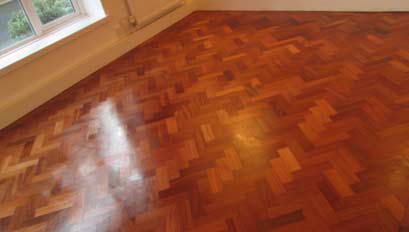
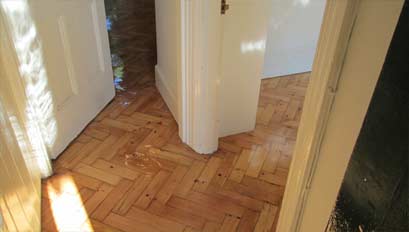
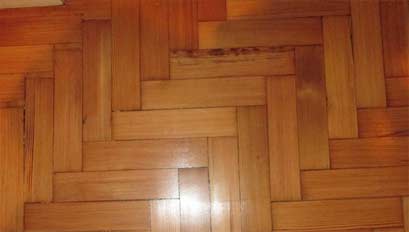
Several of Covent Garden's older commercial buildings and some of the more substantial Georgian properties retain original herringbone or block parquet in entrance halls and principal rooms. We restore these floors, including re-laying lifted blocks, sourcing matching replacement sections, and refinishing to match the restored pattern.
Floor Maintenance in Covent Garden
Covent Garden's commercial properties require more frequent maintenance than typical residential floors — the volume of foot traffic means finishes wear faster and need refreshing more regularly to protect the timber beneath.
For restaurants, bars, and retail units in WC2, we offer commercial maintenance programmes: periodic recoating and buffing scheduled around trading hours, deep cleaning between full refinishes, and condition assessments that flag when a full sand is needed before the floor reaches a point of irreparable wear. Regular maintenance significantly extends the life of a commercial floor and reduces the cost and disruption of full restoration over time.
For Covent Garden's residential properties — particularly the buy-to-let flats and serviced apartments that make up a significant proportion of the local housing stock. Recoating between tenancies — completed in a single day without the cost or disruption of a full sand — is a popular option for Covent Garden landlords and letting agents looking to refresh a property quickly. Full maintenance pricing is available on our floor maintenance price guide.
Frequently Asked Questions — Flooring in Covent Garden
Can you carry out floor sanding in a Covent Garden restaurant or bar without closing for the full duration? For most commercial floor restoration jobs in WC2 we work during the venue's closed hours — typically late evenings after service ends or during Monday closures. A standard restaurant dining room (50–80 m²) can usually be sanded and first-coated in a single overnight session, with the second coat applied the following night. We plan the schedule around your trading calendar to minimise impact on revenue.
Do you work in Covent Garden warehouse and loft conversions? Yes — this is one of the most common property types we work in across WC2. Concrete subfloor assessment, appropriate underlay specification, and wide-plank engineered installation are all areas we handle regularly in Covent Garden's conversion stock.
Can you install or restore a sprung floor in a Covent Garden dance or rehearsal studio? Yes. We have experience with sprung floor systems and studio-grade finishes for performing arts and fitness environments. We can advise on the appropriate system for your space, install new sprung floors, and restore and refinish existing ones. Contact us to discuss your specific requirements.
How do you manage access and parking for jobs in central Covent Garden WC2? Covent Garden is within the Congestion Charge zone and the ULEZ area. We factor daily access charges into all written quotes. For loading and materials delivery in the pedestrianised areas around the Piazza and Long Acre, we plan access routes. Early morning starts from 07:30 help with vehicle access before the area reaches peak pedestrian congestion.
What finish is best for a high-traffic Covent Garden restaurant floor? For restaurant and bar environments in WC2 we typically specify Bona Traffic HD — a two-component water-based lacquer that provides maximum surface hardness and resistance to spills, cleaning chemicals, and chair leg abrasion. It is available in a matt finish that suits the industrial aesthetic common in Covent Garden's restaurant interiors, as well as satin and semi-gloss. An anti-slip additive is available for areas close to kitchen entrances or where wet floors are a risk.
We cover all Covent Garden postcodes within WC2 and regularly work in neighbouring areas including the Strand, Holborn, Soho, Bloomsbury, and the City fringe. Call us on 020 7036 0625 or request a free quote online — we respond to all Covent Garden enquiries the same working day.
Flooring Services in Covent Garden
As a trusted local flooring company, we offer a comprehensive range of flooring services in Covent Garden and surrounding areas. Whether you need new flooring installed, existing floors repaired, or expert advice on the best flooring options for your property, our experienced team is here to help.
Floor Fitting
Wood floor fitting is the process of installing flooring such as engineered wood, solid wood, parquet, or laminate, ensu...
Floor Sanding
Floor sanding is the process of removing the top layer of a wooden floor using professional sanding equipment to elimina...
Wood Floor Repair
Wood floor repair involves fixing damaged, worn, or unstable areas of a wooden floor, including replacing boards, fillin...
Floor Maintenance
Wood floor maintenance includes cleaning, polishing, buffing, and re-coating wooden floors to preserve their appearance,...
Solid Wood Floor Sanding
Solid wood floor sanding is the process of removing the top layer of solid timber flooring to eliminate wear, scratches,...
Engineered Floor Sanding
Engineered wood floor sanding is the process of carefully removing the top wear layer of an engineered floor to restore ...
Gap Filling
Wood floor gap filling involves sealing gaps between floorboards or parquet blocks to improve stability, appearance, and...
Floor Sealing
Floor sealing refers to the application of a protective finish, such as lacquer or oil, to a wooden floor after sanding,...
Commercial Floor Sanding
Commercial floor sanding involves restoring wooden floors in high-traffic environments by removing worn finishes, surfac...
Engineered Floor Fitting
Engineered wood floor fitting involves installing multi-layered wooden boards designed for stability, allowing them to p...
Laminate Floor Installation
Laminate floor fitting involves installing multi-layer synthetic flooring boards designed to replicate the appearance of...
Floorboards Fitting
Floorboards fitting covers the installation of timber floorboards, ensuring correct preparation, alignment, and fixing f...
Floor Insulation Fitting
Floor insulation fitting involves installing insulating materials beneath a floor structure to reduce heat loss, improve...
Floorboards Repair
Floorboard repair covers the restoration of damaged, loose, or worn timber boards, addressing issues such as movement, s...
Floor Scratch Repair
Wood floor scratch repair focuses on restoring damaged areas of a wooden floor by reducing or removing surface scratches...
Floor Polishing
Floor polishing focuses on enhancing the appearance of wooden floors by restoring shine, improving surface protection, a...
Parquet Floor Sanding
Parquet floor sanding involves carefully restoring patterned wooden flooring by removing worn finishes, surface damage, ...
Floorboards Sanding
Floorboards sanding focuses on restoring timber boards by removing worn finishes, surface damage, and imperfections, cre...
Stairs Sanding
Stair sanding involves restoring wooden staircases by removing worn finishes, surface damage, and imperfections, prepari...
Wood Floor Staining
Floor staining enhances the appearance of wooden floors by applying coloured finishes that change the tone of the wood w...
School Floor Sanding
School floor sanding focuses on restoring wooden floors in educational environments by removing wear, surface damage, an...
Solid Wood Floor Fitting
Solid wood floor fitting requires careful preparation and precise installation, as natural timber reacts to changes in t...
Parquet Floor Fitting
Parquet floor fitting involves installing patterned wooden flooring with precision, ensuring correct alignment, subfloor...
Staircase Floor Fitting
Staircase floor fitting involves installing wooden elements on staircases, including treads, risers, and trims, ensuring...
Soundproofing Wood Flooring
Soundproof floor fitting focuses on reducing airborne and impact noise by installing suitable underlay and flooring syst...
Solid Wood Floor Repair
Solid wood floor repair covers the restoration of damaged timber flooring by replacing worn boards, treating surface iss...
Engineered Floor Repair
Engineered wood floor repair focuses on restoring damaged or worn engineered flooring by addressing surface issues and, ...
Parquet Floor Repair
Parquet floor repair involves restoring patterned wooden flooring by fixing damaged blocks, stabilising loose sections, ...
Wood Floor Cleaning
Wood floor cleaning involves using suitable products and techniques to remove dirt, maintain the finish, and protect the...
Floor Waxing
Floor waxing and recoating involves renewing the protective layer of a wooden floor by removing old wax or finish build-...
Floor Stripping
Floor stripping refers to the removal of old wax, polish, or finish layers from a floor using specialised products, prep...
Wood Floor Re-Oiling
Wood floor re-oiling focuses on renewing the protective oil finish of a wooden floor, enhancing its natural appearance w...
Wood Floor Recoating
Wood floor recoating involves applying a new protective finish over an existing one without full sanding, helping to ref...
Commercial Floor Cleaning
Commercial floor cleaning focuses on deep cleaning and maintenance of flooring in high-traffic environments, removing em...
LVT Floor Installation
LVT floor installation involves fitting luxury vinyl tiles or planks with precision, ensuring correct subfloor preparati...
All our flooring services in Covent Garden come with a free, no-obligation estimate. We pride ourselves on quality workmanship and competitive pricing across all London boroughs.