Monday - Friday 07:30 - 17:30, Saturday 07:30 - 16:00
Flooring Services Upton Park — Floor Sanding, Fitting & Repair in E13 & E6
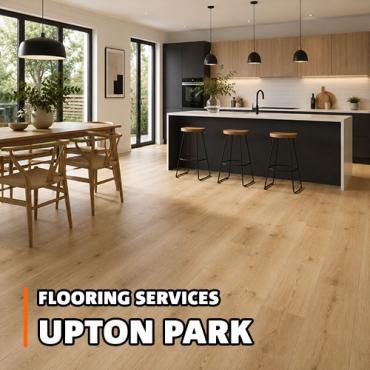
Upton Park is a densely residential neighbourhood straddling the boundary between the London Boroughs of Newham and Barking and Dagenham, centred on the Green Street corridor and served by Upton Park station on the District and Hammersmith & City lines. It covers parts of both E13 and E6 — a broad residential area with a strong community identity and a housing stock that is, for our purposes, one of the most interesting in outer east London.
The area is built predominantly on late Victorian and Edwardian speculative housing from the 1880s through to around 1914 — the same wave of suburban expansion that extended east London out from the older riverside settlements toward the Essex countryside. The streets around Green Street, Plashet Road, Barking Road and the residential grids that run off them are lined with two-storey terraced and semi-detached houses of remarkably consistent quality. These were built to house the skilled working and lower-middle classes who were moving out of the more crowded inner east London neighbourhoods at the turn of the twentieth century, and the standard of construction — solid brick, suspended timber floors throughout, decent ceiling heights — has stood up well over more than a century of use.
Upton Park is perhaps most widely known as the former home of West Ham United, whose Boleyn Ground on Green Street was the club's home for 112 years before they relocated to the London Stadium in Stratford in 2016. The ground itself was demolished and the site — Upton Gardens — is now a residential development of several hundred homes, adding a layer of new-build housing to what is otherwise an almost entirely period residential neighbourhood. The broader area around Green Street remains one of outer east London's most vibrant street-level retail and community environments, with a strong South Asian and Caribbean commercial presence that has defined the character of the neighbourhood for decades.
For flooring, Upton Park is classic inner east London period terrace territory — suspended timber subfloors throughout, original pine and occasionally oak floorboards common beneath carpet in the older properties, and a steady flow of owner-occupier renovation work as the area's housing stock is gradually and carefully updated. Flooring Services London covers Upton Park E13 and E6 as part of our wider east London service area. All work begins with a free site visit and a written fixed-price quote. E13 and E6 fall within the ULEZ zone — the daily charge applies and is included clearly in every written estimate.
Wood Floor Fitting in Upton Park
The overwhelming majority of flooring work in Upton Park takes place in Victorian and Edwardian terraced and semi-detached houses — properties built between roughly 1885 and 1914 with suspended timber subfloors on every floor. This is a well-understood construction type and one we work with constantly across east London. The subfloor condition in Upton Park's period housing is generally good — these are solidly built houses — but individual assessment during the site visit always confirms the specific situation before any installation is agreed.
Where original floorboards are in sound structural condition, the most sensible approach is almost always to work with what is already there rather than install new flooring over it. Original pine boards in Upton Park's period terraces, once sanded and refinished, can look extraordinary — and the result is more authentic to the character of the house than any new product installed on top. We assess the existing boards honestly and give a clear recommendation during the site visit.
Where new flooring is going in over suspended timber subfloors, the main options are:
- Solid wood floor fitting — the most durable long-term option for suspended timber subfloors; solid hardwood can be sanded many times over its lifetime and is entirely appropriate for the construction type of Upton Park's period houses
- Engineered wood — greater dimensional stability in rooms with more humidity variation, such as ground-floor rooms and kitchens; available in a wider range of board widths and finishes
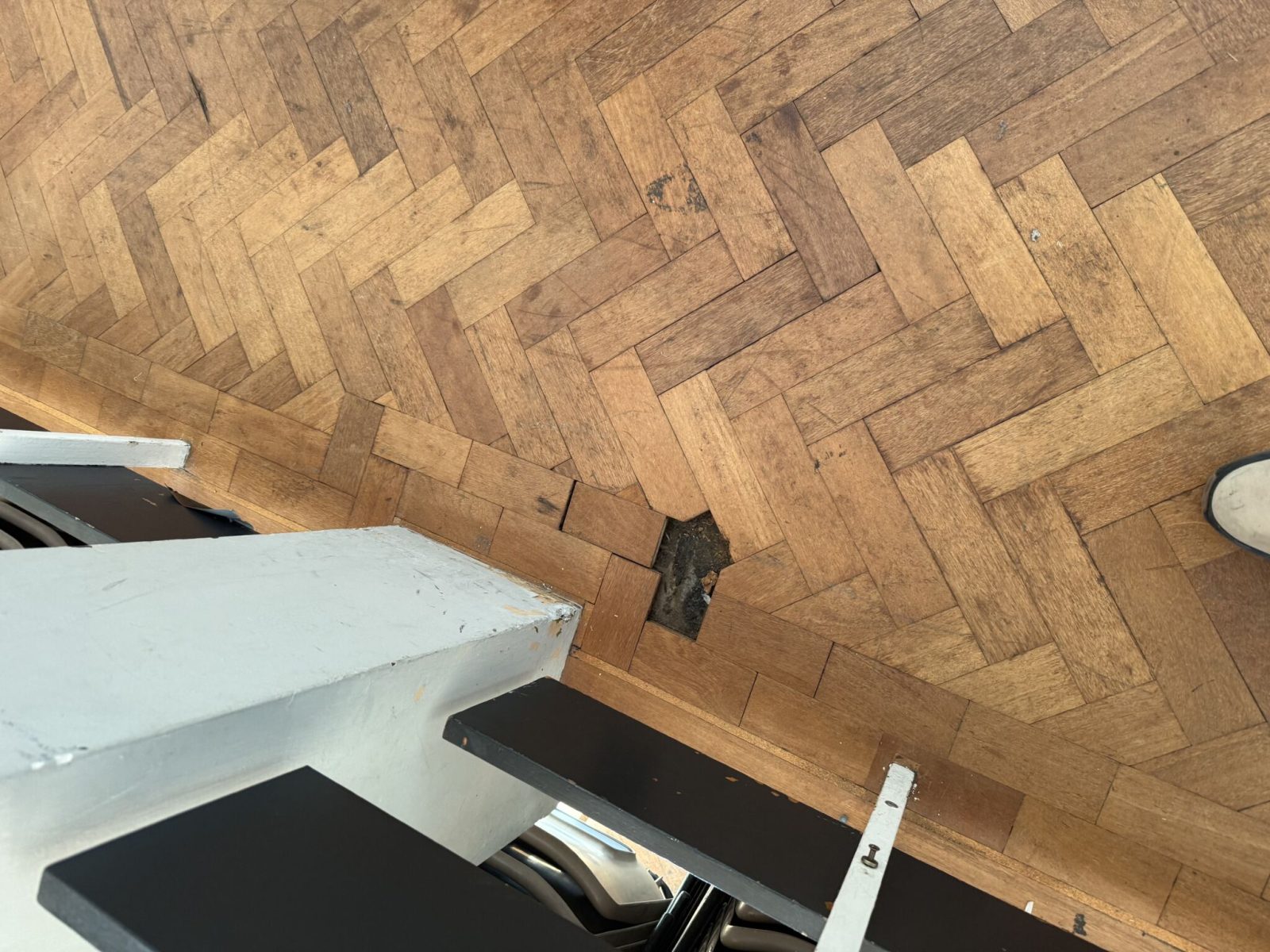
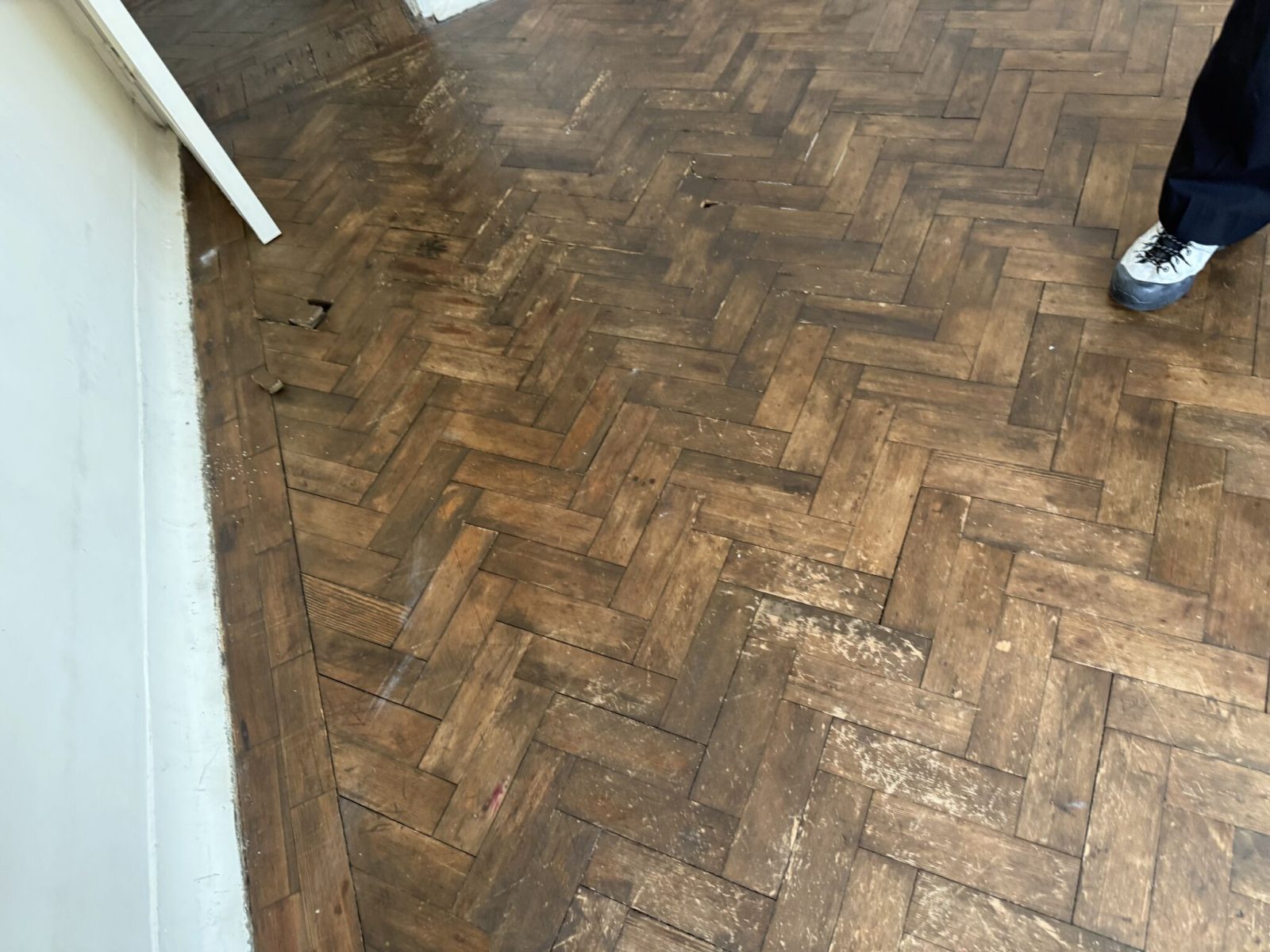
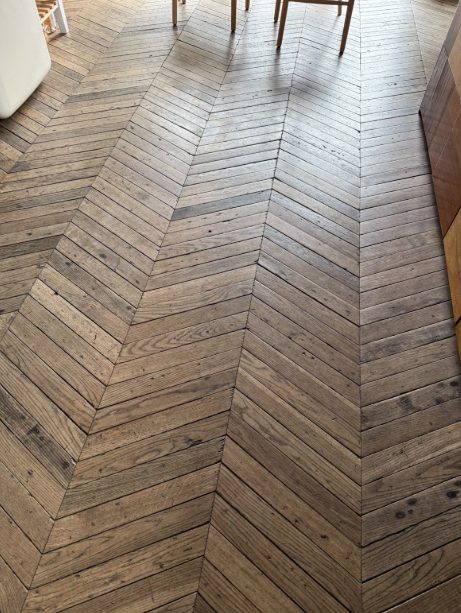
- Parquet floor fitting — herringbone and traditional block parquet are increasingly popular in Upton Park's period living rooms and hallways, and suit the proportions of the Victorian terrace extremely well
- Laminate — a practical and cost-effective option for rooms where budget or use makes hardwood less appropriate
For the Upton Gardens new-build development on the former Boleyn Ground site, concrete subfloors throughout mean that engineered wood or LVT are the appropriate specifications — solid timber nail-down installation is not viable on concrete subfloors. We carry out full moisture assessment before every installation in the development and advise on the correct damp-proof membrane and underlay specification for each apartment.
In Upton Park's semi-detached properties — larger than the standard terrace and more common toward the E6 end of the area — the flooring brief sometimes extends to parquet or wider-plank hardwood in reception rooms, where ceiling heights and room proportions can support a more generous board format than the narrower standard terrace layout.
Floor Sanding in Upton Park
Upton Park is one of the better areas in east London for original period floorboard restoration. The housing stock's age — predominantly 1885 to 1914 — means that original pine boards are extremely common beneath carpet throughout the area, and the generally solid construction of these houses means the boards have survived in good condition in the majority of cases. Many homeowners in Upton Park discover their original floors for the first time during a renovation and are surprised by how little work they actually need.
Our dust-free sanding process captures up to 99% of airborne particles at source. In the densely packed terraced streets of E13 and E6 — where houses share party walls and rooms sit directly adjacent to neighbours' living spaces — this is particularly important. Traditional open sanding generates significant airborne dust that migrates through wall cavities, under doors and throughout the house in a way that dust-free extraction effectively eliminates.
The sanding approach depends on the specific floor:
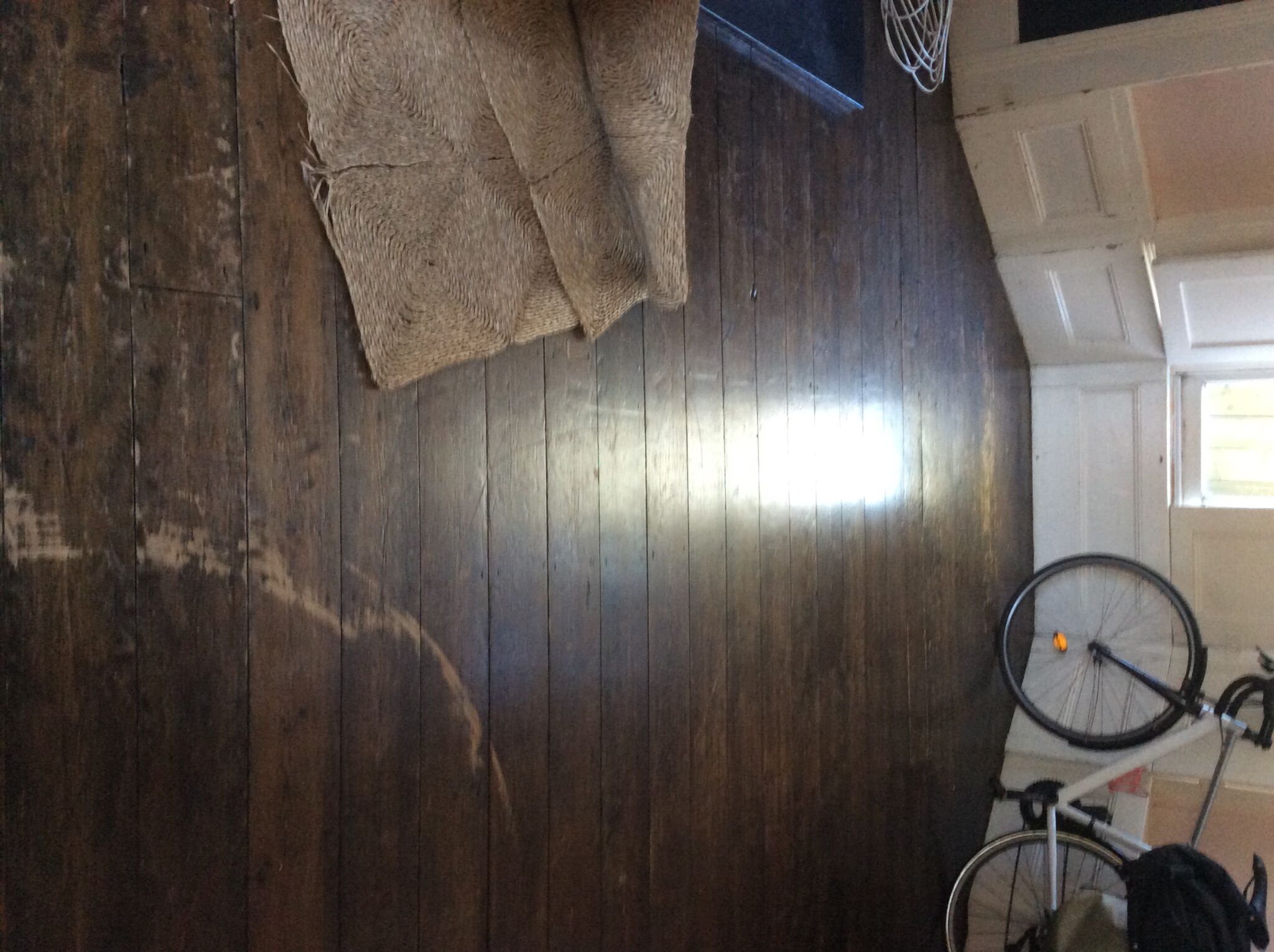
- Original pine floorboards in Upton Park's Victorian and Edwardian terraces are the most common brief. Assessment during the site visit determines board thickness, existing finish and condition. Most period boards in E13 and E6 can be sanded several more times over their remaining lifespan. Hard-wax oil — Osmo Polyx or similar — is our most common finish recommendation for Upton Park period properties, giving a natural, sympathetic result that enhances the grain of the timber without the anachronistic high-gloss sheen of lacquer on a Victorian floor
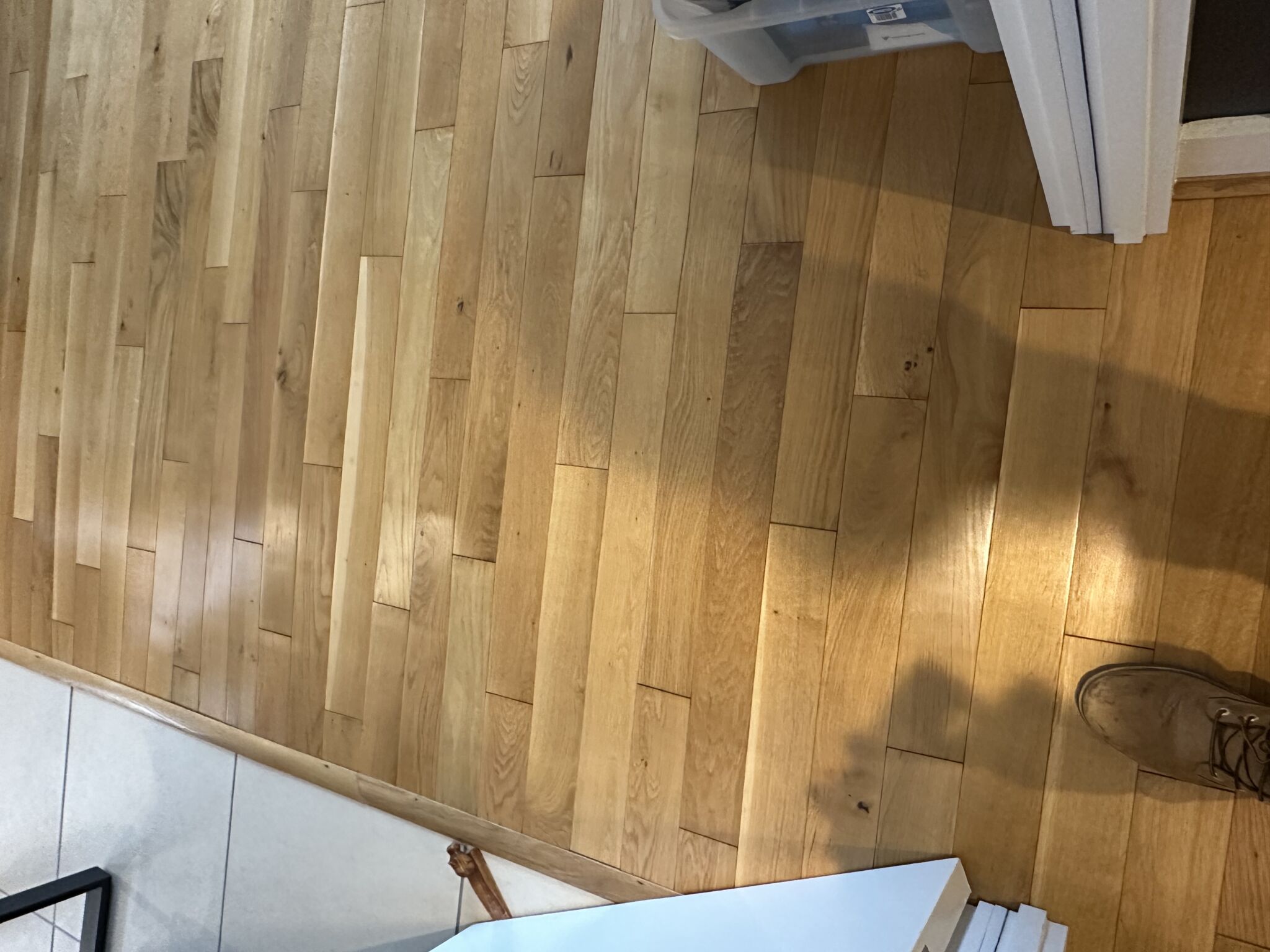
- Hardwood floors — oak and other species installed in more recent refurbishments — are sanded with a species-appropriate approach and finished to the homeowner's specification
- Parquet floors — present in many Upton Park's larger and semi-detached properties, both original and more recently installed — require specialist edge work and directional sanding that standard drum equipment cannot handle adequately. We bring the appropriate specialist equipment to every parquet job
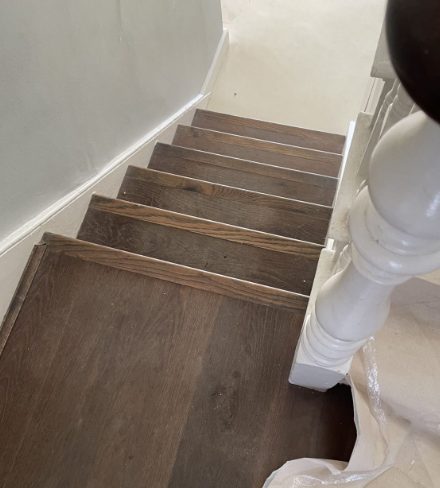
- Staircases — the staircases of Upton Park's Victorian terraces are sanded by hand and detail sander to match the rest of the floor, and are routinely included as part of a whole-house restoration
Wood Floor Repair in Upton Park
The period housing of Upton Park generates a consistent and predictable set of repair requirements — the natural consequence of suspended timber floors that have been in continuous use for over a century. Seasonal movement in these floors is entirely normal and expected: boards expand in summer humidity and contract in winter dryness, producing the characteristic gaps and occasional squeaks that most owners of Upton Park period terraces will recognise as features of the house rather than faults in it. In most cases these seasonal movements do not require treatment.
Where repair work is genuinely needed, the most common jobs in E13 and E6 include:
- Gap filling between floorboards — using flexible filler that moves with the floor rather than rigid compound that cracks in winter. The filler is colour-matched to the existing boards so the repair is as unobtrusive as possible
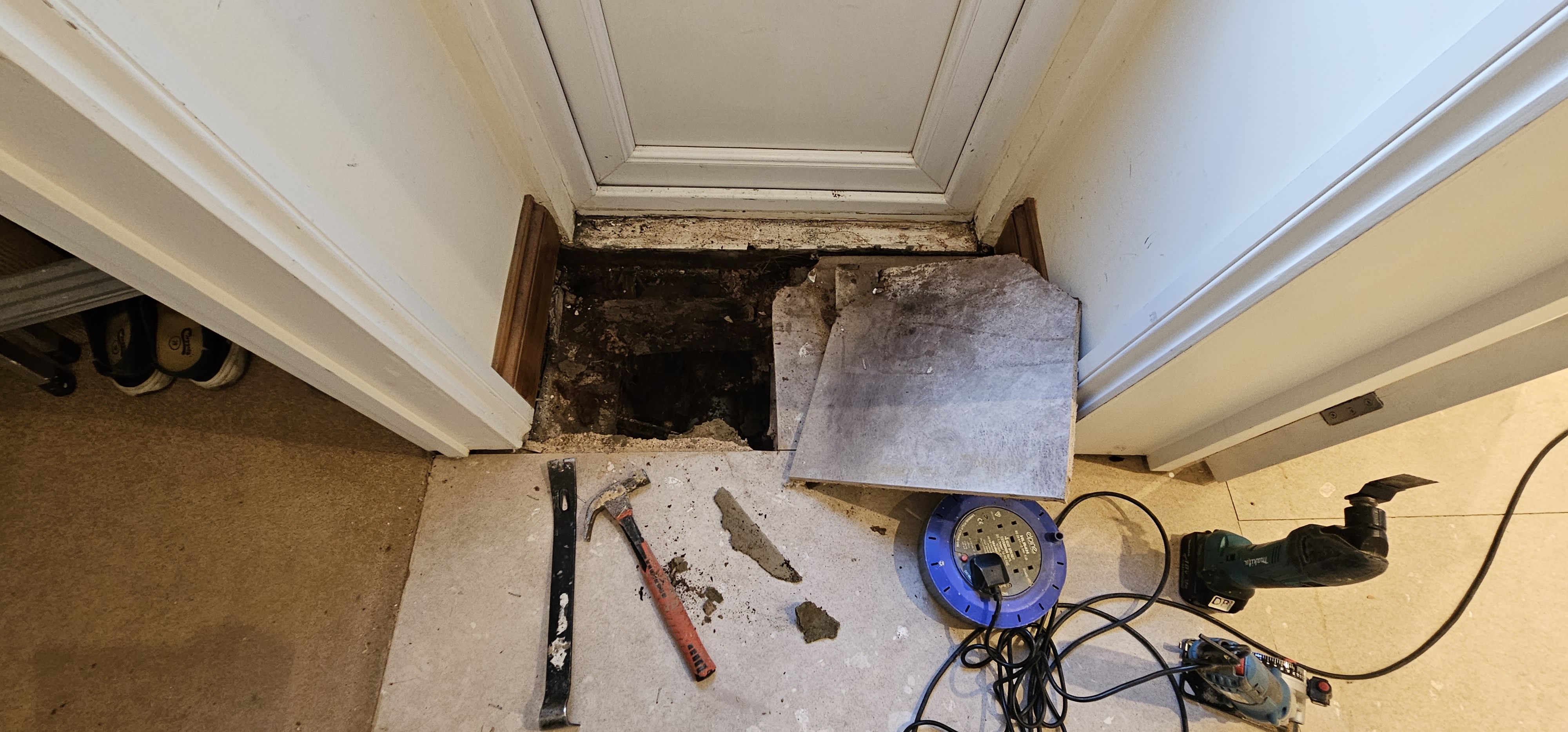
- Board replacement where individual planks are cracked, split, or have suffered water damage — from a leaking radiator, a bathroom overflow or years of ground moisture ingress at the edges of a ground-floor room
- Fixing loose boards — a common issue in Upton Park's older terraces, where original cut nail fixings have gradually worked free from the joists over many decades of seasonal movement. Re-fixing is usually straightforward and eliminates the squeaks that loose boards produce
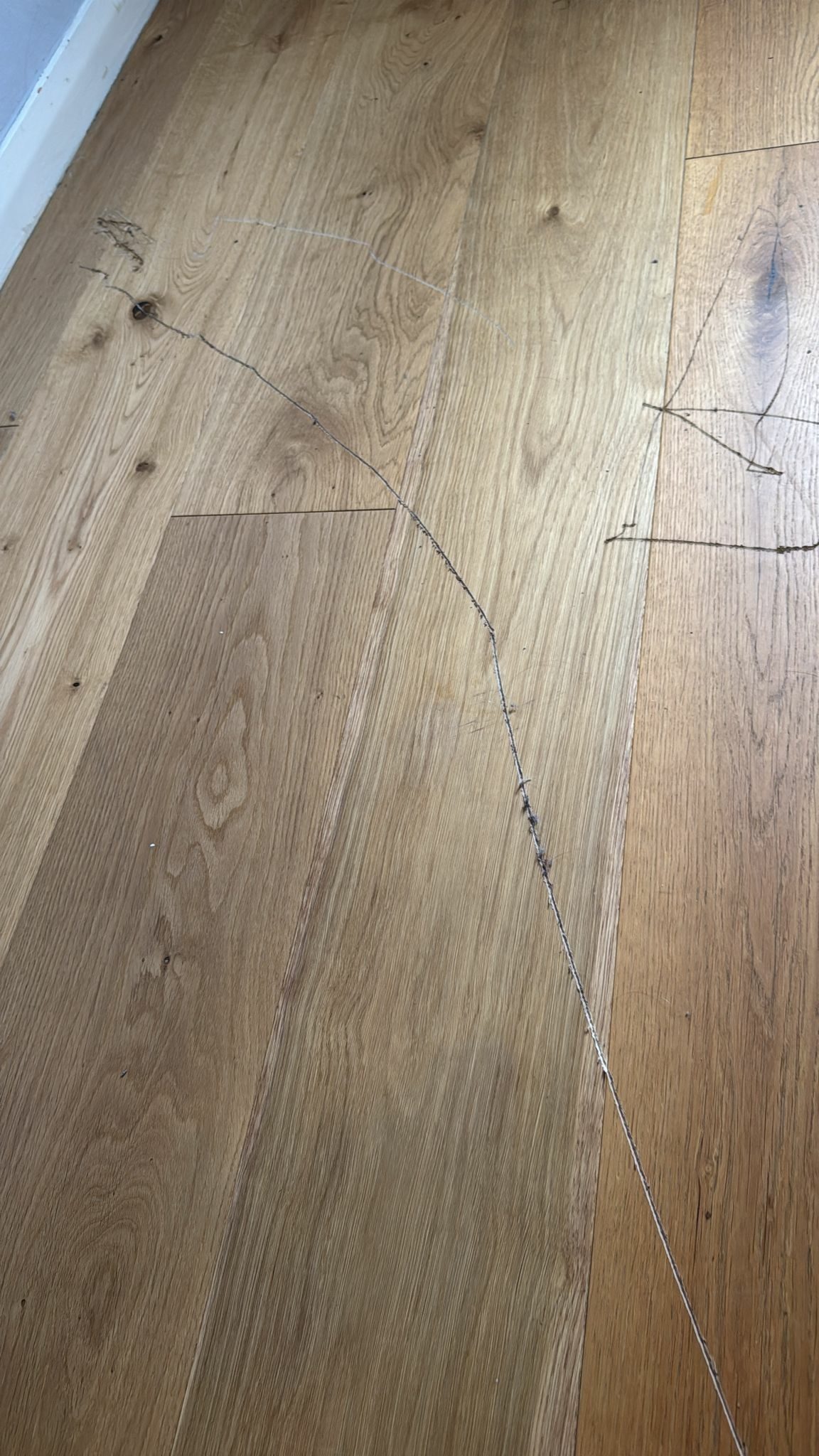
- Surface scratch and damage repair on both lacquered and oiled floors, including localised refinishing to blend repaired areas with the surrounding floor surface
- Staircase repair — loose treads, damaged nosings and worn surfaces on the staircases of E13 and E6's period houses are routine repair work we carry out across the area
For the Upton Gardens new-build properties, repair requirements tend toward the engineered floor category — surface wear, localised scratching and occasional edge-lifting or delamination in apartments that have been occupied for several years. We assess the specific condition during the site visit and advise on repair, recoating or replacement as appropriate.
Floor Maintenance in Upton Park
Upton Park's period floorboards, once restored, benefit most from an oil or wax-based maintenance approach rather than the recoating cycle associated with lacquered floors. An oiled or waxed finish on a Victorian pine floor is easy to spot-repair — localised damage can be addressed without the need to sand and refinish the entire floor — and periodic professional re-oiling or re-waxing keeps the finish in excellent condition and significantly extends the interval before a full professional resand is required.
For Upton Park's growing number of recently refurbished properties with lacquered engineered or hardwood floors, periodic wood floor recoating is the most practical ongoing maintenance strategy — a fresh coat of lacquer applied over the existing finish once it shows signs of wear, without the disruption of full sanding. It refreshes the floor's appearance and protects the timber at a fraction of the cost and inconvenience of a full restoration.
We also provide maintenance services for the commercial premises along Green Street and Barking Road — the shops, restaurants and community spaces that form the backbone of Upton Park's street-level commercial life. Commercial floor cleaning and maintenance for high-traffic environments is carried out at times that minimise disruption to the business.
Flooring Services London covers all residential and commercial flooring work in Upton Park E13 and E6 — from the Victorian and Edwardian terraces of Green Street and Plashet Road to the new-build homes of Upton Gardens and the commercial premises along Barking Road. We are available Monday to Friday 07:30–17:30 and Saturday 07:30–16:00. All work begins with a free, no-obligation site visit and a written fixed-price quote — call us on 020 7036 0625 or request a quote online. We respond to all Upton Park enquiries the same working day.
We regularly work in neighbouring areas including Plaistow, East Ham, Forest Gate, Barking and Ilford.
Frequently Asked Questions — Flooring in Upton Park
My Upton Park terrace has the original floorboards under the carpet — are they worth keeping? In the vast majority of cases, yes. Original pine floorboards in Upton Park's Victorian and Edwardian terraces are among the most rewarding floors to restore in east London — they are well-seasoned, typically in sound structural condition, and respond extremely well to professional sanding. The result is a floor with genuine character and history that no new product can replicate, achieved at a fraction of the disruption and cost of a full floor replacement.
What finish is most appropriate for period floorboards in an Upton Park Victorian terrace? For most Upton Park period properties, hard-wax oil is the finish we recommend most often. It enhances the natural grain and warmth of the timber, sits sympathetically with the character of a Victorian house, and is straightforward to maintain and spot-repair over time. Lacquer provides a harder, more washable surface and suits higher-traffic areas and homeowners who prefer a more contemporary look — but it requires full sanding to repair when the surface is damaged, whereas oil finishes can be spot-treated.
Do you work in the Upton Gardens development on the old Boleyn Ground site? Yes — we cover the Upton Gardens new-build development as part of our Upton Park service area. The concrete subfloors in these properties mean engineered wood and LVT are the appropriate floor specifications, and we carry out full moisture assessment before every installation to confirm the correct product and underlay for each apartment.
My Upton Park terrace has gaps between the floorboards — should I fill them? It depends on the size and character of the gaps. Narrow seasonal gaps — boards that expand in summer and contract in winter — are entirely normal in Victorian suspended timber floors and generally do not need treatment. Where gaps are wide enough to trap dirt, create draughts from the underfloor void, or are structurally problematic, professional gap filling using flexible filler is the right approach. We assess this during the site visit and advise honestly on whether filling is needed.
Does ULEZ apply in Upton Park E13 and E6? Yes — both E13 and E6 fall within the ULEZ zone. The daily charge applies to our vehicles and is included transparently in every written quote for Upton Park work, with no additional charges on the final invoice.
How do I arrange a free quote for flooring work in Upton Park? Call us on 020 7036 0625 Monday to Friday 07:30–17:30 or Saturday 07:30–16:00, or use our free online quote form. We will arrange a convenient site visit at a time that suits you and provide a written fixed-price estimate with no obligation.
Flooring Services in Upton Park
As a trusted local flooring company, we offer a comprehensive range of flooring services in Upton Park and surrounding areas. Whether you need new flooring installed, existing floors repaired, or expert advice on the best flooring options for your property, our experienced team is here to help.
Floor Fitting
Wood floor fitting is the process of installing flooring such as engineered wood, solid wood, parquet, or laminate, ensu...
Floor Sanding
Floor sanding is the process of removing the top layer of a wooden floor using professional sanding equipment to elimina...
Wood Floor Repair
Wood floor repair involves fixing damaged, worn, or unstable areas of a wooden floor, including replacing boards, fillin...
Floor Maintenance
Wood floor maintenance includes cleaning, polishing, buffing, and re-coating wooden floors to preserve their appearance,...
Solid Wood Floor Sanding
Solid wood floor sanding is the process of removing the top layer of solid timber flooring to eliminate wear, scratches,...
Engineered Floor Sanding
Engineered wood floor sanding is the process of carefully removing the top wear layer of an engineered floor to restore ...
Gap Filling
Wood floor gap filling involves sealing gaps between floorboards or parquet blocks to improve stability, appearance, and...
Floor Sealing
Floor sealing refers to the application of a protective finish, such as lacquer or oil, to a wooden floor after sanding,...
Commercial Floor Sanding
Commercial floor sanding involves restoring wooden floors in high-traffic environments by removing worn finishes, surfac...
Engineered Floor Fitting
Engineered wood floor fitting involves installing multi-layered wooden boards designed for stability, allowing them to p...
Laminate Floor Installation
Laminate floor fitting involves installing multi-layer synthetic flooring boards designed to replicate the appearance of...
Floorboards Fitting
Floorboards fitting covers the installation of timber floorboards, ensuring correct preparation, alignment, and fixing f...
Floor Insulation Fitting
Floor insulation fitting involves installing insulating materials beneath a floor structure to reduce heat loss, improve...
Floorboards Repair
Floorboard repair covers the restoration of damaged, loose, or worn timber boards, addressing issues such as movement, s...
Floor Scratch Repair
Wood floor scratch repair focuses on restoring damaged areas of a wooden floor by reducing or removing surface scratches...
Floor Polishing
Floor polishing focuses on enhancing the appearance of wooden floors by restoring shine, improving surface protection, a...
Parquet Floor Sanding
Parquet floor sanding involves carefully restoring patterned wooden flooring by removing worn finishes, surface damage, ...
Floorboards Sanding
Floorboards sanding focuses on restoring timber boards by removing worn finishes, surface damage, and imperfections, cre...
Stairs Sanding
Stair sanding involves restoring wooden staircases by removing worn finishes, surface damage, and imperfections, prepari...
Wood Floor Staining
Floor staining enhances the appearance of wooden floors by applying coloured finishes that change the tone of the wood w...
School Floor Sanding
School floor sanding focuses on restoring wooden floors in educational environments by removing wear, surface damage, an...
Solid Wood Floor Fitting
Solid wood floor fitting requires careful preparation and precise installation, as natural timber reacts to changes in t...
Parquet Floor Fitting
Parquet floor fitting involves installing patterned wooden flooring with precision, ensuring correct alignment, subfloor...
Staircase Floor Fitting
Staircase floor fitting involves installing wooden elements on staircases, including treads, risers, and trims, ensuring...
Soundproofing Wood Flooring
Soundproof floor fitting focuses on reducing airborne and impact noise by installing suitable underlay and flooring syst...
Solid Wood Floor Repair
Solid wood floor repair covers the restoration of damaged timber flooring by replacing worn boards, treating surface iss...
Engineered Floor Repair
Engineered wood floor repair focuses on restoring damaged or worn engineered flooring by addressing surface issues and, ...
Parquet Floor Repair
Parquet floor repair involves restoring patterned wooden flooring by fixing damaged blocks, stabilising loose sections, ...
Wood Floor Cleaning
Wood floor cleaning involves using suitable products and techniques to remove dirt, maintain the finish, and protect the...
Floor Waxing
Floor waxing and recoating involves renewing the protective layer of a wooden floor by removing old wax or finish build-...
Floor Stripping
Floor stripping refers to the removal of old wax, polish, or finish layers from a floor using specialised products, prep...
Wood Floor Re-Oiling
Wood floor re-oiling focuses on renewing the protective oil finish of a wooden floor, enhancing its natural appearance w...
Wood Floor Recoating
Wood floor recoating involves applying a new protective finish over an existing one without full sanding, helping to ref...
Commercial Floor Cleaning
Commercial floor cleaning focuses on deep cleaning and maintenance of flooring in high-traffic environments, removing em...
LVT Floor Installation
LVT floor installation involves fitting luxury vinyl tiles or planks with precision, ensuring correct subfloor preparati...
All our flooring services in Upton Park come with a free, no-obligation estimate. We pride ourselves on quality workmanship and competitive pricing across all London boroughs.