Monday - Friday 07:30 - 17:30, Saturday 07:30 - 16:00
Flooring Services Walthamstow — Floor Sanding, Fitting & Repair in E17
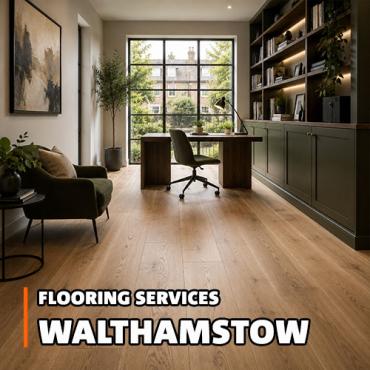
Flooring Services London provides floor sanding, floor fitting, wood floor repair and floor maintenance in Walthamstow E17. Walthamstow is the largest and most architecturally varied neighbourhood in the London Borough of Waltham Forest — a place that contains genuine extremes within a single postcode, from the densely built Victorian terraces around the High Street and St James Street to the spacious, well-preserved streets of the Walthamstow Village conservation area, and from the semis of the northern residential grid to the newer flatted developments that have followed the area's significant regeneration over the past decade. That variety is what makes Walthamstow one of the most interesting and varied areas for flooring work in northeast London.
The Walthamstow Village conservation area is the most architecturally significant part of E17 for flooring purposes. The streets around Orford Road, Church End and the roads running off St Mary Road contain some of the finest and best-preserved Victorian and Edwardian housing in the whole of Waltham Forest — properties with generous room proportions, high ceilings, original construction quality and, in many cases, original suspended timber floors of a character and quality that genuinely rewards careful restoration work. Wide-plank boards in hardwood and quality softwood, and original block parquet in the reception rooms of the better properties, are common throughout the Village streets, and these floors are worth taking seriously. Beyond the conservation area, the Lloyd Park area, the streets around Hoe Street and Forest Road, and the substantial residential grid to the north all add their own distinct layers of original flooring work — each requiring a different approach and each assessed individually. All work begins with a free site visit and a written fixed-price quote.
Get a free quote for your Walthamstow property →
Wood Floor Fitting in Walthamstow
Walthamstow's housing stock spans a wide enough range of building periods and property types that subfloor conditions vary considerably across E17, and proper assessment at the site visit is essential before any specification is confirmed. The Victorian and Edwardian terraces have suspended timber subfloors throughout; the semis are the same on upper floors, with solid concrete more common on ground floors in the later stock; and the newer flatted and converted properties bring a different set of subfloor requirements entirely. Where original floors survive in reasonable condition, restoration is almost always the better recommendation before new installation is considered. Where new flooring is going in, the appropriate options for Walthamstow's housing stock are:
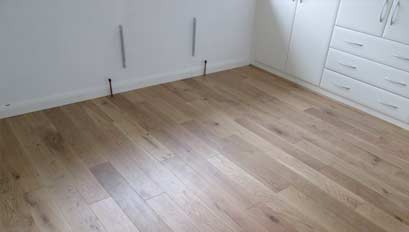
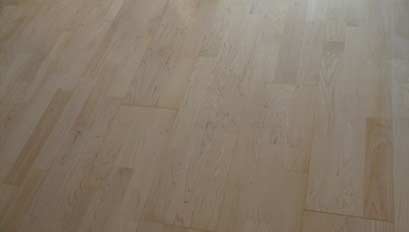
- Solid wood floor fitting — solid hardwood in oak, ash or other species, in formats suited to the room proportions and period of the property; the most durable and characterful long-term specification for the Village conservation area's better Victorian and Edwardian properties, and for any E17 property where suspended timber subfloors and good room proportions make hardwood a practical choice. The larger rooms of the Village streets suit wider plank formats particularly well
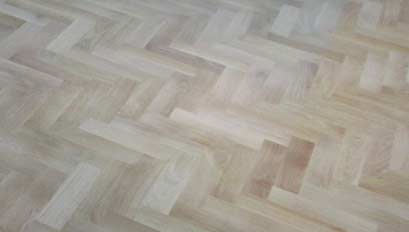
- Parquet floor fitting — herringbone and traditional block parquet, well suited to the Edwardian and periods that define much of Walthamstow's residential character; wide-format herringbone engineered oak is an outstanding specification in the reception rooms of the Village conservation area's better Edwardian properties, and entirely appropriate to the period and quality of the building
- Engineered wood floor fitting — the dimensionally stable alternative where concrete ground floors, variable moisture readings or the requirements of a converted or flatted property make solid timber less appropriate; increasingly the standard specification for Walthamstow's growing stock of refurbished and converted properties, and well suited to installation over underfloor heating where present
- LVT installation — a fully waterproof practical option for kitchens, utility rooms and ground-floor rooms where timber flooring carries more risk; quality wood-effect LVT in wide-plank formats integrates naturally alongside timber floors elsewhere in the house and is a sensible, hard-wearing specification for Walthamstow's busier ground-floor rooms
- Laminate floor fitting — where project requirements or budget make hardwood the less practical option
- Soundproof floor fitting — increasingly relevant in Walthamstow's converted and flatted properties, particularly in the newer developments around Walthamstow Central and the refurbished former commercial buildings throughout E17; we assess acoustic requirements at the site visit and specify the appropriate underlay system before any installation is agreed
Full subfloor preparation is standard before every installation — moisture assessment, levelling and damp-proof membrane where required. In the Village conservation area's Victorian properties particularly, where the subfloor may carry the effects of over a century of seasonal movement and varying maintenance quality, this stage deserves proper attention and we give it accordingly.
Floor Sanding in Walthamstow
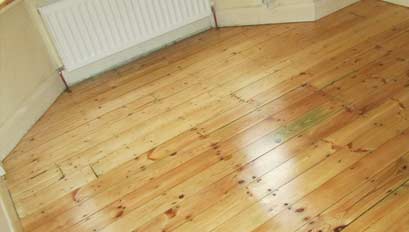
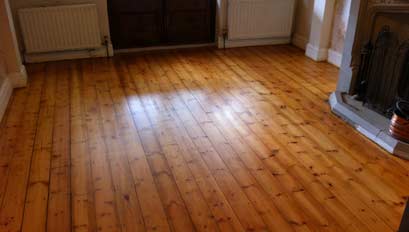
Walthamstow produces some of the most varied and characterful floor sanding work in northeast London, and the range within a single postcode is genuinely wide. At one end, the Victorian and Edwardian properties of the Village conservation area and the Lloyd Park streets generate demanding, individually varied briefs — wide-plank boards in hardwood and quality softwood, reception room parquet of genuine character, and period staircases that in the best E17 properties are architecturally significant enough to deserve the same care as the floors themselves. At the other end, the semis throughout the northern and western parts of E17 provide a consistent and substantial stream of original softwood board and block parquet restoration work — less individually demanding, but no less important to approach properly.
The original floors of Walthamstow Village deserve particular attention. The properties around Orford Road and Church End were built to a specification considerably above the standard Victorian terrace — better timber, wider boards, higher-quality original detailing throughout — and the floors reflect that. Original boards and reception room parquet in these properties carry well over a century of character that no new product can come close to replicating, and a professional sand and hard-wax oil finish is the most effective way to bring that character fully to the surface. The result in a well-preserved Village property is among the most rewarding flooring work we do anywhere in the borough.
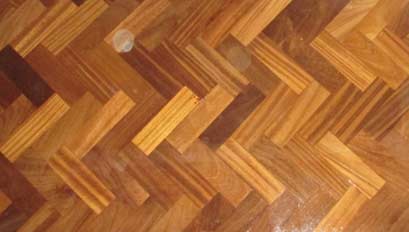
The parquet throughout E17 tells a slightly different but equally important story. Much of it has spent decades under carpet and emerges in better structural condition than expected. A proper parquet restoration in a Walthamstow semi — sanded carefully, finished with hard-wax oil, maintained annually — is a floor that will last another fifty years without needing to be replaced, and that represents considerably better value than any new flooring product installed over the top of it.
Our dust-free sanding process captures up to 99% of airborne particles at source — important in Walthamstow's densely built terraced streets, where houses share walls, and essential in occupied homes where dust containment matters practically as much as it does for quality of finish.
The sanding approach across Walthamstow E17:
- Original Victorian and Edwardian boards in the Village conservation area and Lloyd Park streets — assessed individually for timber species, board width, thickness and condition; hard-wax oil is our most frequent finish recommendation, enhancing the natural grain and ageing sympathetically with the house; in the finest Village properties the specific finish choice is always discussed individually at the site visit
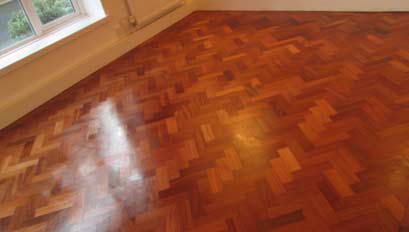
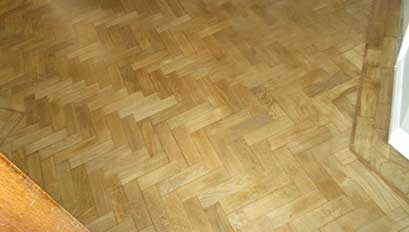
- Original block parquet in Victorian, Edwardian and properties across E17 — sanded using specialist edge equipment and careful directional handling; each Walthamstow parquet job assessed individually for block layout, timber species, existing finish layers and the most appropriate treatment
- Hardwood boards in the better Victorian and Edwardian properties — sanded with a species-appropriate grit sequence and finished to specification; floor staining an option worth discussing where a client wants to change the tone of the timber before sealing
- Softwood boards throughout the E17 residential grid — assessed on the same individual basis as Victorian material; hard-wax oil the standard recommendation for the period
- Engineered floors in renovated and converted properties — wear layer thickness measured and confirmed before any sanding is agreed; we will always advise honestly if the wear layer is insufficient
- Staircases — finished by hand and detail sander with the same individual care as the main floors; in the Village conservation area's better properties, the staircase runs the full height of the house and is worth restoring to a standard that matches the floors it connects
Wood Floor Repair in Walthamstow
The age and variety of Walthamstow's housing stock generates repair requirements that range from the demanding and highly individual to the routine and straightforward, often within the same street. In the Village conservation area's Victorian and Edwardian properties, repair work requires the same level of precision and material sourcing care as in any of the finer residential areas of east London — wide boards must be sourced in the right timber and width, parquet blocks must be genuinely matched rather than approximately substituted, and the quality of the surrounding interior means that a repair that doesn't integrate is immediately visible. Across the broader E17 housing stock, the requirements are typically less exacting but the same principle applies: do it properly, or the sanding that follows will show exactly where the repair was.
Walthamstow also shares with the rest of the borough the cumulative effects of variable-quality renovation work on original floors over the decades. Poorly filled gaps, incompatible finishes applied over original boards, lifted and incorrectly re-laid parquet — these are all things we encounter regularly in E17, and addressing them correctly at the preparation stage is a core part of what we do before any main work begins.
Common repair work across Walthamstow E17:
- Gap filling between floorboards — flexible filler carefully colour-matched to the specific boards; in the Village conservation area's Victorian properties with wider boards, individual colour matching requires particular care to achieve a result that integrates naturally with a high-quality interior
- Board replacement where individual planks are damaged, rotten or missing — sourcing period-matched timber of appropriate width and species; the wider Victorian boards of the Village streets require specific sourcing and we take the time to find the right match
- Loose board re-fixing — original fixings working free from joists after a century or more of seasonal movement; one of the most frequently encountered repair jobs across E17's older terraced streets
- Original parquet repair — re-bonding loose blocks, replacing missing sections with period-matched material; in the Village conservation area this requires genuine care with species and dimension matching
- Remediation of previous poor-quality work — assessing and correcting incompatible finishes, poorly executed repairs and incorrectly re-laid flooring before any new sanding or fitting work is carried out
- Floor scratch repair — localised surface damage treatment where a full resand is not yet warranted
- Moisture-related damage assessment — identifying and advising on the source of any moisture-related movement or damage before carrying out repairs, to prevent recurrence
- Staircase repair — the original staircases of Walthamstow's Victorian and Edwardian terraces restored with the same attention as the floors themselves
Floor Maintenance in Walthamstow
A properly maintained floor lasts significantly longer between full resands — and for a Walthamstow homeowner with original Victorian, Edwardian or inter-war floors, that interval represents a meaningful saving in both disruption and cost. The right maintenance approach by floor type:
- Hard-wax oil finished boards and parquet — annual or biannual re-oiling with Osmo Polyx or equivalent; maintains the protective finish and allows localised wear or damage to be spot-treated without disturbing the rest of the floor. For the Village conservation area properties where floor restoration represents a genuine investment in a high-quality interior, this kind of regular maintenance is the single most effective way to protect that investment and push the interval before a full resand considerably further out
- Wax-finished period parquet — periodic professional re-waxing at appropriate intervals; traditional wax remains the most sympathetic maintenance approach for genuinely historic Victorian or Edwardian block parquet, and in the finest Village properties, it is sometimes the most appropriate long-term choice
- Lacquered engineered and hardwood floors — recoating once the lacquer shows visible signs of wear; extends the floor's useful life without the disruption and cost of a full resand, and is increasingly relevant across E17 as more properties are renovated with engineered flooring
- LVT floors — regular professional cleaning with LVT-appropriate products; periodic deep cleaning at appropriate intervals maintains the surface layer and overall appearance over time
Walthamstow's commercial premises generate some of the most varied commercial flooring demand in the borough — from the independent shops, cafés and restaurants of Orford Road and the Village to the businesses along Hoe Street and St James Street, and the growing range of commercial occupiers that have followed the area's regeneration. Commercial floor sanding and commercial floor maintenance are a consistent part of our work across E17. All commercial work is scheduled around business operating hours to avoid disruption to trading.
Flooring Services in Walthamstow
Flooring Services London covers all residential and commercial flooring work in Walthamstow E17 — from the Victorian and Edwardian terraces of the Village conservation area and Lloyd Park to the inter-war housing throughout the E17 residential grid, the converted and flatted properties near Walthamstow Central, and the commercial premises along Hoe Street, St James Street and Orford Road. Call us on 020 7036 0625 or request a free quote online — we respond to all Walthamstow enquiries the same working day.
Frequently Asked Questions — Flooring in Walthamstow
What types of original floor are most common in Walthamstow properties? It depends significantly on where in E17 the property is. The Victorian and Edwardian terraces of the Village conservation area and the Lloyd Park streets typically have softwood or hardwood boards throughout, with original block parquet — sometimes genuine hardwood block in the better properties — in the reception rooms. The inter-war semis throughout the broader E17 residential grid have original softwood boards on upper floors and softer block parquet in the reception rooms. Both types respond well to professional floor sanding and are worth a proper assessment before any new installation is considered, particularly where carpet has been down for many years and the original floor condition is unknown.
Is the Walthamstow Village conservation area particularly relevant to flooring? Yes — the conservation area designation reflects the exceptional quality and integrity of the Victorian and Edwardian housing stock in this part of E17, and that quality extends directly to the original floors. The properties around Orford Road and Church End tend to have better original timber, wider boards and more considered original detailing than the standard E17 terrace, and the flooring work in these streets is correspondingly more demanding and more rewarding. We treat every Village conservation area floor individually — the right specification, the right materials, the right finish — and the results reflect that approach.
What finish do you recommend for period floors in a Walthamstow Victorian terrace? Hard-wax oil — Osmo Polyx or equivalent — is our most frequent recommendation for Walthamstow's Victorian and Edwardian properties. It enhances the natural grain and warmth of the timber, ages sympathetically with the house, and is practical to maintain in an occupied family home — localised wear or damage can be spot-treated without resanding the entire floor. For original hardwood block parquet in the finest Village properties, traditional wax is sometimes the more appropriate and historically sympathetic choice, and we discuss this individually at the site visit.
Do you work on converted and flatted properties in Walthamstow? Yes — converted and flatted properties are a growing part of the work we do across E17. The key considerations in these settings are subfloor type, moisture assessment and acoustic performance between floors. We assess all three at the site visit and recommend the appropriate specification — whether engineered wood with acoustic underlay, LVT or another solution — before any installation is agreed.
How do I get a quote for flooring work in Walthamstow? Call us on 020 7036 0625 or request a free quote online. We will arrange a convenient site visit and provide a written fixed-price estimate with no obligation.
Flooring Services in Walthamstow
As a trusted local flooring company, we offer a comprehensive range of flooring services in Walthamstow and surrounding areas. Whether you need new flooring installed, existing floors repaired, or expert advice on the best flooring options for your property, our experienced team is here to help.
Floor Fitting
Wood floor fitting is the process of installing flooring such as engineered wood, solid wood, parquet, or laminate, ensu...
Floor Sanding
Floor sanding is the process of removing the top layer of a wooden floor using professional sanding equipment to elimina...
Wood Floor Repair
Wood floor repair involves fixing damaged, worn, or unstable areas of a wooden floor, including replacing boards, fillin...
Floor Maintenance
Wood floor maintenance includes cleaning, polishing, buffing, and re-coating wooden floors to preserve their appearance,...
Solid Wood Floor Sanding
Solid wood floor sanding is the process of removing the top layer of solid timber flooring to eliminate wear, scratches,...
Engineered Floor Sanding
Engineered wood floor sanding is the process of carefully removing the top wear layer of an engineered floor to restore ...
Gap Filling
Wood floor gap filling involves sealing gaps between floorboards or parquet blocks to improve stability, appearance, and...
Floor Sealing
Floor sealing refers to the application of a protective finish, such as lacquer or oil, to a wooden floor after sanding,...
Commercial Floor Sanding
Commercial floor sanding involves restoring wooden floors in high-traffic environments by removing worn finishes, surfac...
Engineered Floor Fitting
Engineered wood floor fitting involves installing multi-layered wooden boards designed for stability, allowing them to p...
Laminate Floor Installation
Laminate floor fitting involves installing multi-layer synthetic flooring boards designed to replicate the appearance of...
Floorboards Fitting
Floorboards fitting covers the installation of timber floorboards, ensuring correct preparation, alignment, and fixing f...
Floor Insulation Fitting
Floor insulation fitting involves installing insulating materials beneath a floor structure to reduce heat loss, improve...
Floorboards Repair
Floorboard repair covers the restoration of damaged, loose, or worn timber boards, addressing issues such as movement, s...
Floor Scratch Repair
Wood floor scratch repair focuses on restoring damaged areas of a wooden floor by reducing or removing surface scratches...
Floor Polishing
Floor polishing focuses on enhancing the appearance of wooden floors by restoring shine, improving surface protection, a...
Parquet Floor Sanding
Parquet floor sanding involves carefully restoring patterned wooden flooring by removing worn finishes, surface damage, ...
Floorboards Sanding
Floorboards sanding focuses on restoring timber boards by removing worn finishes, surface damage, and imperfections, cre...
Stairs Sanding
Stair sanding involves restoring wooden staircases by removing worn finishes, surface damage, and imperfections, prepari...
Wood Floor Staining
Floor staining enhances the appearance of wooden floors by applying coloured finishes that change the tone of the wood w...
School Floor Sanding
School floor sanding focuses on restoring wooden floors in educational environments by removing wear, surface damage, an...
Solid Wood Floor Fitting
Solid wood floor fitting requires careful preparation and precise installation, as natural timber reacts to changes in t...
Parquet Floor Fitting
Parquet floor fitting involves installing patterned wooden flooring with precision, ensuring correct alignment, subfloor...
Staircase Floor Fitting
Staircase floor fitting involves installing wooden elements on staircases, including treads, risers, and trims, ensuring...
Soundproofing Wood Flooring
Soundproof floor fitting focuses on reducing airborne and impact noise by installing suitable underlay and flooring syst...
Solid Wood Floor Repair
Solid wood floor repair covers the restoration of damaged timber flooring by replacing worn boards, treating surface iss...
Engineered Floor Repair
Engineered wood floor repair focuses on restoring damaged or worn engineered flooring by addressing surface issues and, ...
Parquet Floor Repair
Parquet floor repair involves restoring patterned wooden flooring by fixing damaged blocks, stabilising loose sections, ...
Wood Floor Cleaning
Wood floor cleaning involves using suitable products and techniques to remove dirt, maintain the finish, and protect the...
Floor Waxing
Floor waxing and recoating involves renewing the protective layer of a wooden floor by removing old wax or finish build-...
Floor Stripping
Floor stripping refers to the removal of old wax, polish, or finish layers from a floor using specialised products, prep...
Wood Floor Re-Oiling
Wood floor re-oiling focuses on renewing the protective oil finish of a wooden floor, enhancing its natural appearance w...
Wood Floor Recoating
Wood floor recoating involves applying a new protective finish over an existing one without full sanding, helping to ref...
Commercial Floor Cleaning
Commercial floor cleaning focuses on deep cleaning and maintenance of flooring in high-traffic environments, removing em...
LVT Floor Installation
LVT floor installation involves fitting luxury vinyl tiles or planks with precision, ensuring correct subfloor preparati...
All our flooring services in Walthamstow come with a free, no-obligation estimate. We pride ourselves on quality workmanship and competitive pricing across all London boroughs.