Monday - Friday 07:30 - 17:30, Saturday 07:30 - 16:00
Flooring Services Whitechapel — Floor Sanding, Fitting & Repair in E1 & EC3
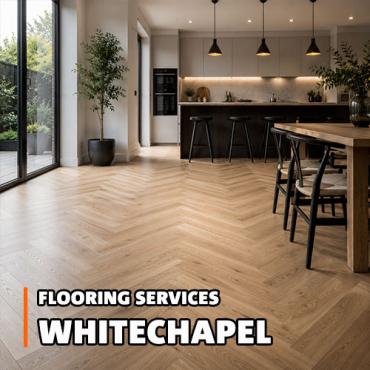
Flooring Services London provides floor sanding, floor fitting, wood floor repair and floor maintenance across Whitechapel in E1 and EC3. Whitechapel sits at the meeting point of the City of London and the East End — a densely urban neighbourhood that has been one of London's most continuously changing districts for several centuries, shaped by successive waves of immigration, industry and regeneration. Its housing stock today reflects that layered history: Victorian and Edwardian terraced housing survives on the residential streets running north and south of Whitechapel Road, alongside a significant number of converted commercial and industrial buildings that have become apartments and creative workspaces as the City fringe has expanded eastward, and a growing volume of new-build residential developments on former cleared and industrial sites throughout E1. The Royal London Hospital, one of the largest NHS teaching hospitals in the country, and the emerging Whitechapel Vision regeneration masterplan — centred on the Elizabeth line station that opened here in 2022 — are reshaping the commercial and residential character of the area at pace. We work across all of Whitechapel's property types, from original period floor restoration in the terraced streets to engineered wood installation in the newest residential developments. All work begins with a free site visit and a written fixed-price quote.
Flooring Services London covers all residential and commercial flooring work across Whitechapel E1 and EC3 — from the Victorian terraces of Fieldgate Street and Brady Street to the converted City-fringe commercial buildings, the new-build developments around the Elizabeth line station, and the commercial and hospitality premises of Whitechapel Road and Brick Lane. Call us on 020 7036 0625 or request a quote online — we respond to all Whitechapel enquiries the same working day. We regularly work in neighbouring areas including Stepney, Bethnal Green, Spitalfields, Wapping and Aldgate.
Wood Floor Fitting in Whitechapel
Whitechapel's Victorian and Edwardian terraced housing — the streets around Fieldgate Street, Brady Street, Cavell Street and the residential grids running off Whitechapel Road — has suspended timber subfloors throughout, and original pine boards beneath carpet are common in these properties. Many of Whitechapel's period terraces housed successive immigrant communities over the past 150 years — the Jewish community that settled here from the 1880s onwards, followed by the Bangladeshi community that has defined the area's character from the 1970s to the present — and the houses themselves have been in continuous occupation throughout, which means their original floors have rarely been left undisturbed long enough to deteriorate significantly. Where those boards are structurally sound, restoring them is almost always the most sensible recommendation. Where new flooring is going in over suspended timber, solid wood floor fitting, engineered wood and parquet floor fitting are the primary options, with the specific choice depending on subfloor condition, room use and the homeowner's brief.
The converted commercial and warehouse buildings of Whitechapel's City fringe — the former textile warehouses, commercial premises and industrial buildings of the streets between Whitechapel Road and Aldgate that have been converted into residential lofts, offices and creative workspaces — have concrete or original stone subfloors requiring a completely different specification. Engineered wood is the standard choice here, with wide-plank formats in natural oil finishes suiting the character of these larger, more open spaces. Moisture assessment is carried out as standard before every installation in these buildings — the age and construction of the original properties can produce variable subfloor moisture conditions that need to be understood individually before any floor is specified.
For Whitechapel's newer residential developments — the apartment buildings appearing steadily along Whitechapel Road and on former cleared sites as the Elizabeth line regeneration takes hold — concrete subfloors throughout make engineered wood the standard specification. Soundproofing underlay is worth considering in the denser apartment buildings where noise between floors is a practical concern.
Whitechapel also has a small but notable number of early Victorian and Georgian properties on the streets closest to the City boundary — some of which retain original floors of considerable age. Where these are encountered, the assessment and installation approach is entirely individual, with finish recommendations that are sympathetic to the specific age and character of the building.
Floor Sanding in Whitechapel
Whitechapel's Victorian and Edwardian terraced housing provides the core of the area's residential floor sanding work — original pine boards assessed for thickness and condition, sanded with our dust-free process and finished to the homeowner's specification. Our dust-free sanding process captures up to 99% of airborne particles at source, which is particularly relevant in Whitechapel's densely occupied terraced streets where party walls are shared throughout and dust migration into neighbouring properties is a real concern.
For the older properties on the City fringe of EC3 — where some genuinely early Victorian and Georgian buildings survive among the commercial fabric — original floors of greater age and varied species require individual assessment before any sanding is agreed. The appropriate grit sequence, finish and overall approach all depend on the specific timber and its history, and we always assess these floors on their own terms rather than applying a standard treatment.
The sanding approach by floor type:
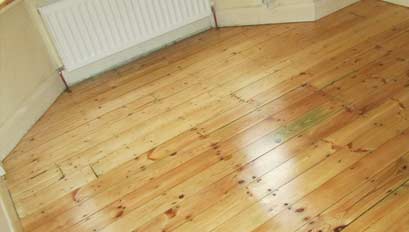
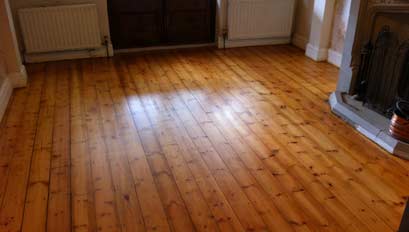
- Original Victorian and Edwardian pine boards in Whitechapel's period terraces — the most common brief in E1. Board thickness, existing finish and condition are assessed during the site visit. Hard-wax oil is our most frequent finish recommendation — it enhances the natural grain of the timber, suits the character of a period East End terrace, and is far easier to maintain and spot-repair than lacquer
- Early Victorian and Georgian boards on the City fringe — assessed individually, with finish recommendations appropriate to the specific age and timber species of the floor
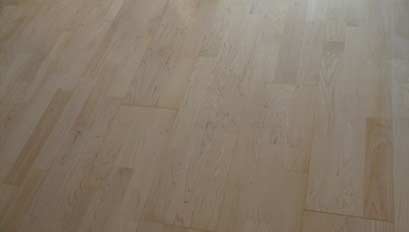
- Engineered floors in converted commercial buildings and newer residential developments — wear layer thickness is always measured before sanding is agreed; we advise honestly if recoating is more appropriate than sanding for a specific floor
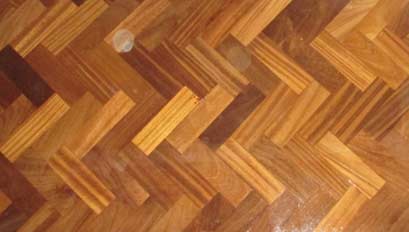
- Parquet floors in Whitechapel's larger period properties — parquet floor sanding requires specialist edge work and directional handling that standard drum equipment cannot achieve
- Staircases in E1's period terraces — finished by hand and detail sander to match the rest of the floor, and routinely included as part of a whole-house sanding project
- Commercial floor sanding across Whitechapel's substantial hospitality and office sector — commercial floor sanding scheduled outside trading hours to minimise disruption
Wood Floor Repair in Whitechapel
The repair requirements of Whitechapel's Victorian and Edwardian terraced housing are the familiar inner east London picture — suspended timber floors in continuous occupation for over a century, showing the natural consequences of seasonal movement, original fixings gradually working free, and the occasional localised damage from water ingress or previous heavy-handed maintenance.
The most common repair work across Whitechapel includes:
- Gap filling between period floorboards — flexible filler colour-matched to the existing boards. Whitechapel's terraced houses have been in continuous occupation by multiple communities over more than a century, and the floors in many of these properties have had a complex history of DIY repairs, floor coverings and treatments that requires careful assessment before filling is agreed
- Board replacement where individual planks have been damaged by water ingress, rot or structural failure — sourcing period-matched pine for the wider boards found in older properties
- Loose board re-fixing — among the most routine repair work we carry out across E1's period terraces; a century of seasonal movement works original cut nail fixings gradually free from the joists
- Surface scratch and damage repair on both lacquered and oiled floors, with localised refinishing to blend repaired areas naturally with the surrounding surface
- Staircase repair — loose treads, damaged nosings and worn stair surfaces in Whitechapel's Victorian housing stock are a consistent part of our repair work in the area
- Engineered floor repair in the converted commercial buildings and newer E1 developments — surface wear, edge-lifting and localised delamination assessed individually and treated with repair, recoating or replacement as appropriate
Floor Maintenance in Whitechapel
Restored period floors with hard-wax oil finishes in Whitechapel's Victorian and Edwardian terraces benefit most from periodic professional re-oiling as ongoing maintenance — annual or biannual treatment that keeps the finish in good condition, enhances the timber's appearance and significantly extends the interval before a full resand is required. The oil finish's practical advantage in a period property is considerable: localised damage can be spot-treated without sanding the entire floor, which is particularly valuable in Whitechapel's heavily occupied and continuously used terraced houses.
For lacquered engineered floors in the converted commercial buildings and newer residential developments, periodic wood floor recoating is the most practical ongoing strategy — a fresh coat over the existing lacquer once it shows signs of wear, extending the floor's life without the disruption of a full resand.
Whitechapel's commercial sector is extensive and varied — the restaurants and cafés of Brick Lane's southern end, the market traders and retail premises of Whitechapel Road, the offices and healthcare facilities around the Royal London Hospital, and the growing number of hospitality and workspace premises arriving with the Elizabeth line regeneration all generate consistent demand for commercial floor cleaning and scheduled floor maintenance. We provide maintenance programmes for commercial premises across E1 and EC3, planned around each business's operating hours.
Frequently Asked Questions — Flooring in Whitechapel
Can you restore original floorboards in a Whitechapel Victorian terrace? Yes — and in the vast majority of E1 period properties it is the right approach. Original pine boards in Whitechapel's Victorian and Edwardian terraces are typically in sound structural condition beneath their floor coverings, despite — or perhaps because of — the continuous occupation these houses have seen. Professional sanding produces results with genuine period character that no new product can replicate. We assess every floor honestly during the site visit before any work is agreed.
What finish suits period floorboards in a Whitechapel terrace? Hard-wax oil is our most frequent recommendation for Whitechapel's Victorian and Edwardian period properties. It enhances the natural grain of the timber without an incongruous lacquered surface, suits the age and character of an East End terrace, and is straightforward to maintain and spot-repair. Lacquer provides a harder, more washable finish suited to higher-traffic areas or a more contemporary look, but requires full sanding to repair localised damage rather than simple spot treatment.
Do you work in the newer developments around the Whitechapel Elizabeth line station? Yes — the new-build residential and commercial developments emerging around the Whitechapel Vision regeneration zone are part of our E1 service area. Concrete subfloors throughout these buildings make engineered wood the appropriate specification, and we carry out full moisture assessment before every installation regardless of the building's age.
Do both ULEZ and Congestion Charge apply in Whitechapel? E1 falls within the ULEZ zone throughout. The Congestion Charge applies to the parts of E1 and EC3 closest to the City boundary. Both charges where applicable are included clearly in every written quote — there are no surprise additions on the final invoice.
Do you carry out commercial floor sanding for businesses on Brick Lane and Whitechapel Road? Yes — restaurants, cafés, retail premises and offices across Whitechapel's commercial zone are a regular part of our E1 commercial work. We schedule all commercial sanding outside trading hours and provide written maintenance programmes for businesses that need regular professional floor care.
How do I arrange a quote for flooring in Whitechapel? Call us on 020 7036 0625 or request a free quote online. We will arrange a convenient site visit and provide a written fixed-price estimate with no obligation.
Flooring Services in Whitechapel
As a trusted local flooring company, we offer a comprehensive range of flooring services in Whitechapel and surrounding areas. Whether you need new flooring installed, existing floors repaired, or expert advice on the best flooring options for your property, our experienced team is here to help.
Floor Fitting
Wood floor fitting is the process of installing flooring such as engineered wood, solid wood, parquet, or laminate, ensu...
Floor Sanding
Floor sanding is the process of removing the top layer of a wooden floor using professional sanding equipment to elimina...
Wood Floor Repair
Wood floor repair involves fixing damaged, worn, or unstable areas of a wooden floor, including replacing boards, fillin...
Floor Maintenance
Wood floor maintenance includes cleaning, polishing, buffing, and re-coating wooden floors to preserve their appearance,...
Solid Wood Floor Sanding
Solid wood floor sanding is the process of removing the top layer of solid timber flooring to eliminate wear, scratches,...
Engineered Floor Sanding
Engineered wood floor sanding is the process of carefully removing the top wear layer of an engineered floor to restore ...
Gap Filling
Wood floor gap filling involves sealing gaps between floorboards or parquet blocks to improve stability, appearance, and...
Floor Sealing
Floor sealing refers to the application of a protective finish, such as lacquer or oil, to a wooden floor after sanding,...
Commercial Floor Sanding
Commercial floor sanding involves restoring wooden floors in high-traffic environments by removing worn finishes, surfac...
Engineered Floor Fitting
Engineered wood floor fitting involves installing multi-layered wooden boards designed for stability, allowing them to p...
Laminate Floor Installation
Laminate floor fitting involves installing multi-layer synthetic flooring boards designed to replicate the appearance of...
Floorboards Fitting
Floorboards fitting covers the installation of timber floorboards, ensuring correct preparation, alignment, and fixing f...
Floor Insulation Fitting
Floor insulation fitting involves installing insulating materials beneath a floor structure to reduce heat loss, improve...
Floorboards Repair
Floorboard repair covers the restoration of damaged, loose, or worn timber boards, addressing issues such as movement, s...
Floor Scratch Repair
Wood floor scratch repair focuses on restoring damaged areas of a wooden floor by reducing or removing surface scratches...
Floor Polishing
Floor polishing focuses on enhancing the appearance of wooden floors by restoring shine, improving surface protection, a...
Parquet Floor Sanding
Parquet floor sanding involves carefully restoring patterned wooden flooring by removing worn finishes, surface damage, ...
Floorboards Sanding
Floorboards sanding focuses on restoring timber boards by removing worn finishes, surface damage, and imperfections, cre...
Stairs Sanding
Stair sanding involves restoring wooden staircases by removing worn finishes, surface damage, and imperfections, prepari...
Wood Floor Staining
Floor staining enhances the appearance of wooden floors by applying coloured finishes that change the tone of the wood w...
School Floor Sanding
School floor sanding focuses on restoring wooden floors in educational environments by removing wear, surface damage, an...
Solid Wood Floor Fitting
Solid wood floor fitting requires careful preparation and precise installation, as natural timber reacts to changes in t...
Parquet Floor Fitting
Parquet floor fitting involves installing patterned wooden flooring with precision, ensuring correct alignment, subfloor...
Staircase Floor Fitting
Staircase floor fitting involves installing wooden elements on staircases, including treads, risers, and trims, ensuring...
Soundproofing Wood Flooring
Soundproof floor fitting focuses on reducing airborne and impact noise by installing suitable underlay and flooring syst...
Solid Wood Floor Repair
Solid wood floor repair covers the restoration of damaged timber flooring by replacing worn boards, treating surface iss...
Engineered Floor Repair
Engineered wood floor repair focuses on restoring damaged or worn engineered flooring by addressing surface issues and, ...
Parquet Floor Repair
Parquet floor repair involves restoring patterned wooden flooring by fixing damaged blocks, stabilising loose sections, ...
Wood Floor Cleaning
Wood floor cleaning involves using suitable products and techniques to remove dirt, maintain the finish, and protect the...
Floor Waxing
Floor waxing and recoating involves renewing the protective layer of a wooden floor by removing old wax or finish build-...
Floor Stripping
Floor stripping refers to the removal of old wax, polish, or finish layers from a floor using specialised products, prep...
Wood Floor Re-Oiling
Wood floor re-oiling focuses on renewing the protective oil finish of a wooden floor, enhancing its natural appearance w...
Wood Floor Recoating
Wood floor recoating involves applying a new protective finish over an existing one without full sanding, helping to ref...
Commercial Floor Cleaning
Commercial floor cleaning focuses on deep cleaning and maintenance of flooring in high-traffic environments, removing em...
LVT Floor Installation
LVT floor installation involves fitting luxury vinyl tiles or planks with precision, ensuring correct subfloor preparati...
All our flooring services in Whitechapel come with a free, no-obligation estimate. We pride ourselves on quality workmanship and competitive pricing across all London boroughs.