Monday - Friday 07:30 - 17:30, Saturday 07:30 - 16:00
Flooring Services Canning Town — Floor Sanding, Fitting & Repair in E16

Canning Town is one of east London's most rapidly changing neighbourhoods, and that transformation directly affects the type of flooring work being carried out here. The area is in the midst of a multi-billion-pound regeneration programme that has already delivered thousands of new homes across developments like Hallsville Quarter and Cerulean Quarter, with more phases still under construction. Alongside the new-build stock, a significant number of older properties — Victorian terraces, mid-century council blocks, and 1970s and 1980s housing association homes — remain throughout the area, many now being refurbished or sold to owner-occupiers and investors for the first time.
The result is a neighbourhood with an unusually wide range of property types and flooring situations: brand-new open-plan apartments on concrete decks, some with underfloor heating; older terraced houses with suspended timber floors and original or replacement boards; and mid-century flats where subfloor conditions can be unpredictable without a proper site assessment. Each requires a different approach, and that is exactly what we carry out before any work begins — a free site visit that examines the floor itself, the subfloor, the room's conditions, and which product or service will give you the best long-term result.
To arrange a visit or discuss your project, call us on 020 7036 0625 or request a free estimate online.
Floor Sanding and Finishing in Canning Town
Floor sanding is the process of mechanically removing the worn surface layer of a timber floor using industrial belt sanders and edge equipment, then applying a protective finish to restore the floor's appearance and extend its serviceable life. In Canning Town, sanding work arises across several distinct property types, each with its own considerations.
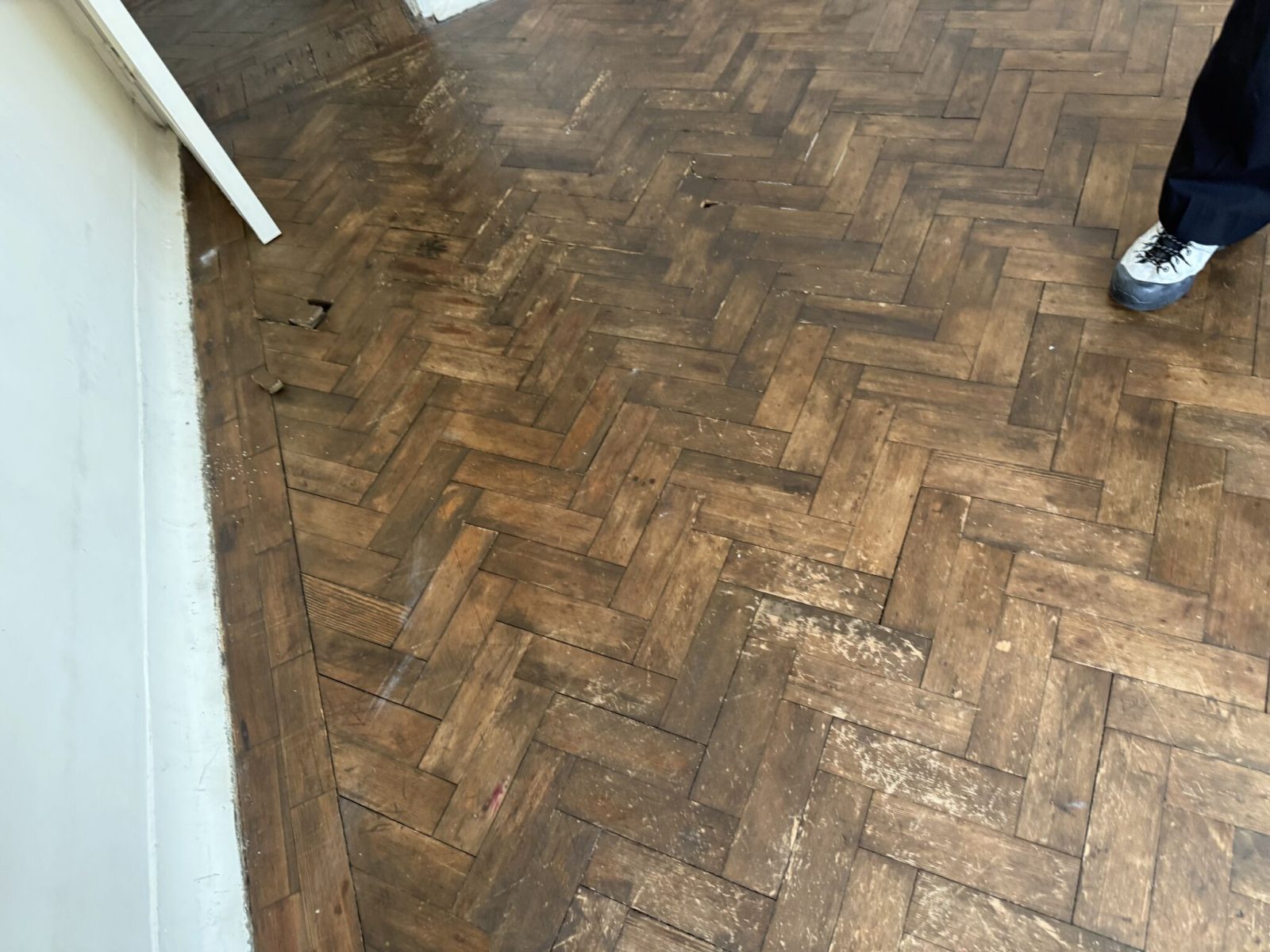
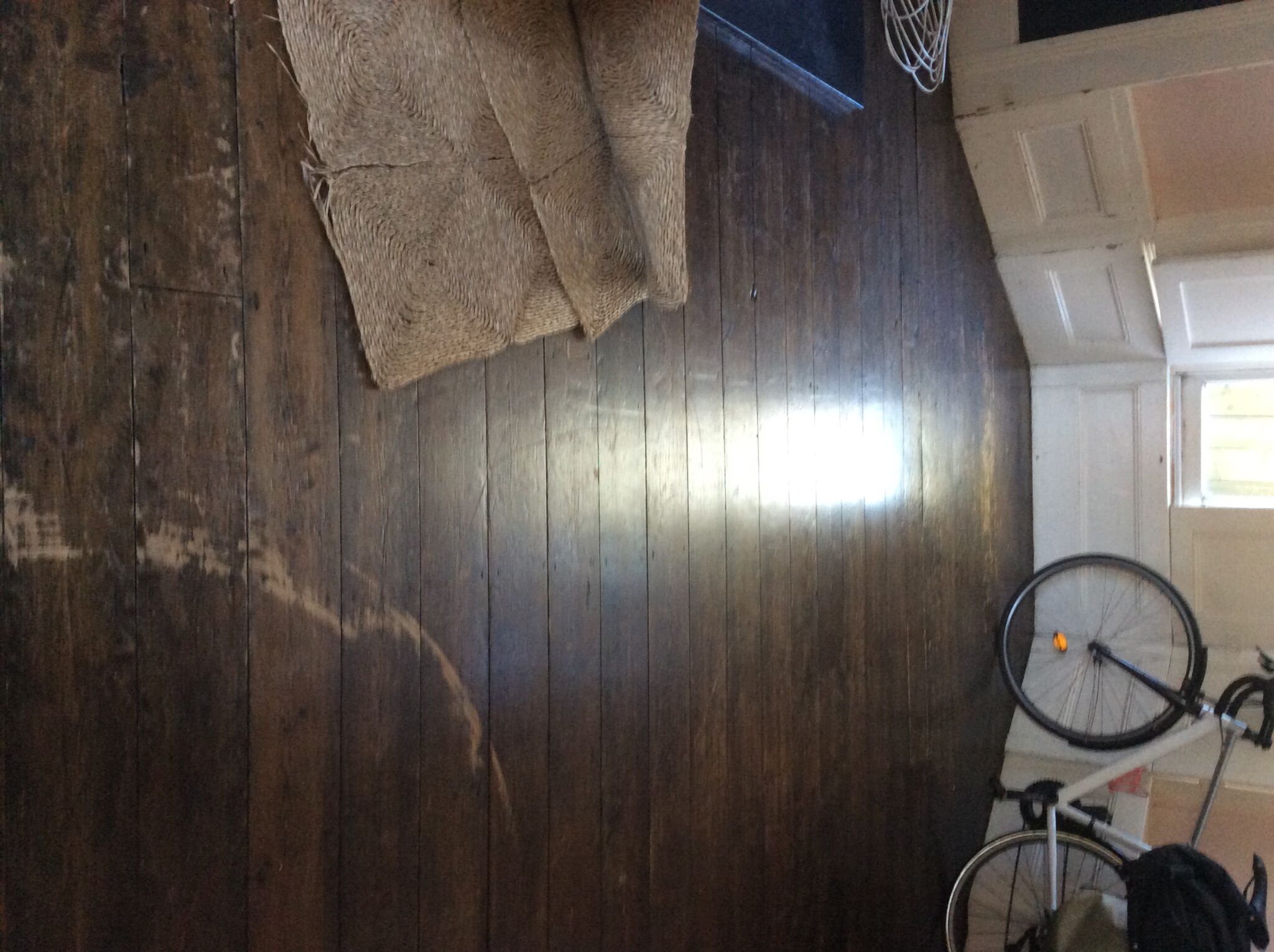
In the older Victorian terraces that still exist in parts of E16, original pine or oak floorboards are often discovered beneath carpet that was laid decades ago. These boards, if they haven't been thinned by previous sanding or damaged by moisture, can be restored to an excellent standard. The finish choices we discuss at the site visit include:
- Lacquer — the most durable, easy-clean option; ideal for hallways and living rooms with heavy foot traffic
- Hardwax oil — a more natural, matt finish that is easier to spot-repair if sections get damaged; popular in rentals
- Staining — changes the tone of the wood before sealing, useful where natural board colour is uneven or the client wants a darker aesthetic
In mid-century and 1970s–1980s properties, boards are more likely to be softwood strip or, in some cases, chipboard — the latter of which cannot be sanded and requires a new floor. We identify this at the assessment stage. Where softwood boards are present and of adequate thickness, a full sand and refinish remains a very cost-effective option compared to replacement.
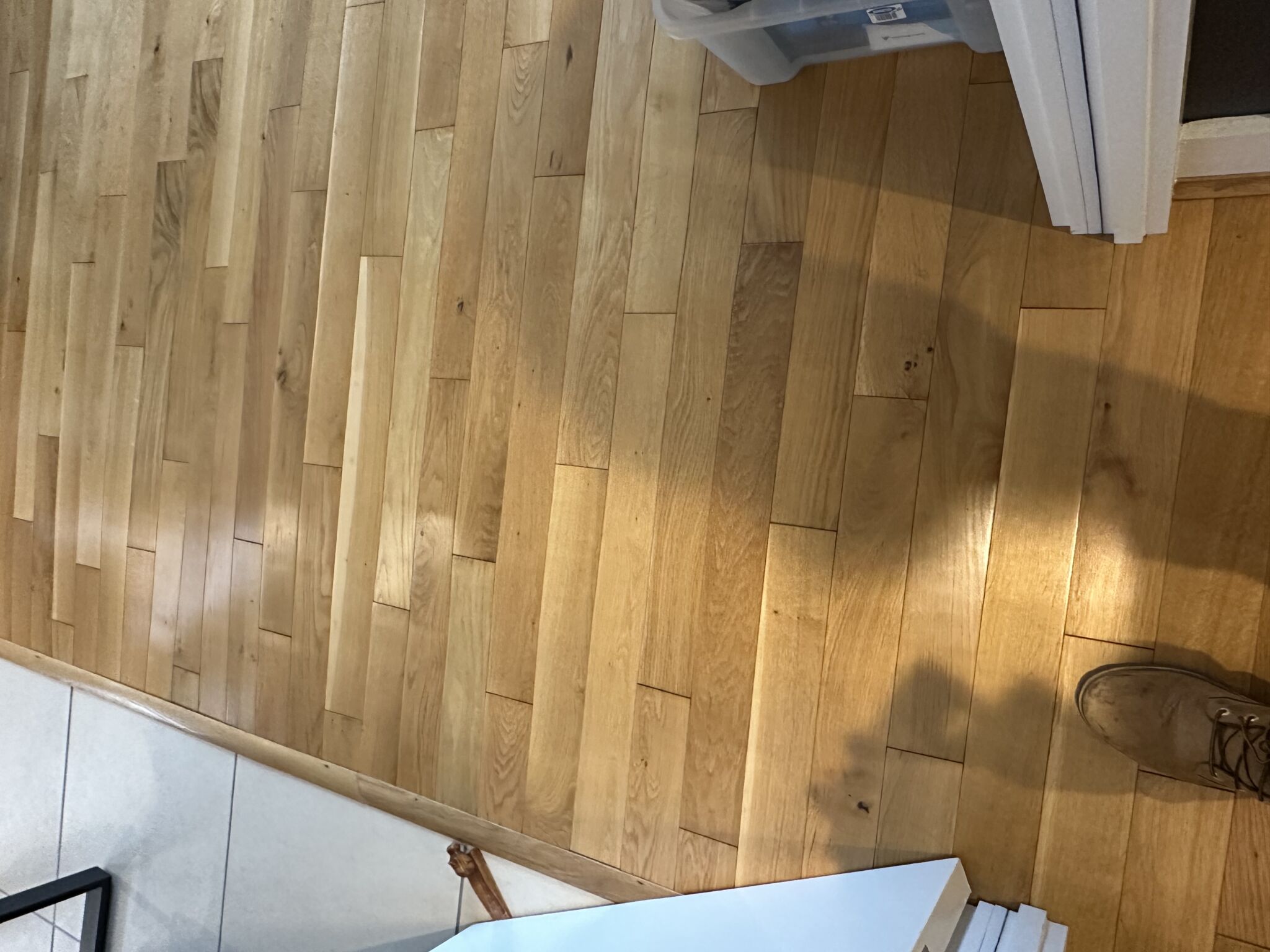
Gap filling is a standard part of our sanding process where needed. In Canning Town's older housing stock, years of seasonal movement open joints between boards. We fill these with flexible resin matched to the board tone before applying any finish, so the floor looks uniform and the gaps don't reappear within a season.
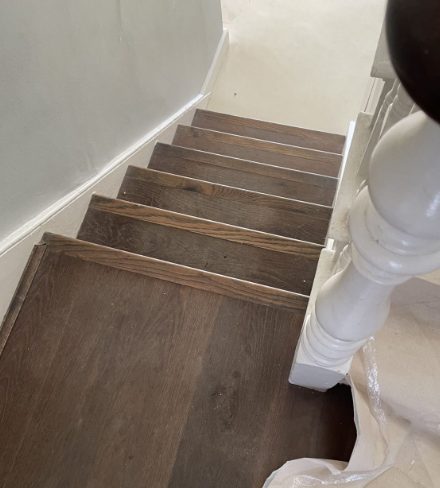
For stair sanding in terraced properties, we carry this out as an extension of the ground-floor work, ensuring the staircase finish matches the restored floor below. For a full breakdown of what's involved and typical costs, see our professional floor sanding service page and our pricing guide.
Thinking about your floors in Canning Town? Call us on 020 7036 0625 or get a free no-obligation estimate — we'll come to you, assess the floor properly, and give you honest advice.
Wood Floor Fitting in Canning Town
Canning Town's regeneration has produced a large volume of new-build and recently completed apartments where engineered wood or LVT are the default flooring choice, and a parallel market in older properties being refurbished where owners want the floors to match the quality of the renovation. We work across both regularly.
For new-build and recently completed apartments — particularly in Hallsville Quarter, Cerulean Quarter, and the riverside developments along the E16 corridor — the subfloor is typically a concrete deck, sometimes with underfloor heating already installed. The correct product for these conditions is engineered wood:
- It bonds directly to concrete with the right adhesive preparation
- It is compatible with underfloor heating when specified and installed correctly
- It is available in a wide range of species, widths, and finishes to suit modern open-plan interiors
- Wider-plank brushed or smoked oak has become a popular choice in Canning Town's contemporary apartments for its understated, warehouse-influenced aesthetic
For properties with underfloor heating, we specify only boards rated for UFH use and follow a strict installation protocol — subfloor temperature controls, adequate board acclimation time, and the correct adhesive for thermal movement. Getting this wrong risks boards cupping or gapping within the first heating season.
For older terraced properties in Canning Town with suspended timber subfloors, we assess whether solid wood or engineered is the more suitable choice. Where joists are sound and there is adequate ventilation beneath, solid wood is a viable option and offers the longest lifespan with multiple re-sands over its life. For rooms with less predictable conditions — including any ground-floor rooms where damp ingress is a possibility — engineered remains the safer specification.
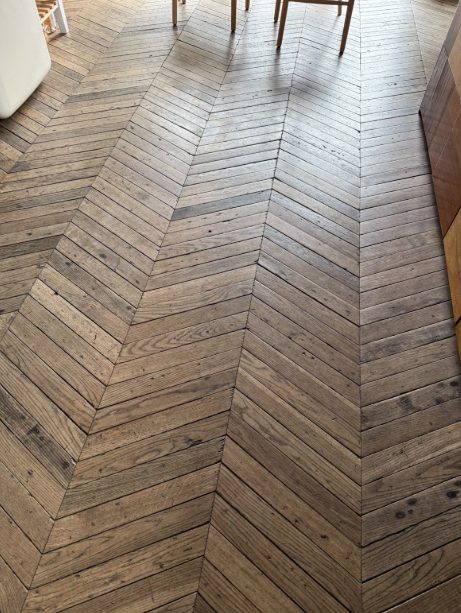
We also fit parquet flooring, including herringbone and chevron patterns, both for period-appropriate restorations and as contemporary design choices in modern apartments. Engineered herringbone oak is increasingly requested in Canning Town's new-build one and two-bedroom flats, where it adds visual character to otherwise standard open-plan layouts.
For a full overview of fitting options, installation methods, and what to expect on the day, see our wood floor fitting service page.
LVT Installation in Canning Town
Luxury vinyl tile (LVT) is a waterproof, multi-layer flooring product that replicates the appearance of wood or stone. In Canning Town's active rental market — where proximity to Canary Wharf, the Jubilee line, and London City Airport makes the area attractive to working professionals and short-term tenants — LVT is one of the most practical and popular products we install. It handles heavy use, resists water, and is straightforward to clean, making it a strong choice for landlords who need a floor that performs reliably across multiple tenancies.
The critical factor in any LVT installation is subfloor preparation, and this is where most of the work happens. Our preparation process for Canning Town properties typically involves:
- Self-levelling compound on concrete decks where the surface has undulations or trowel marks that would transfer through to the finished floor
- Plywood overlaying on suspended timber subfloors to eliminate flex, which causes click-lock LVT joints to work loose over time
- Moisture testing on ground-floor and basement-level slabs before any product is laid
For buy-to-let landlords managing properties in E16, we are experienced working around occupied and vacant tenancies and can typically complete a standard room installation in a single day once the preparation work is done. We also work with developers on multiple-unit installations in new-build blocks, coordinating across phases to meet handover schedules. For full product and specification details, see our LVT and vinyl flooring installation page.
Wood Floor Repair in Canning Town
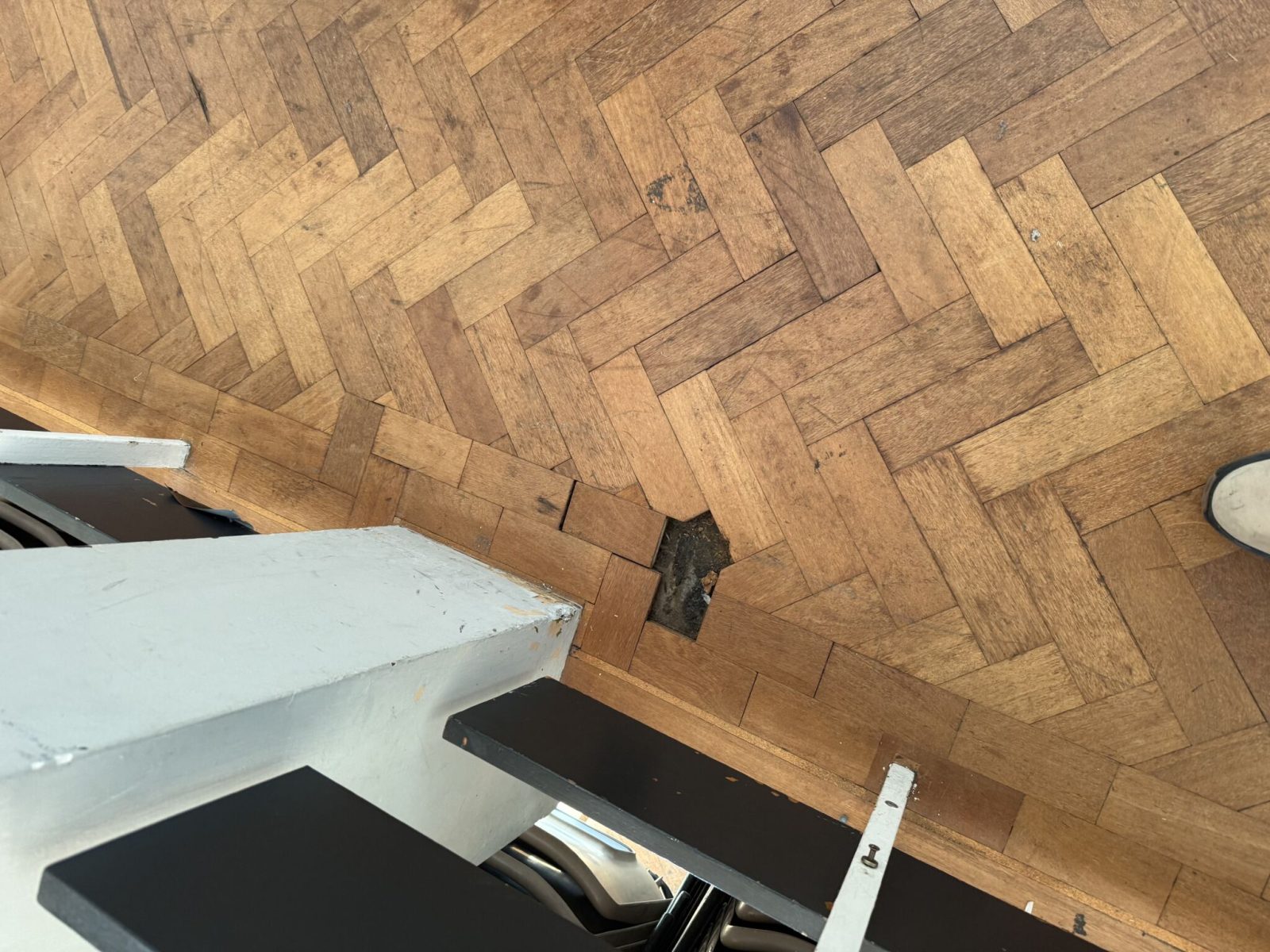
Wood floor repair in Canning Town covers a wide range of issues depending on the property era and floor type. In the older terraced housing stock, the most common problems we address are:
- Squeaking boards — usually caused by loose fixings or boards rubbing against each other at the joints; we identify the source before treating
- Gaps between boards — widened by years of seasonal movement and addressed with flexible resin filler matched to the wood tone
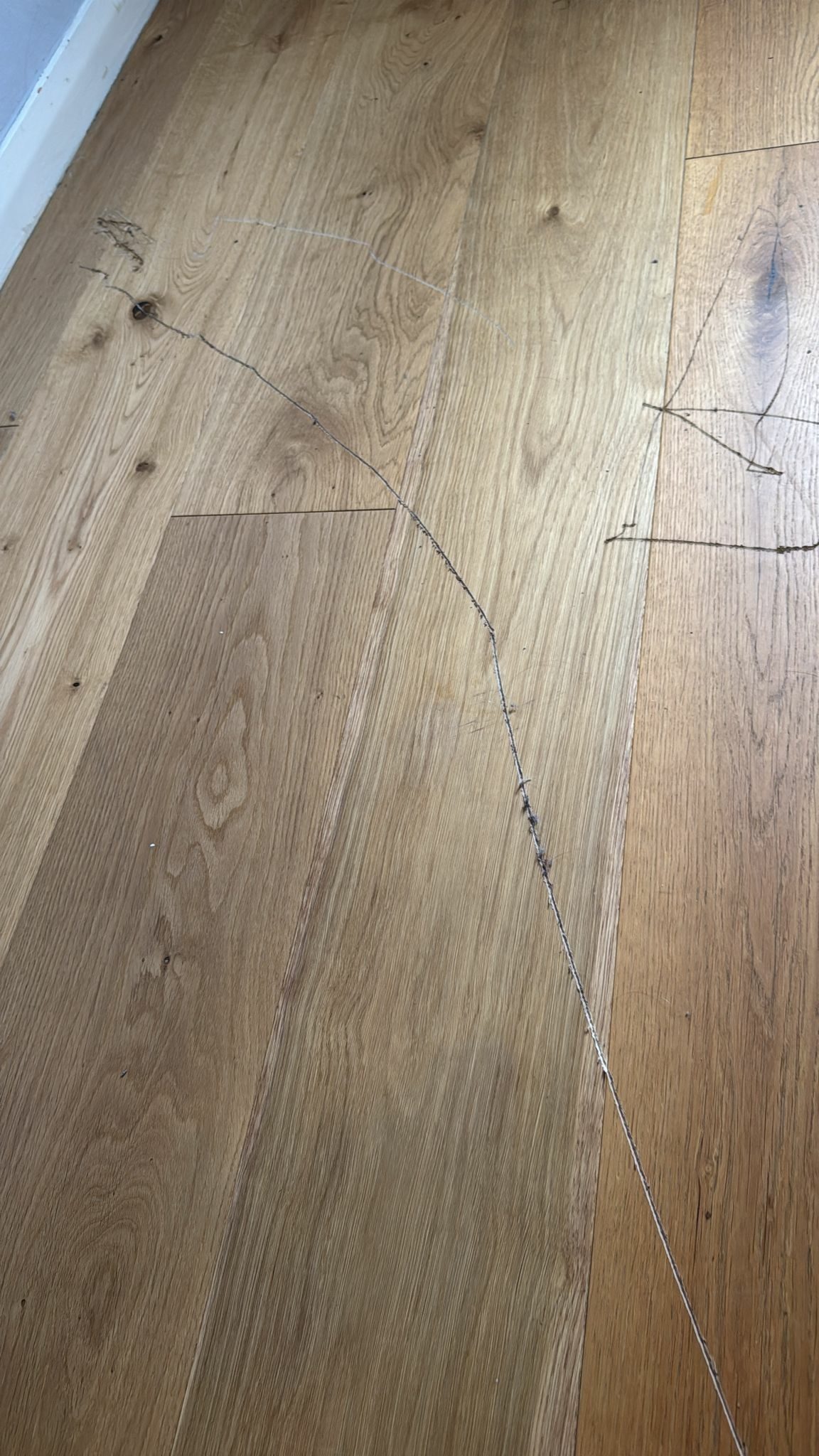
- Surface scratches and worn finish — assessed for depth; shallow damage in a lacquered floor can often be addressed with a localised sand and refinish without touching the rest of the floor
- Damaged or rotten boards — replaced individually with matching timber where the damage is localised
In the newer Canning Town developments, repair work most commonly involves engineered board issues: delaminating wear layers, damaged click-lock joints, or boards that have lifted due to moisture or incorrect installation. Whether these can be repaired in situ or require board replacement depends on the wear layer thickness and the extent of damage — we assess this honestly at the site visit and give you a clear recommendation before any work begins.
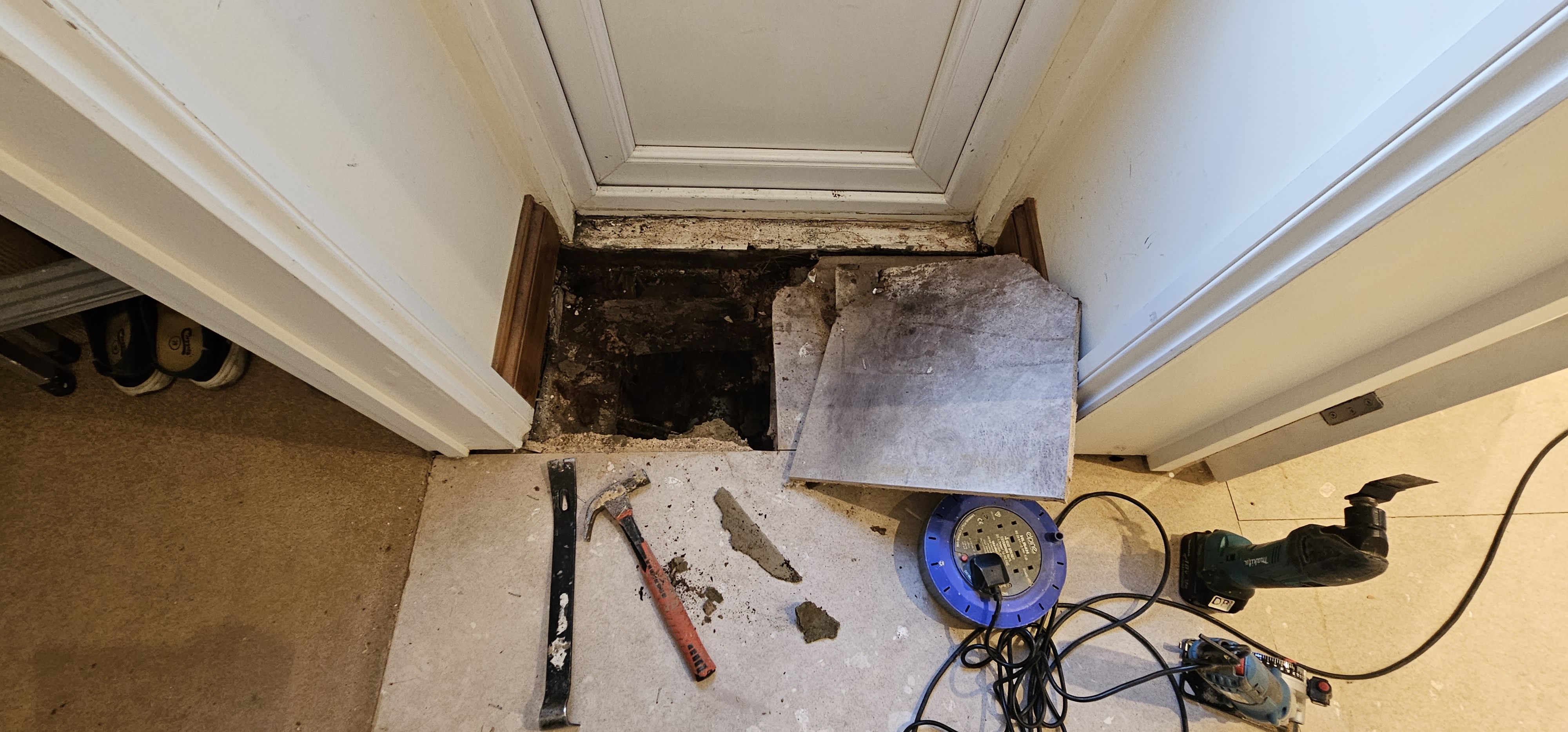
For properties where water damage has occurred — from a leak, an overflowing bath, or a plumbing issue — we carry out a thorough assessment of the extent of damage before advising on repair versus replacement, as acting on surface symptoms without identifying the underlying cause leads to the problem recurring.
Wood Floor Maintenance in Canning Town
Regular floor maintenance protects the investment you've made in your floor and significantly extends the time between full sanding or replacement jobs. For Canning Town properties, the maintenance approach depends on the floor type and finish:
For oiled and hardwax-finished floors, we carry out re-oiling every two to four years, depending on foot traffic. This involves cleaning and degreasing the floor surface, then applying a fresh coat of compatible oil that replenishes the protective layer and revives the natural appearance of the timber. It is a straightforward one-day treatment for most rooms.
For lacquered floors that have dulled or show minor surface wear without structural damage, recoating is the right maintenance treatment — applying a fresh layer of lacquer over the existing finish without the disruption of a full sand. This is a cost-effective mid-life option that restores appearance and extends the finish's protective life.
For landlords in Canning Town managing properties between tenancies, a scheduled maintenance visit is one of the most effective ways to protect a flooring investment. A floor recoating or re-oil between tenancies typically costs a fraction of a full sand and refinish, and avoids the situation where incremental damage builds up to the point where only a full restoration will suffice. We work with many E16 landlords on this basis and can build a maintenance schedule around your tenancy cycle.
Frequently Asked Questions — Flooring in Canning Town E16
I've just bought a new-build apartment in Canning Town — can I install engineered wood over underfloor heating? Yes, but it must be specified and installed correctly. We use only engineered boards rated for use with UFH systems, with the board acclimated to the room temperature before installation, laid with the appropriate adhesive, and with the underfloor heating ramped up gradually after installation. Rushing any of these steps risks the boards cupping or gapping once the heating season begins. We carry out this type of installation regularly in E16's new-build developments and can advise on suitable products at the free site visit.
The previous tenant damaged the floor in my rental flat — is repair or full replacement the better option? It depends on the type and extent of damage. Localised scratches or worn finish in a small area can often be addressed with a spot sand and refinish without touching the rest of the floor. Multiple damaged boards or widespread wear typically makes a full sand more cost-effective than piecemeal repairs. For engineered floors, the wear layer thickness is the key factor — we measure this at the site visit and give you a straightforward recommendation.
I'm refurbishing a Victorian terrace in E16 — what's under the carpet likely to be? In Canning Town's older terraced stock, you are most likely to find original softwood floorboards, although some properties have had chipboard or plywood laid over the originals. Lifting a small section of carpet at a corner before we visit is worth doing if possible, as it lets us advise more precisely. Where original boards are present and of sufficient thickness, sanding and refinishing them is usually the best-value option. Where they've been covered with chipboard, a new floor will be required.
Can you install flooring in a Canning Town flat while it's being let? We can work around tenant schedules where needed — for example, installing in phases, or completing a full installation during a short void period. For sanding jobs, we recommend that the property be unoccupied for at least 24 hours after the final coat to allow the finish to cure properly. We discuss the logistics at the estimate stage and plan the work around your specific situation.
What flooring works best in Canning Town's open-plan new-build apartments? For open-plan concrete-deck apartments — which make up the bulk of Canning Town's new-build stock — engineered wood or LVT are the two most practical choices. Engineered oak, particularly in wider plank formats, suits the scale of open-plan layouts well and adds warmth to spaces that can otherwise feel hard and cold. LVT offers greater water resistance, which matters in kitchen-diner-living configurations where a single product runs through areas with different moisture exposure. We'll talk through both options and give you an honest view of what suits your specific apartment at the free estimate.
Working Across Canning Town
We cover all of Canning Town and the surrounding E16 area, including Custom House, Silvertown, North Woolwich, and the new-build developments along the Royal Docks waterfront. Whether your project is a single-room floor restoration, a full flat LVT installation, a repair between tenancies, or a maintenance programme for a buy-to-let portfolio, we provide a free no-obligation estimate before any work begins.
Call us on 020 7036 0625 or request a free quote online. We're available Monday to Friday 07:30–17:30 and Saturday 07:30–16:00.
Flooring Services in Canning Town
As a trusted local flooring company, we offer a comprehensive range of flooring services in Canning Town and surrounding areas. Whether you need new flooring installed, existing floors repaired, or expert advice on the best flooring options for your property, our experienced team is here to help.
Floor Fitting
Wood floor fitting is the process of installing flooring such as engineered wood, solid wood, parquet, or laminate, ensu...
Floor Sanding
Floor sanding is the process of removing the top layer of a wooden floor using professional sanding equipment to elimina...
Wood Floor Repair
Wood floor repair involves fixing damaged, worn, or unstable areas of a wooden floor, including replacing boards, fillin...
Floor Maintenance
Wood floor maintenance includes cleaning, polishing, buffing, and re-coating wooden floors to preserve their appearance,...
Solid Wood Floor Sanding
Solid wood floor sanding is the process of removing the top layer of solid timber flooring to eliminate wear, scratches,...
Engineered Floor Sanding
Engineered wood floor sanding is the process of carefully removing the top wear layer of an engineered floor to restore ...
Gap Filling
Wood floor gap filling involves sealing gaps between floorboards or parquet blocks to improve stability, appearance, and...
Floor Sealing
Floor sealing refers to the application of a protective finish, such as lacquer or oil, to a wooden floor after sanding,...
Commercial Floor Sanding
Commercial floor sanding involves restoring wooden floors in high-traffic environments by removing worn finishes, surfac...
Engineered Floor Fitting
Engineered wood floor fitting involves installing multi-layered wooden boards designed for stability, allowing them to p...
Laminate Floor Installation
Laminate floor fitting involves installing multi-layer synthetic flooring boards designed to replicate the appearance of...
Floorboards Fitting
Floorboards fitting covers the installation of timber floorboards, ensuring correct preparation, alignment, and fixing f...
Floor Insulation Fitting
Floor insulation fitting involves installing insulating materials beneath a floor structure to reduce heat loss, improve...
Floorboards Repair
Floorboard repair covers the restoration of damaged, loose, or worn timber boards, addressing issues such as movement, s...
Floor Scratch Repair
Wood floor scratch repair focuses on restoring damaged areas of a wooden floor by reducing or removing surface scratches...
Floor Polishing
Floor polishing focuses on enhancing the appearance of wooden floors by restoring shine, improving surface protection, a...
Parquet Floor Sanding
Parquet floor sanding involves carefully restoring patterned wooden flooring by removing worn finishes, surface damage, ...
Floorboards Sanding
Floorboards sanding focuses on restoring timber boards by removing worn finishes, surface damage, and imperfections, cre...
Stairs Sanding
Stair sanding involves restoring wooden staircases by removing worn finishes, surface damage, and imperfections, prepari...
Wood Floor Staining
Floor staining enhances the appearance of wooden floors by applying coloured finishes that change the tone of the wood w...
School Floor Sanding
School floor sanding focuses on restoring wooden floors in educational environments by removing wear, surface damage, an...
Solid Wood Floor Fitting
Solid wood floor fitting requires careful preparation and precise installation, as natural timber reacts to changes in t...
Parquet Floor Fitting
Parquet floor fitting involves installing patterned wooden flooring with precision, ensuring correct alignment, subfloor...
Staircase Floor Fitting
Staircase floor fitting involves installing wooden elements on staircases, including treads, risers, and trims, ensuring...
Soundproofing Wood Flooring
Soundproof floor fitting focuses on reducing airborne and impact noise by installing suitable underlay and flooring syst...
Solid Wood Floor Repair
Solid wood floor repair covers the restoration of damaged timber flooring by replacing worn boards, treating surface iss...
Engineered Floor Repair
Engineered wood floor repair focuses on restoring damaged or worn engineered flooring by addressing surface issues and, ...
Parquet Floor Repair
Parquet floor repair involves restoring patterned wooden flooring by fixing damaged blocks, stabilising loose sections, ...
Wood Floor Cleaning
Wood floor cleaning involves using suitable products and techniques to remove dirt, maintain the finish, and protect the...
Floor Waxing
Floor waxing and recoating involves renewing the protective layer of a wooden floor by removing old wax or finish build-...
Floor Stripping
Floor stripping refers to the removal of old wax, polish, or finish layers from a floor using specialised products, prep...
Wood Floor Re-Oiling
Wood floor re-oiling focuses on renewing the protective oil finish of a wooden floor, enhancing its natural appearance w...
Wood Floor Recoating
Wood floor recoating involves applying a new protective finish over an existing one without full sanding, helping to ref...
Commercial Floor Cleaning
Commercial floor cleaning focuses on deep cleaning and maintenance of flooring in high-traffic environments, removing em...
LVT Floor Installation
LVT floor installation involves fitting luxury vinyl tiles or planks with precision, ensuring correct subfloor preparati...
All our flooring services in Canning Town come with a free, no-obligation estimate. We pride ourselves on quality workmanship and competitive pricing across all London boroughs.