Monday - Friday 07:30 - 17:30, Saturday 07:30 - 16:00
Flooring Services Marylebone — Floor Sanding, Fitting & Repair in W1, NW1
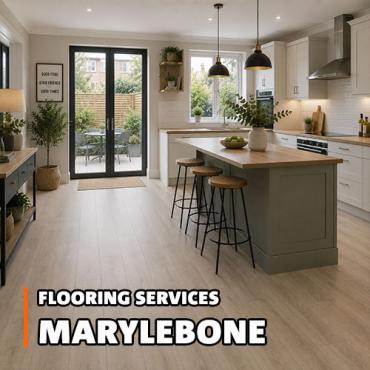
Marylebone is one of central London's most distinctive and well-preserved neighbourhoods — a largely residential area in W1 and NW1 bounded by Regent's Park to the north, Oxford Street to the south, Edgware Road to the west, and Fitzrovia to the east. Its character is defined by two great historic estates: the Portman Estate, which covers the western half of the neighbourhood in streets such as Portman Square, Gloucester Place, and Baker Street, and the Howard de Walden Estate, which covers the eastern half in the quieter residential streets around Marylebone High Street, Wimpole Street, Devonshire Place, and Harley Street.
The property stock across both estates is predominantly Georgian and early Victorian — large townhouses, terraced rows, and lateral conversions laid out in the regular grid pattern characteristic of 18th and early 19th-century London estate development. Many of these buildings retain original architectural features — deep sash windows, decorative cornicing, wide entrance halls with original chequerboard or stone floors, and the solid timber subfloors and original floorboards that are standard in properties of this period and quality.
Marylebone's flooring requirements reflect this heritage. The neighbourhood's period properties demand careful, experienced work — original wide-plank floors in Georgian townhouses, original herringbone parquet in Edwardian lateral conversions, and the specific challenges of working in central London properties that are frequently occupied, managed by professionals, and surrounded by sensitive architectural detail.
Flooring Services London has been carrying out floor sanding, floor fitting, wood floor repair, and floor maintenance in Marylebone for over 20 years, working across both estates and all property types in W1 and NW1.
Wood Floor Sanding in Marylebone
Floor sanding in Marylebone covers some of the most rewarding restoration work we carry out anywhere in London. The neighbourhood's Georgian and early Victorian townhouses — particularly those on the Howard de Walden Estate in streets such as Queen Anne Street, Welbeck Street, and Marylebone Lane — have original wide-plank pine and oak floorboards dating from the late 18th and early 19th centuries. These floors are significantly older than the Victorian boards found in most inner London terraces, and the quality of the old-growth timber is exceptional — boards sanded to reveal this original material consistently produce some of the finest restored floors we see anywhere.
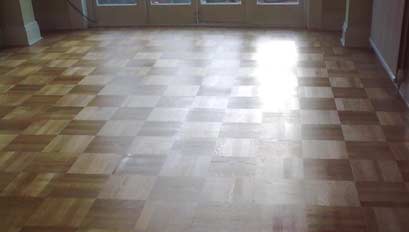
The Portman Estate streets — Montagu Square, Bryanston Square, Gloucester Place — have a slightly later housing stock, primarily Regency and early Victorian, with the same broad categories of original floorboards and, in the grander properties, original herringbone and geometric parquet in reception rooms and entrance halls. Our parquet floor sanding service covers the full restoration of these floors, including the specialist diagonal sanding technique required for block parquet and reclaimed replacement block sourcing where sections are damaged or missing.
Harley Street and the medical district — the streets around Harley Street, Wimpole Street, and Devonshire Place are predominantly occupied by medical and professional practices at ground and first-floor level, with residential above. Commercial floor sanding in these properties — consulting rooms, waiting rooms, and corridors — is carried out outside practice hours and requires the same discreet, professional approach as residential work in the same buildings. Our commercial floor sanding service covers all commercial environments in Marylebone.
Sanding costs in Marylebone W1 and NW1 depend on floor type, condition, finish specification, and access. Marylebone falls within both the ULEZ zone and the Congestion Charge area — any applicable daily access surcharges are always stated explicitly in the written quote before work begins. All prices are confirmed in writing following the free site visit — a full breakdown of all sanding and finishing charges is available on our floor restoration price guide.
We use dust-free sanding equipment on every Marylebone job — critical in the neighbourhood's occupied period properties where uncontrolled dust would penetrate original cornicing, plasterwork, and the fine decorative detail of Georgian and Regency interiors.
Finishes we apply in Marylebone: For Georgian and Regency period properties where authenticity matters, hard-wax oil (Osmo Polyx, Bona Craft Oil) or traditional wax are the most sympathetic finishes — penetrating the timber and enhancing its natural character without adding an anachronistic surface sheen. For Marylebone's busy professional and medical premises, Bona Traffic HD lacquer in matt or satin provides the commercial-grade durability needed for high-footfall environments.
Wood Floor Fitting in Marylebone
New floor installation in Marylebone's varied property stock covers a wide range of specifications, each shaped by the specific property type, subfloor, and use:
Georgian and Regency townhouses — the defining property type in Marylebone's finest streets. These properties have suspended timber subfloors throughout, typically with original boards of various ages beneath successive layers of covering. Where original boards cannot be salvaged, solid wood floor fitting in period-appropriate wide-plank profiles is the most appropriate replacement — full details and pricing are available on our floor fitting price guide.
Lateral conversions and mansion flat apartments — a significant proportion of Marylebone's grand Georgian and early Victorian townhouses have been subdivided into large lateral apartments, particularly in the Howard de Walden Estate streets around Wimpole Street and Devonshire Place. These conversions typically have concrete subfloors between storeys — standard in mid-20th century conversion work — and almost universally have lease acoustic requirements for new hard flooring. We advise on compliant acoustic underlay specifications before every Marylebone flat installation and provide written documentation for estate managers and freeholders. Full details on our acoustic and soundproofing floor fitting service.
Wide-plank engineered oak and walnut in formats of 180–220mm width suit the scale of Marylebone's large reception rooms and are compatible with the underfloor heating systems increasingly found in the neighbourhood's high-specification conversions. Full details and pricing for our engineered floor fitting service are available on our floor fitting price guide.
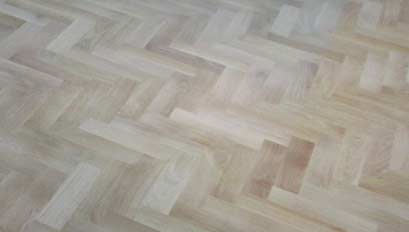
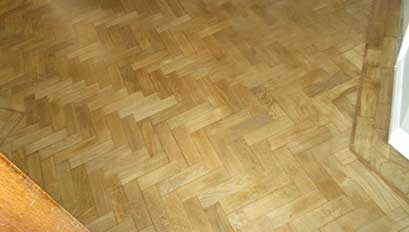
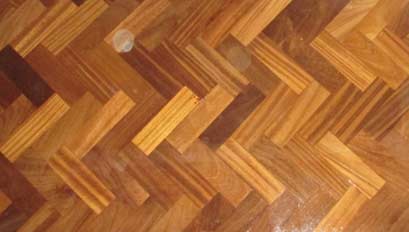
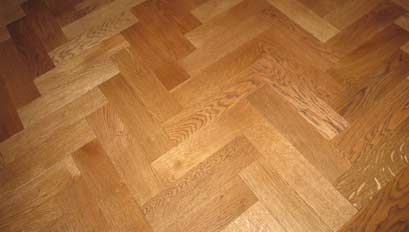
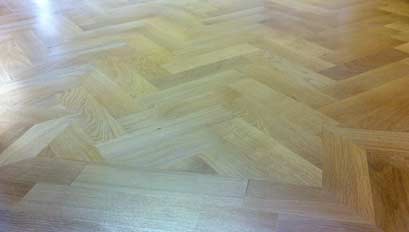
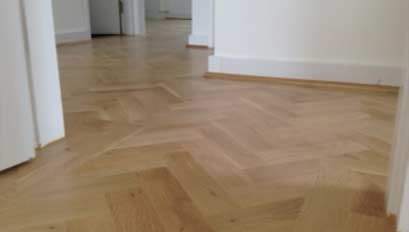
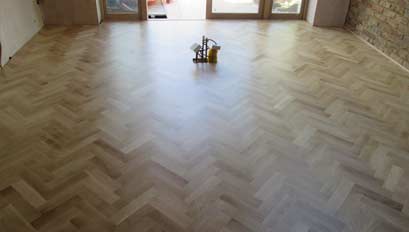
Herringbone and chevron parquet is consistently one of the most requested specifications in Marylebone, particularly in entrance halls, studies, and dining rooms where a period reference in the floor design complements the architectural character of the building. Full details and pricing for our parquet floor fitting service in London are confirmed following the free site visit.
Commercial and professional premises — Marylebone's density of medical and professional practices, boutique hotels, restaurants on Marylebone High Street, and offices throughout the estate streets generates consistent demand for commercial floor fitting. We specify and install flooring appropriate to commercial use — high-wear products, commercial-grade acoustic underlays, and finishes rated for the specific traffic and cleaning requirements of each environment.
Wood Floor Repair in Marylebone
The age and quality of Marylebone's original floors mean repair work is a consistent and important part of what we carry out in W1 and NW1:
Georgian wide-plank repair — original 18th and early 19th century wide-plank floors in Marylebone's Georgian townhouses develop significant seasonal gaps as the large board widths — sometimes 150–200mm — expand and contract with London's central heating cycles. Strip gap filling for wider gaps is always carried out as part of a sanding project. Individual board replacement using matched reclaimed timber where boards are beyond repair — sourcing wide-plank period timber for Marylebone Georgian properties requires specialist reclaimed suppliers we work with regularly. Full gap filling and repair pricing is available on our floor restoration price guide.
Parquet restoration — original herringbone and geometric parquet in Marylebone's Edwardian lateral conversions and mansion flat buildings develop loose blocks, adhesive failure, and surface wear over time. We re-lay and re-adhere lifted blocks, source reclaimed replacement sections, and restore the complete floor through sanding and refinishing. Full details on our parquet floor repair service.
Staircase restoration — the grand staircases of Marylebone's Georgian townhouses are prominent architectural features. We sand, refinish, and, where necessary, refit treads and string cappings, matching the finish to adjacent landing and hallway floors. Full details on our stairs sanding and staircase floor fitting services.
Scratch and surface repair — localised floor scratch repair for surface and finish-level scratches — all pricing confirmed during the free site visit.
Ready to discuss a flooring project in Marylebone? Call us on 020 7036 0625 or request a free site visit — we respond to all Marylebone enquiries the same working day and are experienced working with both the Portman and Howard de Walden estate management teams.
Floor Maintenance in Marylebone
Marylebone's predominantly high-value residential properties and active professional premises benefit from regular professional maintenance that keeps floors in excellent condition between full restoration cycles.
Our floor maintenance services for Marylebone properties include wood floor recoating — practical for professional premises requiring minimal disruption — wood floor re-oiling as the standard annual or biannual maintenance cycle for period timber floors, floor waxing for original Georgian and Regency wax-finished floors, and professional wood floor cleaning to remove ingrained dirt and product residue before maintenance treatments. Full pricing for all maintenance services is available on our floor maintenance price guide.
For Harley Street and professional practice premises in Marylebone, we carry out maintenance outside practice hours — early mornings, evenings, and weekends — coordinating with practice managers to avoid any disruption to appointments and patient access.
Why Marylebone Property Owners Choose Flooring Services London
- W1 and NW1 expertise — we work regularly throughout Marylebone, Fitzrovia, Mayfair, Bayswater, and the surrounding central London area. We understand the Portman and Howard de Walden estate management requirements and the specific flooring challenges of Georgian and Regency period properties
- Period property specialists — Georgian wide-plank floors, Edwardian parquet, and Regency period timber all require knowledge and experience that generalist contractors do not have. We bring both to every Marylebone job
- Dust-free sanding — essential in Marylebone's occupied period properties with original plasterwork and decorative detail
- Fixed-price written quotes — assessed in person, confirmed before work starts. ULEZ and Congestion Charge surcharges always stated explicitly
- Rated 4.93/5 from verified customers across London
Frequently Asked Questions — Flooring in Marylebone
Can you restore original Georgian wide-plank floors in a Marylebone townhouse? Yes — restoring original 18th and early 19th century wide-plank floors in Marylebone's Georgian properties is among the most specialised and rewarding work we carry out. The timber quality in these floors is exceptional — old-growth pine and oak of a density and character not commercially available today. Even floors that look badly worn or have been covered for generations respond remarkably well to professional restoration. We assess every floor honestly during the free site visit and confirm what is achievable.
Do you work with the Portman and Howard de Walden estate management teams? Yes — we are experienced working in properties on both estates and understand the specific contractor requirements, access procedures, and quality standards that apply. We can provide all required documentation — insurance certificates, method statements, COSHH data sheets — before work begins on any Marylebone estate property.
What finish is most appropriate for an original Georgian floor in Marylebone? For original 18th-century wide-plank floors in Marylebone's Georgian properties, traditional wax or hard-wax oil (Osmo Polyx) are the most historically appropriate and sympathetic finishes. Both penetrate the timber without forming a surface film, producing a natural appearance that suits the period character of the building. For high-traffic areas or commercial premises where durability is the priority, Bona Traffic HD in extra-matt is the more practical specification.
Can you sand and restore floors in a Harley Street medical or professional practice? Yes — we carry out floor sanding and maintenance in Marylebone's professional and medical premises outside practice hours. We confirm working windows with practice managers in advance, use dust-free equipment throughout, and ensure the premises are clean and ready before the practice reopens. All work is carried out with the same standard of documentation — method statements, COSHH data sheets — required for commercial contractor access.
How do the Congestion Charge and ULEZ affect costs for Marylebone jobs? All of W1 and NW1 Marylebone falls within both the ULEZ zone and the Congestion Charge area. Applicable daily surcharges are always included explicitly in the written quote — never added afterwards.
We cover all Marylebone postcodes within W1 and NW1 and regularly work in neighbouring areas including Fitzrovia, Mayfair, Bayswater, St John's Wood, Regent's Park, and Paddington.
Call us on 020 7036 0625 or request a free quote online — we respond to all Marylebone enquiries the same working day.
Flooring Services in Marylebone
As a trusted local flooring company, we offer a comprehensive range of flooring services in Marylebone and surrounding areas. Whether you need new flooring installed, existing floors repaired, or expert advice on the best flooring options for your property, our experienced team is here to help.
Floor Fitting
Wood floor fitting is the process of installing flooring such as engineered wood, solid wood, parquet, or laminate, ensu...
Floor Sanding
Floor sanding is the process of removing the top layer of a wooden floor using professional sanding equipment to elimina...
Wood Floor Repair
Wood floor repair involves fixing damaged, worn, or unstable areas of a wooden floor, including replacing boards, fillin...
Floor Maintenance
Wood floor maintenance includes cleaning, polishing, buffing, and re-coating wooden floors to preserve their appearance,...
Solid Wood Floor Sanding
Solid wood floor sanding is the process of removing the top layer of solid timber flooring to eliminate wear, scratches,...
Engineered Floor Sanding
Engineered wood floor sanding is the process of carefully removing the top wear layer of an engineered floor to restore ...
Gap Filling
Wood floor gap filling involves sealing gaps between floorboards or parquet blocks to improve stability, appearance, and...
Floor Sealing
Floor sealing refers to the application of a protective finish, such as lacquer or oil, to a wooden floor after sanding,...
Commercial Floor Sanding
Commercial floor sanding involves restoring wooden floors in high-traffic environments by removing worn finishes, surfac...
Engineered Floor Fitting
Engineered wood floor fitting involves installing multi-layered wooden boards designed for stability, allowing them to p...
Laminate Floor Installation
Laminate floor fitting involves installing multi-layer synthetic flooring boards designed to replicate the appearance of...
Floorboards Fitting
Floorboards fitting covers the installation of timber floorboards, ensuring correct preparation, alignment, and fixing f...
Floor Insulation Fitting
Floor insulation fitting involves installing insulating materials beneath a floor structure to reduce heat loss, improve...
Floorboards Repair
Floorboard repair covers the restoration of damaged, loose, or worn timber boards, addressing issues such as movement, s...
Floor Scratch Repair
Wood floor scratch repair focuses on restoring damaged areas of a wooden floor by reducing or removing surface scratches...
Floor Polishing
Floor polishing focuses on enhancing the appearance of wooden floors by restoring shine, improving surface protection, a...
Parquet Floor Sanding
Parquet floor sanding involves carefully restoring patterned wooden flooring by removing worn finishes, surface damage, ...
Floorboards Sanding
Floorboards sanding focuses on restoring timber boards by removing worn finishes, surface damage, and imperfections, cre...
Stairs Sanding
Stair sanding involves restoring wooden staircases by removing worn finishes, surface damage, and imperfections, prepari...
Wood Floor Staining
Floor staining enhances the appearance of wooden floors by applying coloured finishes that change the tone of the wood w...
School Floor Sanding
School floor sanding focuses on restoring wooden floors in educational environments by removing wear, surface damage, an...
Solid Wood Floor Fitting
Solid wood floor fitting requires careful preparation and precise installation, as natural timber reacts to changes in t...
Parquet Floor Fitting
Parquet floor fitting involves installing patterned wooden flooring with precision, ensuring correct alignment, subfloor...
Staircase Floor Fitting
Staircase floor fitting involves installing wooden elements on staircases, including treads, risers, and trims, ensuring...
Soundproofing Wood Flooring
Soundproof floor fitting focuses on reducing airborne and impact noise by installing suitable underlay and flooring syst...
Solid Wood Floor Repair
Solid wood floor repair covers the restoration of damaged timber flooring by replacing worn boards, treating surface iss...
Engineered Floor Repair
Engineered wood floor repair focuses on restoring damaged or worn engineered flooring by addressing surface issues and, ...
Parquet Floor Repair
Parquet floor repair involves restoring patterned wooden flooring by fixing damaged blocks, stabilising loose sections, ...
Wood Floor Cleaning
Wood floor cleaning involves using suitable products and techniques to remove dirt, maintain the finish, and protect the...
Floor Waxing
Floor waxing and recoating involves renewing the protective layer of a wooden floor by removing old wax or finish build-...
Floor Stripping
Floor stripping refers to the removal of old wax, polish, or finish layers from a floor using specialised products, prep...
Wood Floor Re-Oiling
Wood floor re-oiling focuses on renewing the protective oil finish of a wooden floor, enhancing its natural appearance w...
Wood Floor Recoating
Wood floor recoating involves applying a new protective finish over an existing one without full sanding, helping to ref...
Commercial Floor Cleaning
Commercial floor cleaning focuses on deep cleaning and maintenance of flooring in high-traffic environments, removing em...
LVT Floor Installation
LVT floor installation involves fitting luxury vinyl tiles or planks with precision, ensuring correct subfloor preparati...
All our flooring services in Marylebone come with a free, no-obligation estimate. We pride ourselves on quality workmanship and competitive pricing across all London boroughs.