Monday - Friday 07:30 - 17:30, Saturday 07:30 - 16:00
Flooring Services Gidea Park — Floor Sanding, Fitting & Repair in RM2
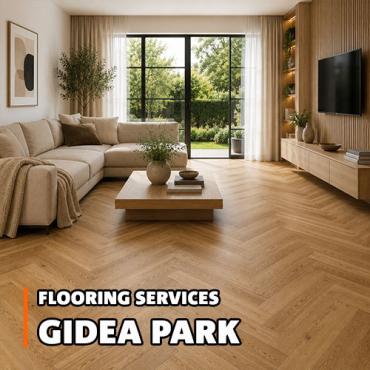
Gidea Park is one of the most architecturally distinctive residential areas in outer east London — a planned garden suburb in RM2 that was developed from 1910 onward as a direct result of the Gidea Park Exhibition of 1911, one of the earliest and most significant exhibitions of modern domestic architecture in Britain. The exhibition invited leading architects of the day to design individual houses on plots across the new garden suburb, with the aim of demonstrating what well-designed, affordable middle-class housing could look like. The result was a neighbourhood of individually designed Arts and Crafts, Queen Anne Revival, and early Modern houses — each architecturally distinct, each on a well-planted plot, and collectively forming one of the most coherent planned residential developments of the Edwardian and early 20th-century period in the country.
The area sits in RM2, bordered by Romford to the west, Harold Wood to the north, Emerson Park to the south, and the A12 Eastern Avenue to the north. The housing stock falls into two broad categories. The original exhibition houses and their contemporaries — built between approximately 1910 and 1930 in the streets closest to Gidea Park station including Heath Drive, Balgores Lane, Main Road, and the quieter avenues running off them — are larger, individually designed properties with Arts and Crafts features, original hardwood floors in some cases, and the higher-specification construction that reflects the exhibition's ambitions. The later housing spreading toward the outer edges of the area is more standard suburban in character — comfortable semi-detached houses built from the 1930s onward as Gidea Park's popularity as a residential address led to further development.
For flooring, Gidea Park presents a more varied and generally higher-specification brief than the surrounding outer east London suburbs. The original exhibition and Arts and Crafts houses in the inner streets of RM2 are significant period properties where flooring work needs to reflect the character of the buildings — original hardwood floors where they exist deserve careful restoration rather than replacement, and new floor specifications should be sympathetic to the architectural heritage of these distinctive homes. The later 1930s-onward stock has the same general flooring requirements as the broader Havering suburban housing market, though often with a slightly higher specification driven by the property values and owner-occupier expectations of the area.
Flooring Services London has been carrying out floor sanding, floor fitting, wood floor repair, and floor maintenance in Gidea Park and the wider RM2 area for over 20 years. All pricing is confirmed in writing following a free site visit — full details on our floor restoration and fitting price guide. No ULEZ or Congestion Charge surcharges apply to RM2.
The Gidea Park Exhibition Houses — A Specific Flooring Brief
The houses built for and around the 1911 Gidea Park Exhibition represent some of the most architecturally significant domestic buildings in outer east London. Designed by architects including H. A. Rickards, T. P. Butler, and numerous others who contributed individual plots, these houses have a quality of construction and attention to detail that was genuinely exceptional for the period — and that extends to their original floors.
Original hardwood floors in the exhibition and Arts and Crafts houses of Gidea Park's inner streets are most commonly solid oak strip or wide-plank floors in the principal rooms and hallways — a specification typical of high-quality domestic construction from the Edwardian period. These floors, where they have survived beneath subsequent carpet and floor coverings, are in many cases in excellent structural condition. The timber quality — dense, old-growth Edwardian oak — is significantly higher than in the standard suburban housing of the period, and restoring these floors through professional floor sanding produces consistently outstanding results.
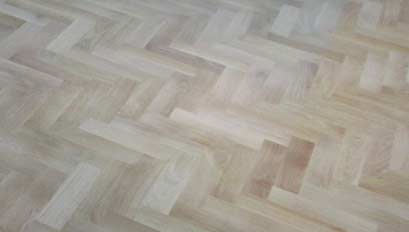
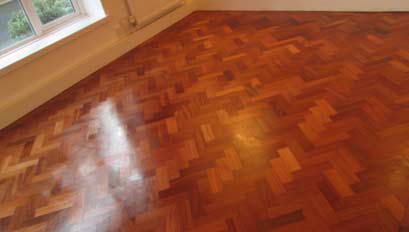
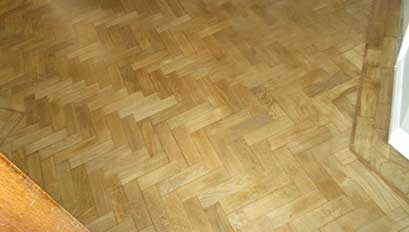
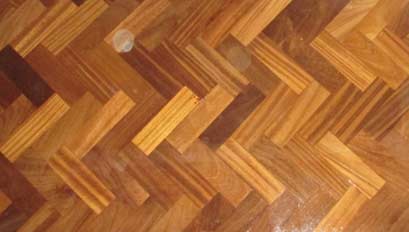
Some of the exhibition houses also have original parquet — herringbone or geometric block patterns in entrance halls and drawing rooms — that requires the specialist diagonal sanding technique and careful block assessment before any restoration work begins. Where parquet blocks are loose, damaged, or missing, we source reclaimed period-matched replacement sections before sanding begins.
For Gidea Park's exhibition and period houses, the finish specification matters particularly. Hard-wax oil (Osmo Polyx, Bona Craft Oil) is the most sympathetic finish for original Edwardian hardwood in these properties — it enhances the natural grain and warmth of old-growth oak without adding a surface film that would look anachronistic in an Arts and Crafts interior. For high-traffic areas and staircase treads, Bona Traffic HD in extra-matt provides the durability needed while maintaining a natural appearance.
Wood Floor Sanding in Gidea Park
Floor sanding across Gidea Park's varied housing stock covers two distinct scenarios:
Arts and Crafts and period house sanding — the most distinctive and rewarding sanding work we carry out in RM2. Original Edwardian oak and hardwood floors in the exhibition houses respond exceptionally well to professional restoration. All sanding is carried out with dust-free extraction equipment capturing up to 99% of airborne particles — essential in occupied period properties where dust would penetrate original features and period detail.
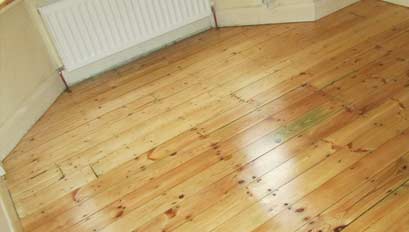
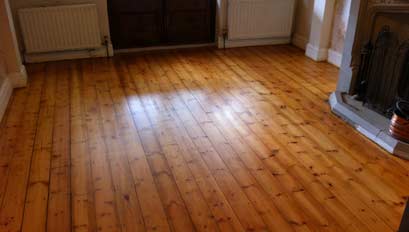
1930s and later housing sanding — the semi-detached and detached houses built across Gidea Park from the 1930s onward have the softwood suspended timber ground floors standard across the outer east London housing stock of that era. These boards — typically in very good condition beneath decades of carpet — respond well to professional floorboards sanding and refinishing.
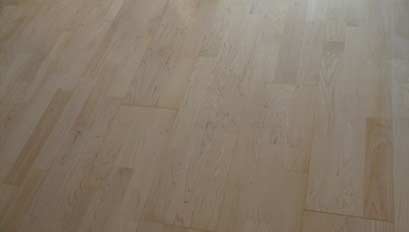
For engineered wood floors installed in Gidea Park properties in the past 10–20 years that are now showing surface wear, engineered floor sanding with wear layer assessment is the appropriate treatment. We measure wear layer thickness during the site visit before any sanding is committed.
Wood Floor Fitting in Gidea Park
New floor installation in Gidea Park reflects the area's architectural variety:
Original exhibition and Arts and Crafts houses — these properties have suspended timber subfloors throughout with the high-quality joist construction typical of Edwardian domestic building. Where new floors are needed — in rooms where original floors have been irreparably damaged or in new extensions — solid hardwood or wide-plank engineered oak in sympathetic natural finishes is the most appropriate specification. Herringbone parquet in entrance halls suits the Arts and Crafts character of the original houses particularly well. Our parquet floor fitting service covers solid and engineered herringbone installation in RM2 period properties.
1930s semi-detached and detached houses — suspended timber ground floors throughout. Solid hardwood or engineered wood secret-nailed or floated as appropriate. Floor insulation fitting between the joists of ground floors is worth considering in Gidea Park's older housing where the subfloor void is uninsulated — combining insulation with sanding or repair work is the most cost-effective approach.
Extensions and home improvements — Gidea Park's owner-occupier community invests actively in home improvement, and extensions, kitchen renovations, and loft conversions generate consistent demand for new floor fitting. Extension floors are typically concrete slab — we advise on engineered wood or LVT installation with moisture assessment during the free site visit.
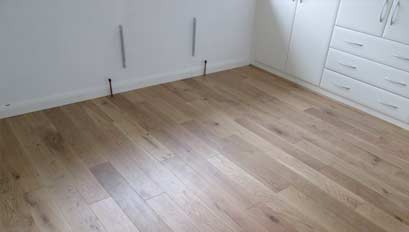
Higher-specification installations — Gidea Park's property values and owner-occupier profile drive demand for higher-specification floor products compared to the surrounding suburban areas. Wide-plank engineered oak in 180–220mm formats, herringbone parquet, and solid hardwood are all commonly specified in Gidea Park renovations. We advise on product selection during the free site visit, taking into account the specific character of each property and the client's priorities.
Staircase fitting and sanding — the staircases of Gidea Park's period houses are often architecturally significant — wider treads, more generous proportions, and original balustrade and newel details that deserve the same care as the floor restoration. We sand, refinish, and where necessary refit stair components, matching the finish to the adjacent floor. Full details on our stairs sanding and staircase floor fitting services.
Wood Floor Repair in Gidea Park
Edwardian hardwood floor repair — original oak floors in Gidea Park's exhibition and Arts and Crafts houses develop the same age-related issues as all Edwardian hardwood: seasonal gaps in wide boards, occasional board damage, and old finish that has darkened or become incompatible with modern maintenance. We carry out targeted repair using period-matched timber sourced from reclaimed suppliers, with gap filling and wood floor repair as part of complete sanding and restoration projects.
Parquet repair — loose or damaged herringbone blocks in Gidea Park's period houses re-laid and re-adhered using modern flexible adhesive, with reclaimed replacement sections sourced where needed. Full details on our parquet floor repair service.
1930s floorboard repairs — squeaking boards, seasonal gaps, and occasional water damage in Gidea Park's older housing stock — all assessed and repaired during the free site visit.
Ready to discuss a flooring project in Gidea Park? Call us on 020 7036 0625 or request a free site visit — we respond to all RM2 enquiries the same working day.
Floor Maintenance in Gidea Park
For Gidea Park's predominantly owner-occupied properties — particularly the period houses where the floors are an important part of the property's character and value — regular professional maintenance keeps floors in excellent condition between full sanding cycles. Wood floor re-oiling is the standard annual or biannual maintenance cycle for oil-finished Edwardian hardwood and 1930s softwood floors. Wood floor recoating refreshes a lacquered floor in a single day without sanding. Full details on all maintenance services and pricing are available through our floor maintenance and restoration price guide.
Why Gidea Park Property Owners Choose Flooring Services London
- Period property expertise — we understand the specific flooring characteristics of Gidea Park's Edwardian Arts and Crafts exhibition houses and the appropriate restoration and finish specifications for these distinctive properties
- RM2 experience — we work regularly throughout Gidea Park, Romford, Harold Wood, and the surrounding Havering area
- Dust-free sanding — essential in Gidea Park's occupied period houses where dust control protects original features
- Higher-specification installations — wide-plank engineered oak, herringbone parquet, and solid hardwood are all regular parts of our Gidea Park work
- No ULEZ or Congestion Charge surcharges — RM2 is outside both zones
- Fixed-price written quotes — assessed in person, confirmed before work starts
- Rated 4.93/5 from verified customers across London
Frequently Asked Questions — Flooring in Gidea Park
Can you restore original Edwardian hardwood floors in one of the Gidea Park exhibition houses? Yes — and this is among the most rewarding work we carry out in RM2. Original Edwardian oak and hardwood floors in Gidea Park's exhibition and Arts and Crafts houses are of a quality rarely found in suburban housing. Even floors that have been covered for decades respond exceptionally well to professional sanding and refinishing. We assess every floor honestly during the free site visit — including confirming the timber species, board condition, and the most appropriate finish for the specific property — before any work is agreed.
What finish is best for an original hardwood floor in a Gidea Park Arts and Crafts house? For most original Edwardian hardwood floors in Gidea Park's exhibition houses, hard-wax oil (Osmo Polyx or Bona Craft Oil) in a matt finish is the most appropriate choice — it enhances the natural grain and warmth of old-growth oak without adding a surface sheen that would look out of place in an Arts and Crafts interior. For high-traffic areas and staircase treads where maximum durability is needed, Bona Traffic HD in extra-matt provides commercial-grade hardness while maintaining a natural appearance.
Can you install herringbone parquet in a Gidea Park exhibition house entrance hall? Yes — herringbone parquet is one of the most sympathetic floor specifications for the entrance halls and principal rooms of Gidea Park's Arts and Crafts houses. Both solid oak blocks in traditional Edwardian formats and wider engineered herringbone are available. We advise on the most appropriate format and specification for the specific house and room during the free site visit.
Does ULEZ or Congestion Charge apply to Gidea Park RM2? No — RM2 is outside both the ULEZ zone and the Congestion Charge area. No daily access surcharges apply for work in Gidea Park, which is always confirmed in the written quote.
How is Gidea Park flooring work different from the surrounding suburban areas? The main difference is the quality and character of the period housing stock in Gidea Park's inner streets. The exhibition and Arts and Crafts houses have original hardwood floors, higher-quality construction, and architectural features that make the flooring specification — both for restoration and new installation — more considered than in standard suburban properties. The 1930s housing on the outer edges of RM2 is more similar to the surrounding Havering suburban stock, but even here the property values and owner-occupier expectations tend toward a slightly higher specification than in areas like Collier Row or Harold Wood.
We cover all Gidea Park postcodes within RM2 and regularly work in neighbouring areas including Romford, Harold Wood, Collier Row, Emerson Park, and Brentwood.
Call us on 020 7036 0625 or request a free quote online — we respond to all Gidea Park enquiries the same working day.
Flooring Services in Gidea Park
As a trusted local flooring company, we offer a comprehensive range of flooring services in Gidea Park and surrounding areas. Whether you need new flooring installed, existing floors repaired, or expert advice on the best flooring options for your property, our experienced team is here to help.
Floor Fitting
Wood floor fitting is the process of installing flooring such as engineered wood, solid wood, parquet, or laminate, ensu...
Floor Sanding
Floor sanding is the process of removing the top layer of a wooden floor using professional sanding equipment to elimina...
Wood Floor Repair
Wood floor repair involves fixing damaged, worn, or unstable areas of a wooden floor, including replacing boards, fillin...
Floor Maintenance
Wood floor maintenance includes cleaning, polishing, buffing, and re-coating wooden floors to preserve their appearance,...
Solid Wood Floor Sanding
Solid wood floor sanding is the process of removing the top layer of solid timber flooring to eliminate wear, scratches,...
Engineered Floor Sanding
Engineered wood floor sanding is the process of carefully removing the top wear layer of an engineered floor to restore ...
Gap Filling
Wood floor gap filling involves sealing gaps between floorboards or parquet blocks to improve stability, appearance, and...
Floor Sealing
Floor sealing refers to the application of a protective finish, such as lacquer or oil, to a wooden floor after sanding,...
Commercial Floor Sanding
Commercial floor sanding involves restoring wooden floors in high-traffic environments by removing worn finishes, surfac...
Engineered Floor Fitting
Engineered wood floor fitting involves installing multi-layered wooden boards designed for stability, allowing them to p...
Laminate Floor Installation
Laminate floor fitting involves installing multi-layer synthetic flooring boards designed to replicate the appearance of...
Floorboards Fitting
Floorboards fitting covers the installation of timber floorboards, ensuring correct preparation, alignment, and fixing f...
Floor Insulation Fitting
Floor insulation fitting involves installing insulating materials beneath a floor structure to reduce heat loss, improve...
Floorboards Repair
Floorboard repair covers the restoration of damaged, loose, or worn timber boards, addressing issues such as movement, s...
Floor Scratch Repair
Wood floor scratch repair focuses on restoring damaged areas of a wooden floor by reducing or removing surface scratches...
Floor Polishing
Floor polishing focuses on enhancing the appearance of wooden floors by restoring shine, improving surface protection, a...
Parquet Floor Sanding
Parquet floor sanding involves carefully restoring patterned wooden flooring by removing worn finishes, surface damage, ...
Floorboards Sanding
Floorboards sanding focuses on restoring timber boards by removing worn finishes, surface damage, and imperfections, cre...
Stairs Sanding
Stair sanding involves restoring wooden staircases by removing worn finishes, surface damage, and imperfections, prepari...
Wood Floor Staining
Floor staining enhances the appearance of wooden floors by applying coloured finishes that change the tone of the wood w...
School Floor Sanding
School floor sanding focuses on restoring wooden floors in educational environments by removing wear, surface damage, an...
Solid Wood Floor Fitting
Solid wood floor fitting requires careful preparation and precise installation, as natural timber reacts to changes in t...
Parquet Floor Fitting
Parquet floor fitting involves installing patterned wooden flooring with precision, ensuring correct alignment, subfloor...
Staircase Floor Fitting
Staircase floor fitting involves installing wooden elements on staircases, including treads, risers, and trims, ensuring...
Soundproofing Wood Flooring
Soundproof floor fitting focuses on reducing airborne and impact noise by installing suitable underlay and flooring syst...
Solid Wood Floor Repair
Solid wood floor repair covers the restoration of damaged timber flooring by replacing worn boards, treating surface iss...
Engineered Floor Repair
Engineered wood floor repair focuses on restoring damaged or worn engineered flooring by addressing surface issues and, ...
Parquet Floor Repair
Parquet floor repair involves restoring patterned wooden flooring by fixing damaged blocks, stabilising loose sections, ...
Wood Floor Cleaning
Wood floor cleaning involves using suitable products and techniques to remove dirt, maintain the finish, and protect the...
Floor Waxing
Floor waxing and recoating involves renewing the protective layer of a wooden floor by removing old wax or finish build-...
Floor Stripping
Floor stripping refers to the removal of old wax, polish, or finish layers from a floor using specialised products, prep...
Wood Floor Re-Oiling
Wood floor re-oiling focuses on renewing the protective oil finish of a wooden floor, enhancing its natural appearance w...
Wood Floor Recoating
Wood floor recoating involves applying a new protective finish over an existing one without full sanding, helping to ref...
Commercial Floor Cleaning
Commercial floor cleaning focuses on deep cleaning and maintenance of flooring in high-traffic environments, removing em...
LVT Floor Installation
LVT floor installation involves fitting luxury vinyl tiles or planks with precision, ensuring correct subfloor preparati...
All our flooring services in Gidea Park come with a free, no-obligation estimate. We pride ourselves on quality workmanship and competitive pricing across all London boroughs.
Floor Sanding in RM2 — Gidea Park, Romford
The RM2 postcode district covers Gidea Park, Romford in London. Our team regularly works on period conversions, Victorian terraces, and modern apartments throughout RM2. Whether you have hardwood boards, parquet, or engineered flooring, we provide professional floor sanding with a free site visit and no-obligation quote.
For detailed area information, see our Flooring Services in Gidea Park page.
Frequently Asked Questions
How much does floor sanding cost in Gidea Park, Romford, RM2?
Floor sanding in Gidea Park, Romford, RM2 typically costs £25 to £45 per square metre depending on floor condition and finish type. Gap filling and repairs are priced separately.
How long does floor sanding take in Gidea Park, Romford, RM2?
Most residential floor sanding jobs in Gidea Park, Romford, RM2 are completed in 1-2 days. Lacquering or oiling adds drying time.
Is your floor sanding process dust-free in Gidea Park, Romford, RM2?
We use modern dustless sanding equipment that captures 98%+ of airborne particles, keeping your Gidea Park, Romford, RM2 property clean.
Do you offer free site visits in Gidea Park, Romford, RM2?
Yes, we offer free, no-obligation site visits in Gidea Park, Romford, RM2. Our surveyor assesses the floor and provides a detailed quote on the spot.
Also available in RM2:
Wood Floor Fitting in Gidea Park, Romford, RM2